
You started tirzepatide a few months ago, and the results have been genuinely exciting. The weight is coming off. Your clothes fit differently. Your energy is up. By every metric that matters, it's working.
But somewhere around month two or three, you noticed something else — something you weren't expecting. Your face looks a little older. A little hollower. The lines around your mouth seem deeper. Your cheeks look less full. Maybe your jawline seems softer in a way that has nothing to do with fat and everything to do with skin that isn't quite keeping up.
You're not imagining it. And you're not doing anything wrong.
What you're experiencing has a name — many patients call it "tirzepatide face" — and it's one of the most common concerns we hear at Physician Artistry from patients who are otherwise thrilled with their weight loss results. The good news is that it's well understood, it's treatable, and you don't have to choose between the body you're working toward and a face that looks like you.
What's Actually Happening to Your Face
When you lose weight — especially at the accelerated pace tirzepatide can produce — your body draws from fat stores throughout your entire body. That includes the fat compartments in your face, which are doing far more structural work than most people realize.
Facial fat isn't just padding. It's scaffolding. The fat pads in your cheeks, temples, and under-eye area hold your skin up and give your face its three-dimensional shape. When those fat pads shrink, the skin that was resting on top of them has nowhere to go. It either sags, or it deflates — and often both.
At the same time, rapid weight loss can outpace your skin's ability to contract. Skin elasticity — your skin's ability to bounce back — depends on collagen and elastin, two proteins that naturally decline with age. If your skin has already lost some of that resilience (which is completely normal after your mid-30s), it may not retract as smoothly as the underlying volume disappears.
The result is what patients describe when they search for tirzepatide face before and after comparisons: hollowing under the eyes, deeper nasolabial folds (the lines from your nose to the corners of your mouth), flattened cheeks, and an overall appearance that reads as "tired" or "older" — even as the rest of your body looks better than it has in years.
Why It Happens Faster on Tirzepatide
Tirzepatide is a dual GIP/GLP-1 receptor agonist, which is part of why it tends to produce more significant weight loss than semaglutide alone. That's genuinely impressive — but it also means the facial changes can happen more quickly, giving your skin and collagen less time to adapt.
Patients who lose 15, 20, or 30+ pounds over a few months are often the ones who notice the most visible facial aging. The faster the loss, the less time the skin has to respond. This isn't a reason to slow down your progress — it's simply a reason to be proactive about supporting your skin and facial structure during the process.
If you're curious about how tirzepatide compares to semaglutide in terms of weight loss outcomes, we've covered that in detail here: Tirzepatide vs. Semaglutide: Which Weight Loss Injection Wins?
The Three Things That Change Most
1. Volume loss in the cheeks and midface. This is usually the first change patients notice. The cheeks flatten, the midface looks less lifted, and the overall face takes on a more angular or gaunt quality. For patients who had naturally round or full faces, this can be dramatic.
2. Hollowing under the eyes. The tear trough area is particularly sensitive to volume loss. As the fat pads beneath the eyes shrink, shadows deepen, and patients who never had under-eye concerns suddenly find themselves looking perpetually tired.
3. Skin laxity along the jawline and lower face. Without the underlying fat to hold it in place, skin along the jawline can begin to sag or soften — contributing to early jowling or a loss of definition that wasn't there before weight loss began.
What a Med Spa Tirzepatide Consultation Actually Looks Like
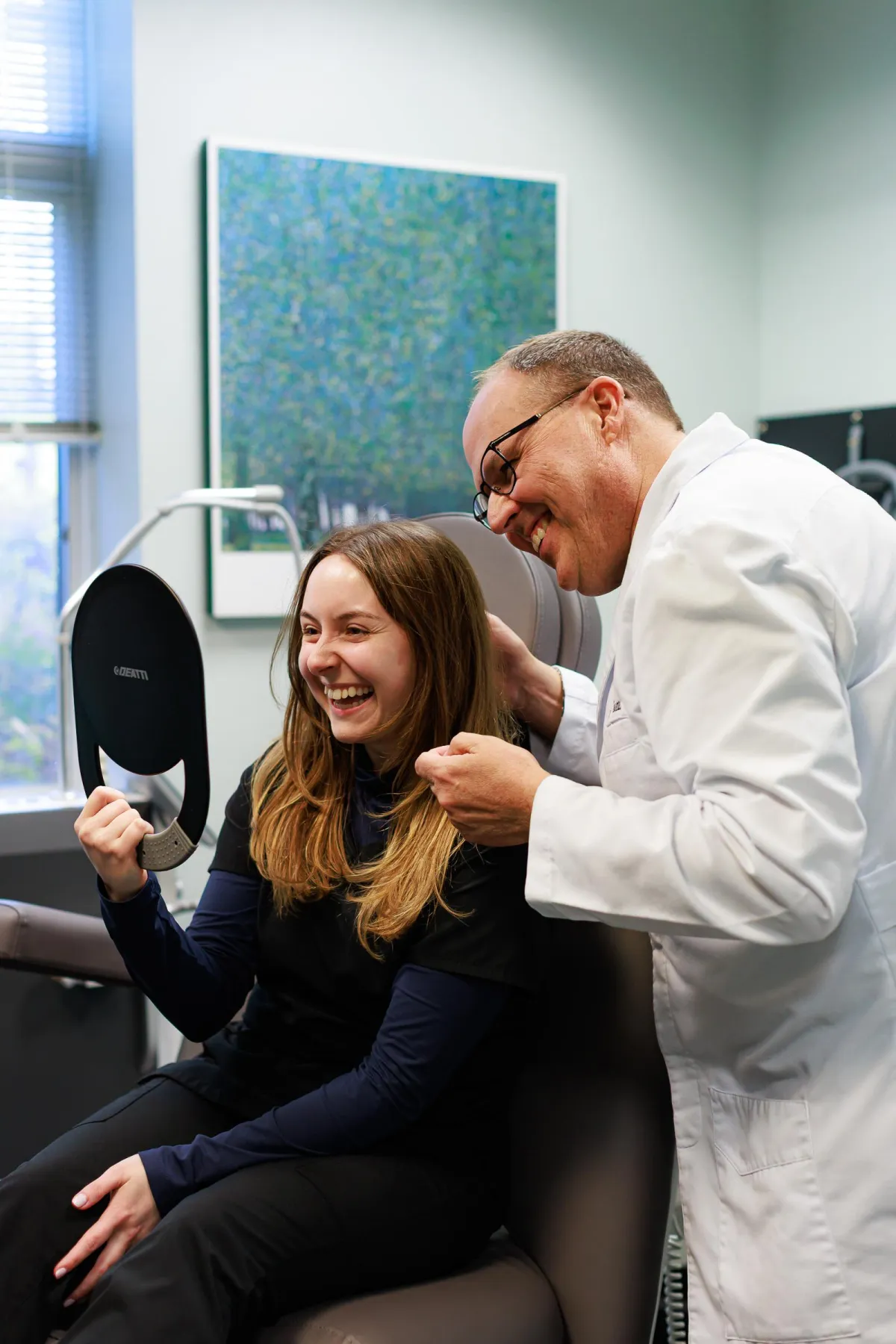
At Physician Artistry, when a patient comes in specifically for facial concerns related to tirzepatide or any GLP-1 weight loss medication, we don't start with a treatment menu. We start with a conversation.
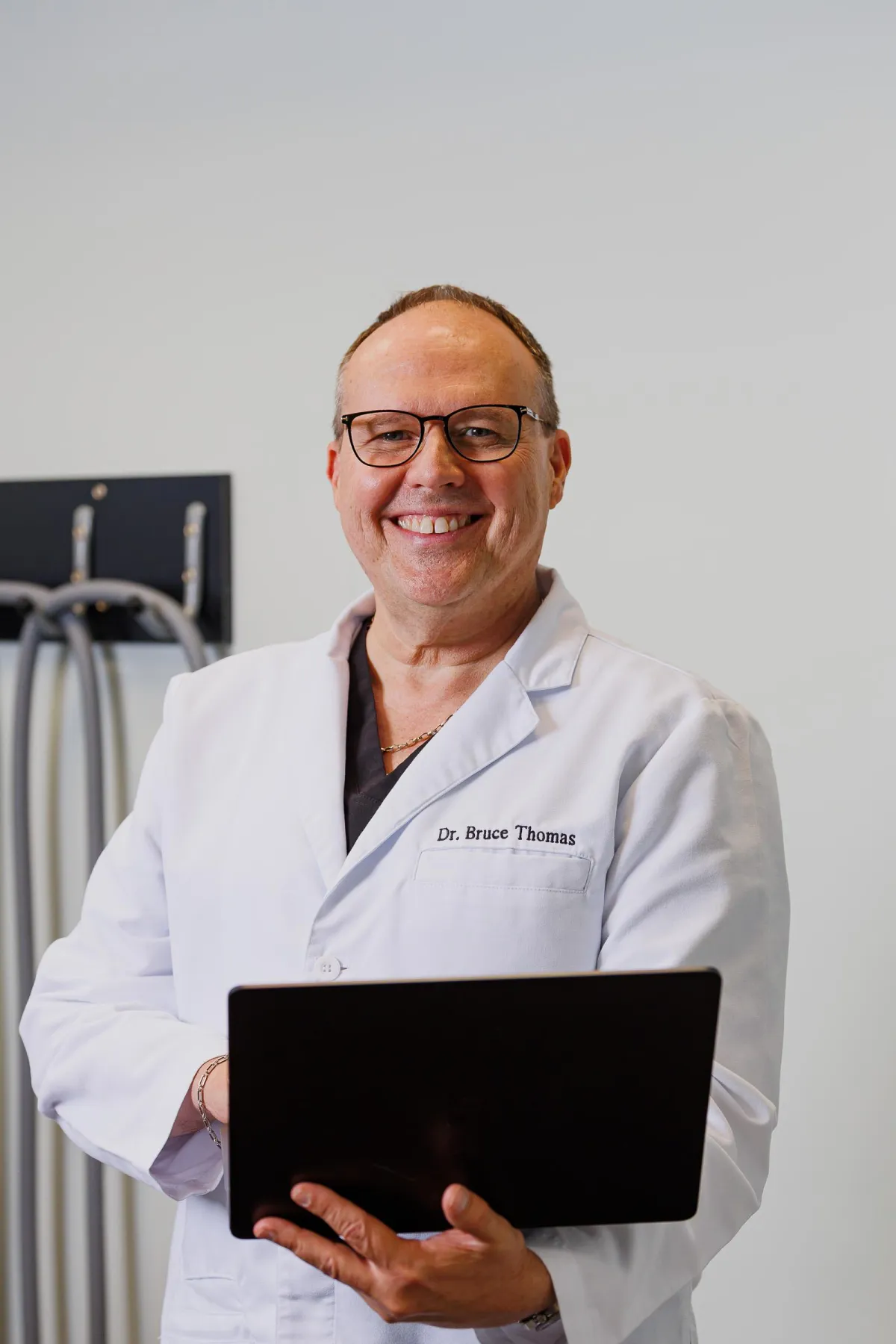
Dr. Thomas takes a genuinely comprehensive look at what's changed — where volume has been lost, how the skin is responding, what the underlying structure looks like — and then builds a plan that addresses those specific changes. Nothing is applied by default or habit. The approach is thoughtful because what works for one patient at three months of weight loss looks completely different from what another patient needs at month eight.
That's the difference between a med spa tirzepatide consultation at a physician-led practice and a walk-in injectable appointment at a franchise clinic. The physician oversight matters here — not just for safety, but because the clinical picture genuinely requires it.
Treatments That Address Tirzepatide Face
Dermal fillers for volume restoration. The most direct way to address facial hollowing is to restore the volume that's been lost. Hyaluronic acid fillers placed in the cheeks, temples, and under-eye area can recreate the three-dimensional structure your face had before weight loss — without looking overdone. Our patients consistently describe results that "enhanced their features without ever looking overdone," and that's exactly the standard we hold ourselves to. Learn more about dermal fillers at Physician Artistry.
Sculptra for longer-term collagen rebuilding. If you're still actively losing weight, sometimes the smarter approach is to lay a foundation for collagen rather than adding volume that may shift as your face continues to change. Sculptra is a biostimulator — it works by triggering your body's own collagen production, gradually improving skin thickness and support over several months. It's a particularly good option for patients who want to get ahead of the aging process rather than catch up to it. Here's a detailed look at what Sculptra's results actually look like month by month.
Secret RF Microneedling for skin tightening. When laxity is the primary concern — particularly along the jawline or in the lower face — Secret RF Microneedling can be remarkably effective. It uses radiofrequency energy delivered through tiny needles to heat the deeper layers of the skin, stimulating collagen and elastin production and helping the skin contract around your new facial structure. It's one of our most requested treatments for patients going through significant weight loss, and for good reason.
Neurotoxin (Botox) for expression lines. As skin loses some of its elasticity, dynamic expression lines — crow's feet, forehead lines, the lines between your brows — can become more visible. Strategic neurotoxin placement can soften these lines significantly without affecting your natural facial movement. Botox at Physician Artistry is always dosed for natural results — you'll still look like yourself, just refreshed.
Combination approaches. Many of our tirzepatide patients benefit most from a phased plan that combines two or more of these treatments, timed strategically around where they are in their weight loss journey. We'll often recommend starting with skin quality and tightening treatments early, then addressing volume once your weight has stabilized. This way, the structural work you do with fillers holds where you want it to.
When Should You Start Addressing It?
This is one of the most common questions we get from patients who are mid-weight loss. The answer isn't one-size-fits-all, but here's a general framework:
If you're still actively losing weight and your face is showing early signs of hollowing, skin-tightening treatments like Secret RF Microneedling or biostimulators like Sculptra are usually the better starting point. They build structure and improve skin quality without adding volume that may look different as your face continues to change.
If your weight has stabilized — or you're within 10–15 pounds of your goal — that's often the right time to assess volume loss and consider targeted filler placement in the cheeks, temples, or under-eye area.
In either case, the earlier you start paying attention to skin quality and collagen support, the better your results will be. We've written more about this for patients on semaglutide, but the same principles apply: protecting your skin during weight loss is something to think about from day one, not after you've already noticed the changes.
You Shouldn't Have to Choose
One of the things we hear most often from tirzepatide patients is that they feel like they have to pick — the body transformation or a face that still looks like them. That's a false choice, and it's one we're here to help you move past.
With the right combination of treatments, planned thoughtfully and timed well, you can absolutely have both. Patients who work with us during their tirzepatide journey consistently tell us they feel like themselves again — lighter, energized, and genuinely confident in what they see in the mirror.
That's the goal. And it's very achievable.
If you're noticing facial changes from tirzepatide — or you want to get ahead of them before they develop — we'd love to talk. Physician Artistry serves patients throughout Sterling, VA, Northern Virginia, and the DC metro area. Dr. Thomas and his team will take the time to actually understand what you're seeing and build a plan that makes sense for where you are in your journey. No scripts, no upsells — just honest, expert guidance from a physician who genuinely cares about your long-term outcome.
Learn more about tirzepatide at Physician Artistry, or reach out to schedule a consultation. We'd be glad to hear from you.
Start your transformation today!
Schedule your complimentary consultation with our friendly and knowledgeable team.