
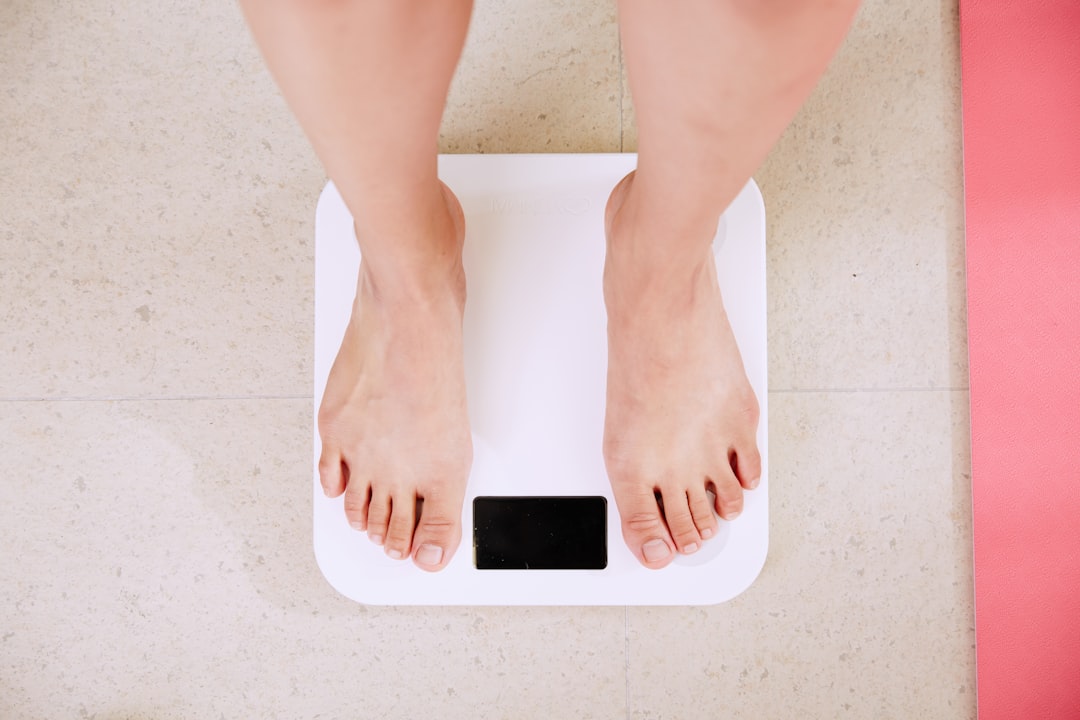
There's a moment that happens for a lot of patients on semaglutide — usually somewhere around the 20- or 30-pound mark — when the excitement of the number on the scale gets complicated by something they didn't expect: their skin doesn't quite look the way they imagined it would.
It might be a little looser around the jawline. A bit more crepey on the arms. Or maybe the face looks more hollow than refreshed. None of this means something went wrong. It means your body is changing quickly, and your skin — which is a living organ with its own pace — is doing its best to keep up.
The good news? This is entirely manageable. With the right skincare habits and the right support from a physician who understands both sides of the equation, you can lose weight and come out the other side looking like the best version of yourself — not a thinner version of someone you don't quite recognize.
Why Rapid Weight Loss Affects Your Skin
Fat doesn't just sit beneath the skin. It also supports it. When you lose a significant amount of weight — especially relatively quickly, as many patients do on GLP-1 medications like semaglutide — the skin that was stretched over that volume doesn't always snap back on its own.
This is particularly noticeable in the face, where fat pads in the cheeks, temples, and under-eye area contribute to that full, youthful appearance. As those fat pads shrink, the skin above them can begin to sag or look deflated. You may also notice more prominent lines, hollowness under the eyes, or a general loss of the softness that once defined your features.
On the body, rapid fat loss can leave skin that looks loose or crepey — especially on the arms, abdomen, and inner thighs. These areas are harder to address with topical products alone, but they're not hopeless.
Understanding why this happens is the first step toward addressing it thoughtfully, rather than reactively.
How Long Does Semaglutide Last — and Why the Timeline Matters for Skin
One of the most common questions patients ask is: how long does semaglutide last? The medication itself has a half-life of approximately one week, which is why it's typically dosed once weekly. Most patients stay on it for several months to a year or more, depending on their goals and how their body responds.
From a skin standpoint, that timeline matters. If you're losing weight steadily over the course of six to twelve months, your skin has more opportunity to adapt gradually than it would with a crash diet. That said, the faster the loss, the more proactive you'll want to be about skin support — both at home and in-office.
This is also why it helps to start thinking about skin health early in your weight loss journey, not after you've already reached your goal weight. Prevention and support are always easier than correction.
The Skincare Habits That Matter Most During Weight Loss
You don't need a complicated 12-step routine. But a few fundamentals make a meaningful difference when your skin is going through the physical stress of rapid change.
Hydration — Inside and Out
Semaglutide can suppress appetite to the point where patients forget to drink enough water. Dehydration shows up in the skin quickly — dullness, fine lines that look more pronounced, and a general lack of bounce. Aim for consistent water intake throughout the day, and pair that with a ceramide-rich moisturizer that supports the skin barrier rather than just sitting on top of it.
Protein Is a Skin Issue, Not Just a Weight Loss Issue
Collagen is made from protein. When patients on GLP-1 medications aren't eating enough — which is common given the appetite suppression — they're often not getting enough protein to support collagen synthesis. This directly affects skin elasticity. Work with your physician to ensure your nutrition is supporting your skin, not just your weight loss goals.
SPF Every Single Day
This one is non-negotiable regardless of whether you're on semaglutide. But it's worth emphasizing here because skin that's already stressed by rapid change is more vulnerable to UV-driven collagen degradation. Daily SPF 30 or higher is the simplest thing you can do to preserve what you have.
Retinoids and Collagen-Stimulating Actives
Incorporating a retinoid into your routine — whether over-the-counter retinol or a prescription-strength retinoid — can meaningfully support skin cell turnover and collagen production during this period. Vitamin C serums are another valuable tool for brightening and protecting. If you're unsure what your skin can tolerate, it's worth discussing with a provider before layering too many actives at once. Our blog on skin cycling with med spa treatments is a good starting point for thinking about how to sequence your routine intelligently.
When Skincare Alone Isn't Enough
Topical products work at the surface. But when you're dealing with volume loss, skin laxity, or structural changes in the face and body, the most effective solutions go a layer deeper — literally.
Facial Volume Loss
If you've noticed that your face looks more hollow or aged since starting your weight loss journey, you're not alone. This is so common it's developed its own cultural shorthand. The underlying issue is fat pad deflation, and the most effective way to address it is with dermal fillers or collagen biostimulators like Sculptra, which rebuild volume gradually and naturally over time.
It's worth reading our dedicated piece on Ozempic face and how fillers can help if this is something you're experiencing — it goes deep on exactly what's happening structurally and what the treatment options look like.
Skin Laxity on the Face and Neck
Loose skin along the jawline, jowls, or neck is one of the more frustrating side effects of significant weight loss. Non-surgical options like Secret RF Microneedling are particularly effective here because they work beneath the surface to stimulate collagen and tighten the skin from within. Results build gradually over several weeks, which makes it a smart treatment to start during your weight loss journey rather than waiting until after.
For patients with more significant laxity in the lower face, a combination approach — microneedling alongside biostimulators or carefully placed filler — can create a lift that looks natural rather than done. Our piece on thread lifts vs. fillers for sagging skin explores some of these options in more detail.
Crepey Skin on the Body
The arms, abdomen, and inner thighs are areas where skin often struggles to rebound after significant fat loss. RF microneedling can be performed on body areas as well as the face, and when combined with proper hydration and nutrition, can meaningfully improve skin texture and tone over time.
What a Physician-Led Approach Actually Looks Like
Here's where the difference between a med spa weight loss program at a physician-led practice and a telehealth prescription mill becomes very clear.
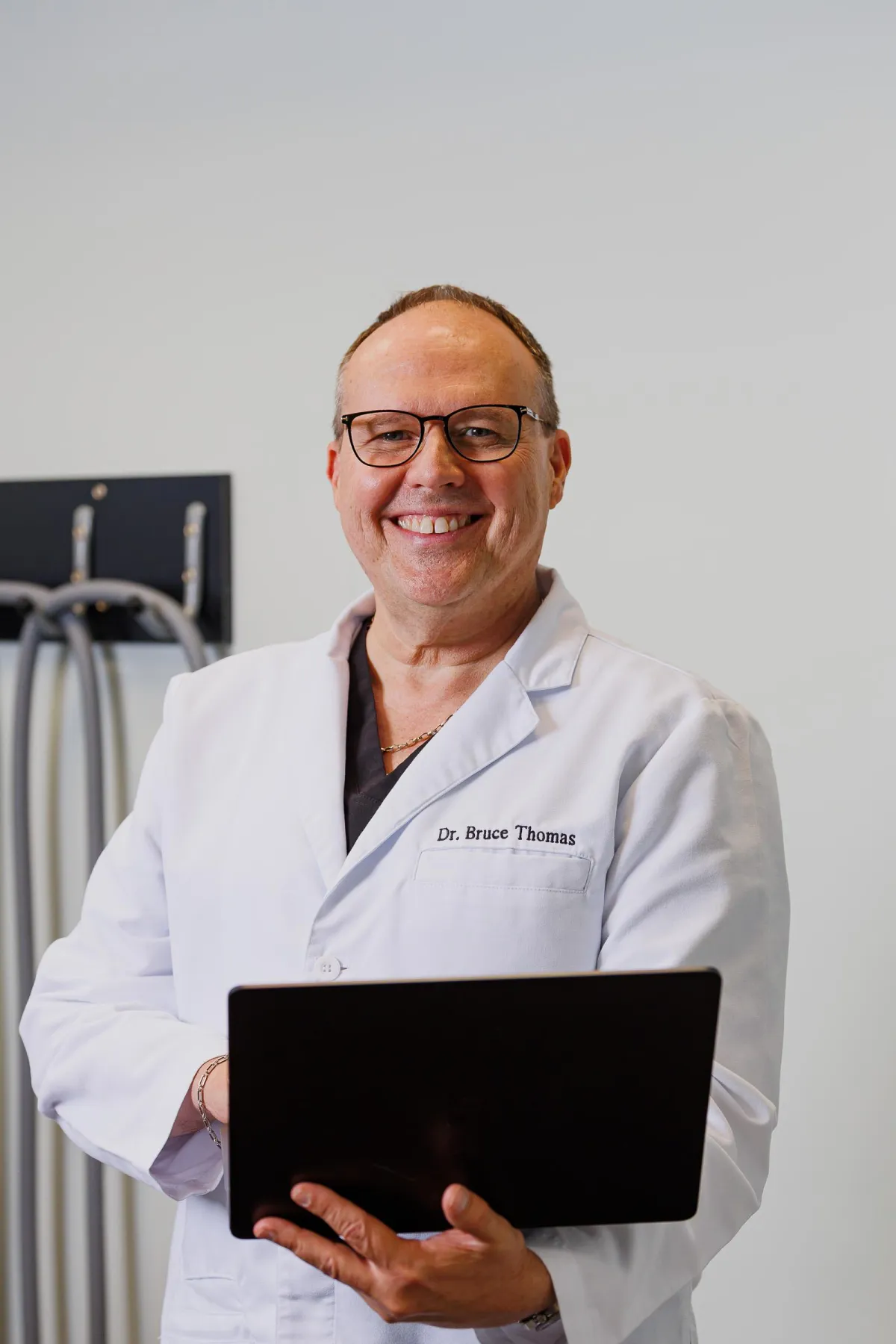
When Dr. Thomas oversees a patient's semaglutide journey at Physician Artistry, weight loss doesn't happen in isolation. The conversation includes how your skin is changing, what your nutrition looks like, whether your body composition is shifting in a healthy direction, and what proactive aesthetic support might help you feel like the full version of your transformation — not just a lighter one.
That might mean starting a skin tightening protocol mid-journey, addressing volume loss with strategically placed filler at the right moment, or simply building a skincare routine that supports your skin while it catches up to your body. Every plan is individualized, because every body — and every face — changes differently.
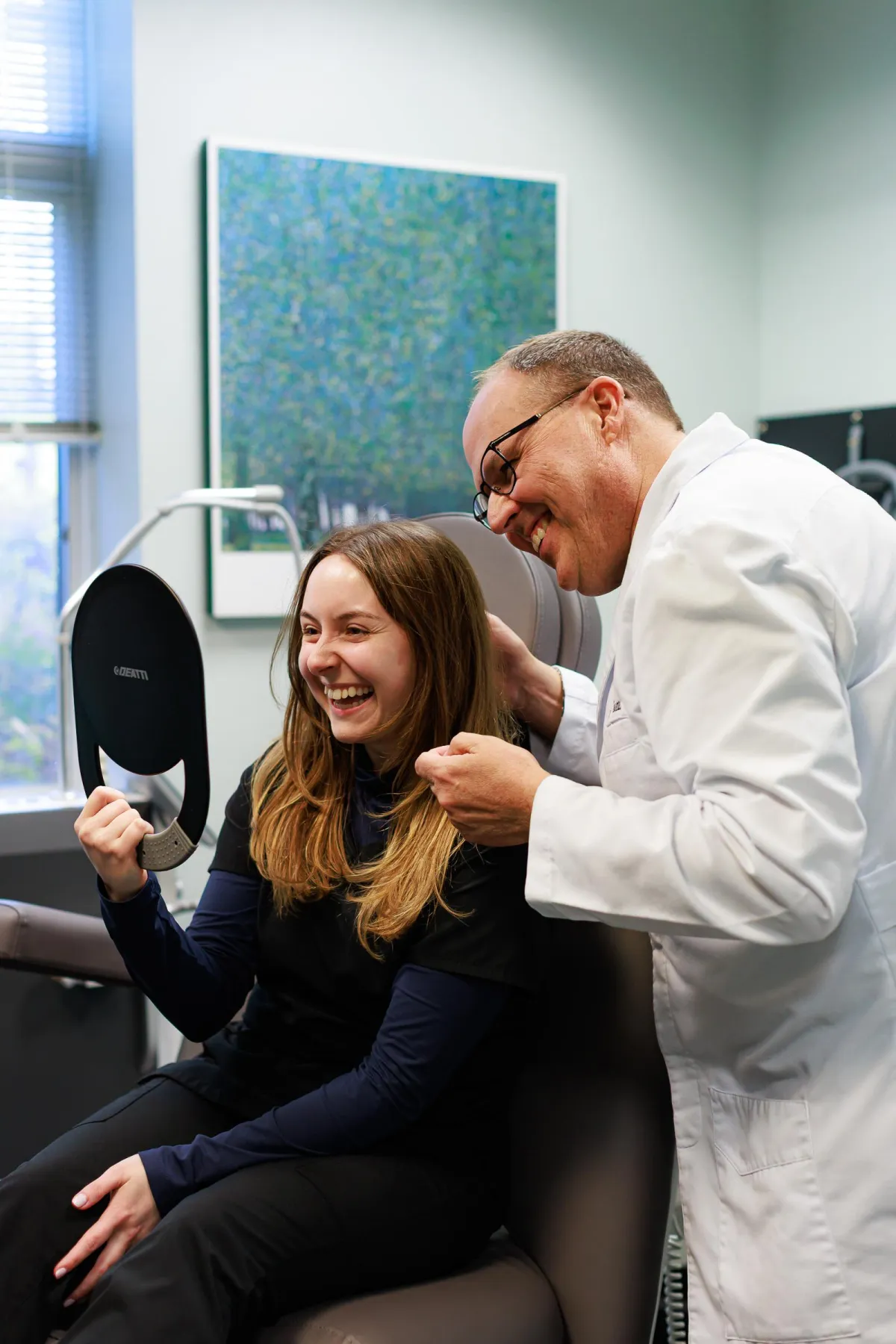
Patients who've gone through this process at Physician Artistry often describe it the way one patient put it: "I feel like myself again — energized, healthy, and confident." That's the goal. Not just a number on the scale, but a version of yourself you're genuinely excited to see in the mirror.
Timing Your Skin Treatments During Weight Loss
One question that comes up often: should I wait until I've hit my goal weight before doing anything aesthetic?
The honest answer is — it depends on the treatment. For volume-replacement with fillers, it generally makes more sense to wait until your weight has stabilized, because the structural landscape of your face will continue to change as you lose more. Treating too early can mean needing adjustments later.
For skin quality treatments — microneedling, resurfacing, collagen stimulation — starting earlier is often smarter. These treatments work gradually, building results over weeks and months. Beginning them during your weight loss journey means your skin arrives at your goal weight in significantly better condition than if you'd waited.
When you come in for a consultation, this is exactly the kind of sequencing Dr. Thomas thinks through with you. The goal is always a plan that makes sense for where you are right now and where you're headed — not a one-size-fits-all protocol.
Ready to Protect Your Skin While You Transform Your Body?
If you're on semaglutide — or considering med spa weight loss injections as part of your health journey — the best thing you can do for your skin is start the conversation early. Not because something will definitely go wrong, but because a little proactive support goes a long way.
Physician Artistry is located in Sterling, VA and serves patients throughout Northern Virginia and the broader DC metro area. Dr. Thomas and his team have helped thousands of patients navigate exactly this kind of transformation — with the clinical depth to address both sides of the equation and the genuine personal care that makes the process feel supported every step of the way.
Reach out to schedule a consultation. We'd love to be part of your story.
Start your transformation today!
Schedule your complimentary consultation with our friendly and knowledgeable team.