

You've been faithful to your retinol. You layer it on every night, you've upgraded to prescription-strength, you've added the vitamin C serum, the peptides, the ceramides. And yet — your skin still looks different. Thinner. Drier. Less like yours.
Here's the thing: you're not doing it wrong. Retinol is a genuinely useful tool. But after menopause, the skin changes you're experiencing aren't primarily a topical problem. They're a hormonal one. And no serum — no matter how good — can fully address what's happening beneath the surface when estrogen levels fall.
What Estrogen Actually Does for Your Skin
Estrogen isn't just a reproductive hormone. It plays a direct role in how your skin functions, repairs itself, and stays resilient. When estrogen is present at healthy levels, it stimulates collagen production, supports the skin's ability to retain moisture, promotes hyaluronic acid synthesis, and helps maintain skin thickness and elasticity.
When estrogen declines — which happens gradually through perimenopause and more sharply after menopause — all of those processes slow down simultaneously. Research suggests that women lose approximately 30% of their skin collagen in the first five years after menopause. That's not a topical skincare problem. That's a systemic shift that requires a more systemic response.
If you've been noticing increased dryness, more pronounced lines, skin that looks thinner or more translucent, or a general loss of that "plump" quality your face used to have, you're experiencing exactly what the data would predict. And you deserve a real answer — not just another product recommendation.
The Hormone-Skin Connection Most Skincare Brands Won't Tell You About
The beauty industry has a financial incentive to sell you serums. There's nothing wrong with a good skincare routine — but it's worth understanding what it can and can't do.
Retinol works by accelerating cell turnover and stimulating some collagen synthesis at the dermal level. It's legitimate. But it's working against an increasingly uphill battle when the hormonal signals that support collagen, moisture retention, and skin repair have already been withdrawn. You're essentially trying to patch a roof while the foundation continues to shift.
This is why estrogen therapy has become one of the most meaningful conversations happening in women's health right now. When estrogen levels are appropriately restored and optimized — under careful physician supervision — patients frequently report improvements not just in how they feel, but in how their skin looks and behaves. Skin feels more hydrated. Fine lines appear less pronounced. That underlying quality of firmness and resilience begins to return.
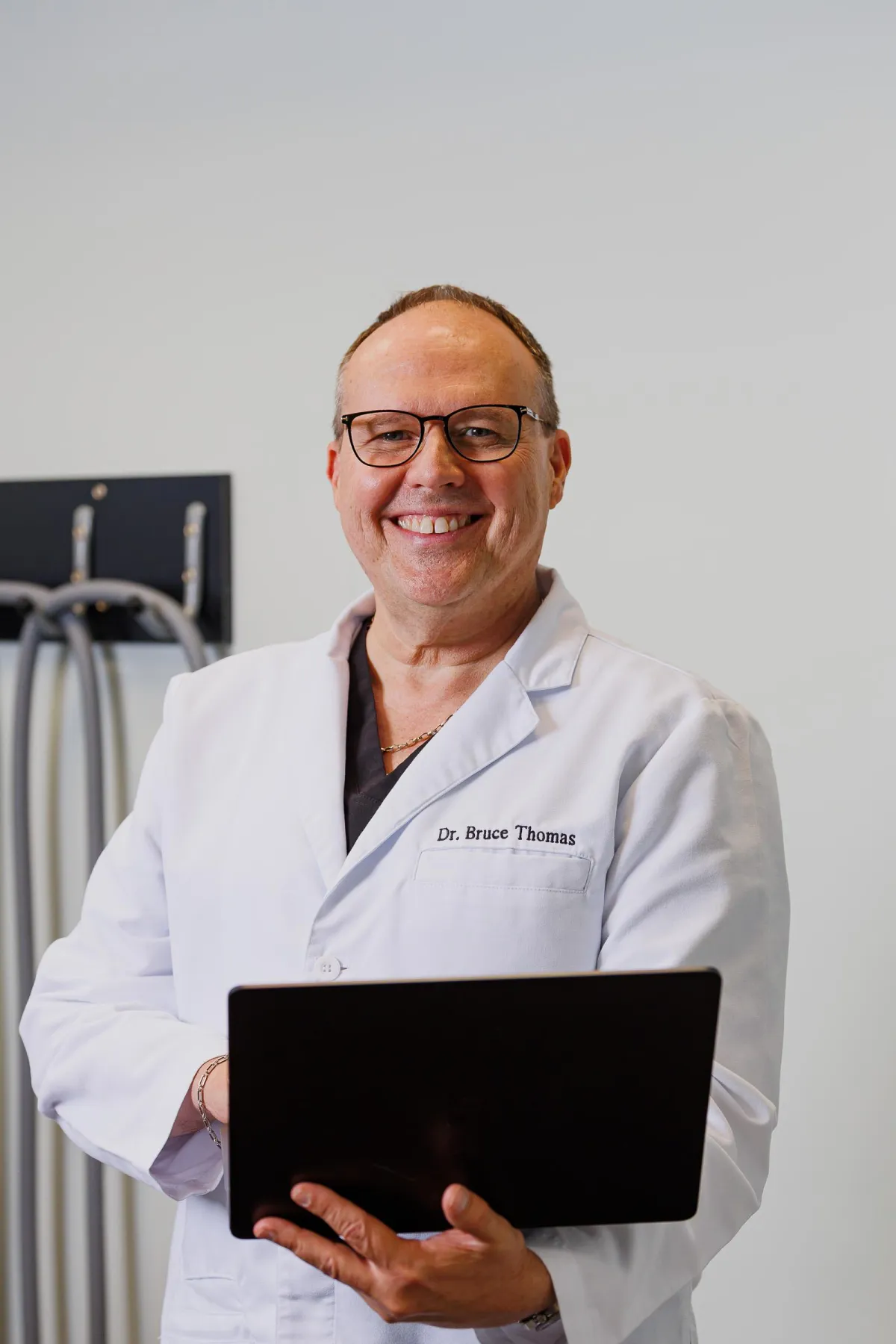
At Physician Artistry, Dr. Thomas brings over 30 years of clinical experience to these conversations. He's not treating your skin in isolation — he's looking at the whole picture, including where your hormones are and what role they're playing in what you're seeing in the mirror.
What a Comprehensive Approach Actually Looks Like
The most effective strategy for post-menopausal skin isn't a choice between hormone therapy and aesthetic treatments — it's a thoughtful combination of both, built around your specific biology and goals.
For many patients, that conversation starts with bioidentical hormone replacement therapy (BHRT). Bioidentical hormones are structurally identical to the hormones your body naturally produces, which allows for a more precise and personalized approach to restoring balance. When your hormonal foundation is addressed, everything else you do for your skin — whether topical or procedural — works better.
On the aesthetic side, there are several treatments that are particularly well-matched to the skin changes that accompany menopause:
Secret RF Microneedling delivers radiofrequency energy beneath the skin's surface to stimulate new collagen and elastin production. It's one of the most effective treatments available for restoring firmness and improving skin texture without surgery. You can read more about whether RF microneedling is worth it and what to expect before you book.
Biostimulators like Sculptra work by triggering your body's own collagen-producing response over time. Rather than adding volume artificially, they help your skin rebuild from within — which is especially meaningful for patients whose collagen loss has been significant. If you're curious about timelines, this breakdown of Sculptra results from months one through six is worth reading.
SkinVive by Juvederm is an injectable skin booster that improves hydration and glow from within the dermis — addressing the moisture loss that makes post-menopausal skin look dull and papery in a way that topical moisturizers simply can't replicate.
There's also meaningful value in understanding how these treatments interact. Combining treatments strategically often produces results that neither approach could achieve alone — and Dr. Thomas takes the time to build a plan that reflects your skin's actual needs, not just a menu of services.
A Note About Timing
One of the most important things to understand about post-menopausal skin care is that earlier intervention tends to produce better outcomes. Collagen loss compounds over time, and skin that has been thinning for a decade is harder to restore than skin that receives support closer to the onset of hormonal change.
That doesn't mean it's too late — it absolutely isn't. Patients see meaningful improvements at every stage. But if you've been wondering whether it's worth having the conversation now, the answer is yes.
The skin changes you're experiencing are real, they have a clear biological cause, and there are evidence-informed options that go well beyond what any topical product can offer. You've already been doing the right things. It may simply be time to go a layer deeper.
Ready to Have a Different Kind of Conversation?
If you're in the Midlothian, Sterling, or broader Northern Virginia area and you're ready to understand what's actually driving your skin changes — and what can genuinely help — Physician Artistry is a good place to start. Dr. Thomas takes a comprehensive and thoughtful approach that looks at your skin, your hormones, and your goals together. The consultation isn't a sales pitch. It's a real conversation.
Reach out to schedule a consultation. You deserve more than another serum recommendation.
Start your transformation today!
Schedule your complimentary consultation with our friendly and knowledgeable team.