

If you've been quietly watching your part widen or your ponytail thin, you've probably already done some searching. And if you've landed on PRP for hair loss, you're in good company — it's one of the most searched regenerative treatments in Northern Virginia right now. But there's a newer option gaining serious attention: polynucleotides. And if you're trying to decide between the two, this is the conversation you need to have before you book anything.
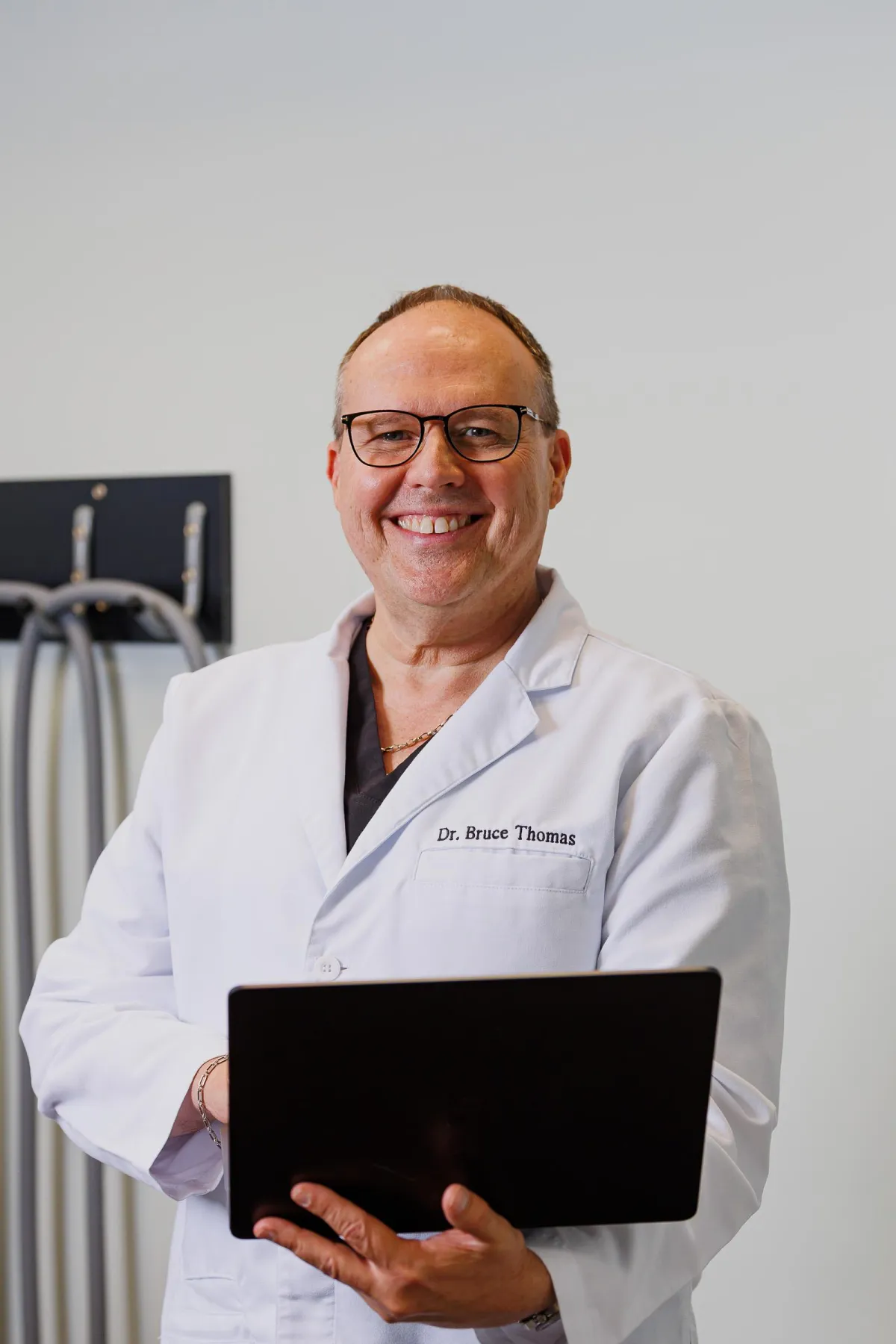
At Physician Artistry in Sterling, VA, Dr. Thomas has guided patients through hair restoration decisions for years — not by defaulting to whatever's trending, but by actually understanding what's happening with your hair and building a plan around that. So let's break down both treatments honestly, so you can walk into your consultation already knowing the right questions to ask.
What PRP Actually Does for Hair Loss
Platelet-rich plasma therapy starts with your own blood. A small sample is drawn, spun in a centrifuge to concentrate the platelets, and then injected into the areas of your scalp where thinning is most active. Those platelets carry growth factors — proteins that signal your dormant or miniaturized hair follicles to wake up and get back to work.
The mechanism is well-established. PRP increases blood supply to the follicle, extends the active growth phase of the hair cycle, and has been shown in multiple clinical studies to increase hair density and thickness over a series of treatments. It's not a magic bullet, but it's real, evidence-backed biology working in your favor.
What most patients want to know is: what does 3 month PRP for hair loss before and after actually look like? The honest answer is that three months is typically when you're just starting to see early results. Hair growth is slow — follicles need time to shift from dormant to active, and then the hair itself has to actually grow. Most patients complete an initial series of three to four sessions spaced four to six weeks apart, and they notice meaningful density improvement somewhere between months three and six. By month six, results are usually clearly visible. Before-and-after photos taken at the three-month mark often show subtle but encouraging change — less scalp visible through the hair, baby hairs at the hairline, improved texture. The more dramatic transformations tend to show up at the six-month mark and beyond.
Maintenance matters too. PRP stimulates the follicles, but it doesn't permanently alter the underlying cause of your hair loss. Most patients do one to two maintenance sessions per year after their initial series to hold their results.
What Polynucleotides Bring to Hair Restoration
Polynucleotides — sometimes called PDRN or PN — are fragments of purified DNA derived from salmon or trout sperm. If that sounds unusual, the science behind them is actually quite elegant. Polynucleotides work as tissue regenerators. They activate receptors in your cells that trigger repair and regeneration, stimulate collagen production in the scalp, reduce local inflammation, and improve the overall cellular environment that hair follicles need to thrive.
Where PRP floods the scalp with growth factors to directly stimulate follicles, polynucleotides work more like a renovation crew — rebuilding the tissue quality and vascular environment around the follicle so it has the conditions it needs to produce healthy hair long-term. They've been used extensively in Europe and Asia for years, and their availability in the US has opened up a genuinely exciting option for hair restoration patients.
You can read more about how polynucleotides work as a regenerative treatment in our post on polynucleotides finally being approved in the US — it covers the clinical background in detail and is worth bookmarking if you're researching this treatment.
PRP vs. Polynucleotides: How They Compare Side by Side
Both treatments are regenerative. Both are injection-based. Both work best as a series rather than a single session. But they're not the same, and they don't reach the same patients equally well.
Mechanism: PRP delivers concentrated growth factors directly. Polynucleotides rebuild the cellular and vascular environment of the scalp. Think of PRP as the spark and polynucleotides as the fuel.
Timeline: Both require patience. PRP tends to show earlier initial changes in some patients because it's directly stimulating follicular activity. Polynucleotides work more gradually but may produce longer-lasting tissue-level improvements.
Who responds best: PRP tends to perform strongest in patients with early-to-moderate androgenetic alopecia (the most common type of pattern hair loss) who still have living, miniaturized follicles that can be reactivated. Polynucleotides may be particularly beneficial for patients dealing with inflammation-driven hair loss, scalp health issues, or those who haven't responded as robustly to PRP alone.
Combining them: This is where things get interesting. PRP and polynucleotides are not competing treatments — they're genuinely complementary. PRP drives direct follicular stimulation while polynucleotides improve the tissue environment those follicles live in. Using both in a coordinated treatment plan is increasingly common in advanced hair restoration protocols, and for the right patient, the combination can outperform either treatment alone.
If you've been curious about how regenerative treatments compare for skin as well as hair, our post on polynucleotides vs. PRP for skin regeneration walks through the same comparison in the context of facial treatment — a useful read if you're considering a full regenerative approach.
Is PRP for Hair Loss Covered by Insurance?
This is one of the most common questions patients ask before booking a consultation, and the straightforward answer is: no, not typically. PRP for hair loss is considered an elective aesthetic treatment by most insurance carriers, which means it falls outside the scope of what standard health insurance will cover — even when hair loss is clearly affecting your quality of life.
There are some narrow exceptions. If your hair loss is tied to a documented medical condition (such as alopecia areata treated in a dermatology setting), some patients have had partial coverage through specific plan structures, but this is not the norm and is not something you should count on. Polynucleotides are similarly out of pocket.
The better question to ask is what the investment actually looks like per session, how many sessions you'll need to reach your goal, and what maintenance looks like over time. A physician-led practice will give you an honest picture of all of that at your consultation, without overselling you on sessions you don't need or underselling the realistic commitment involved.
Hair Restoration in Northern Virginia: What the Process Looks Like at Physician Artistry
If you're searching for hair restoration in Northern Virginia, the quality of your outcome depends heavily on who is actually evaluating and treating you — not just the technology they're using. At Physician Artistry, Dr. Thomas personally assesses what's driving your hair loss before recommending any treatment. That distinction matters. Hair loss has many causes — hormonal shifts, nutritional deficiencies, stress, medications, genetics — and a treatment plan that doesn't account for what's actually happening is one that won't perform as well as it should.
For patients on GLP-1 medications, it's worth knowing that semaglutide and similar drugs have been associated with hair thinning in some patients — you can learn more in our post on semaglutide and hair thinning in Sterling VA. If you're currently on a weight loss medication and noticing changes in your hair, that's an important piece of context for your evaluation.
Your consultation will cover your hair loss history, any contributing health factors, and a clear explanation of which treatment — or combination of treatments — makes the most clinical sense for your specific situation. You'll leave knowing exactly what to expect, in what timeframe, and what the maintenance picture looks like afterward. Patients consistently describe the experience as comprehensive and thoughtful, and that approach doesn't change when the treatment is hair restoration.
Which Treatment Is Right for You?
There's no universal answer, which is exactly why a consultation matters. But here's a general framework that can help you walk in with some context:
If you're in the early stages of hair thinning and want to start with an evidence-backed, well-studied option, PRP therapy is a strong first choice. It has the deepest body of clinical research in hair restoration and tends to produce visible results for most patients with androgenetic alopecia when done as a proper series.
If you've done PRP and want to build on those results, if your hair loss seems inflammation-related, or if scalp health and tissue quality are part of the picture, adding polynucleotides to your protocol makes real clinical sense.
If you want the most comprehensive regenerative approach from the start — especially if your hair loss is more advanced or you've been dealing with it for a while — a combined protocol using both PRP and polynucleotides may give you the best possible outcome.
What won't serve you well is choosing based on what's cheapest or what showed up first in your search results. Hair follicles that have been dormant for too long don't always respond, and starting sooner with the right treatment almost always produces better outcomes than waiting.
Ready to Find Out Which Approach Makes Sense for Your Hair?
Dr. Thomas and the team at Physician Artistry are here to give you a real answer — not a sales pitch. Whether you're just starting to notice thinning or you've been dealing with it for years, there's a path forward worth exploring. Reach out to schedule a consultation, and let's figure out what's actually going on and what can realistically be done about it.
Start your transformation today!
Schedule your complimentary consultation with our friendly and knowledgeable team.