
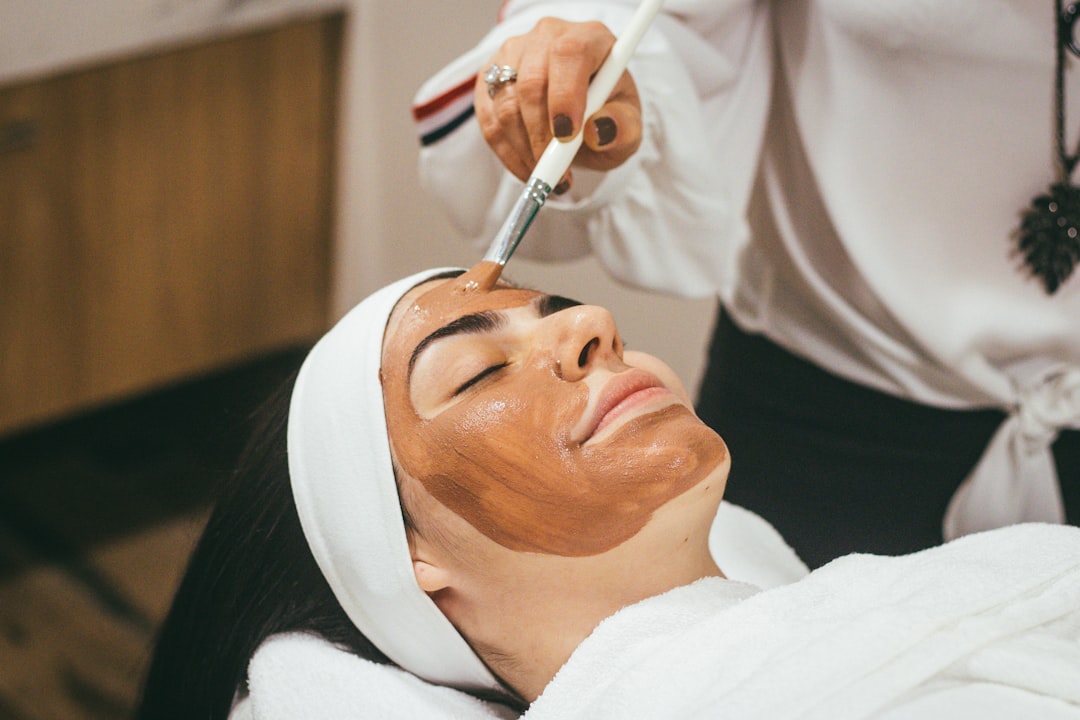
Microneedling works. PRP works. But when patients ask whether combining them is actually worth it — or just a way to upsell a second treatment — that's a fair and smart question. The honest answer is that PRP and microneedling have a genuinely synergistic relationship, and the science behind why they work better together than apart is worth understanding before you decide.
Let's walk through what each treatment does, what happens when you combine them, and what real before-and-after results actually look like for patients who've gone this route.
What Microneedling Actually Does to Your Skin
Microneedling creates thousands of tiny, controlled micro-injuries in the skin. That sounds more aggressive than it is — these are superficial punctures, carefully spaced, designed to trigger your body's natural healing response. When your skin detects those micro-injuries, it goes to work producing new collagen and elastin to repair them.
The result, over the following weeks, is skin that's smoother, firmer, and more even in texture. Fine lines soften. Acne scars become less pronounced. Pores appear smaller. Skin tone becomes more consistent.
At Physician Artistry, we offer Secret RF Microneedling, which adds radiofrequency energy to the microneedling process — delivering heat precisely into the deeper layers of skin to amplify collagen remodeling beyond what standard microneedling can achieve on its own. If you're curious about how RF microneedling compares to the standard version, this breakdown explains the key differences.
What PRP Brings to the Table
PRP stands for platelet-rich plasma. It's made from your own blood — a small sample is drawn, spun in a centrifuge to concentrate the platelets, and then applied to your skin or injected into targeted areas.
Platelets are tiny powerhouses. They contain growth factors — proteins that signal your cells to repair, regenerate, and produce new tissue. When those growth factors are concentrated and delivered where your skin needs them most, they accelerate the healing process and stimulate collagen production in a way that works with your body's own biology, not against it.
PRP on its own is a legitimate treatment with solid clinical support for skin rejuvenation, hair restoration, and more. If you want to understand how PRP therapy works for skin rejuvenation specifically, that's worth reading before your consultation.
Why Combining Them Creates Better Results
Here's where the synergy comes in. Microneedling creates micro-channels — tiny, temporary openings in the skin's surface. Normally, the skin barrier does a remarkable job of keeping things out. But immediately after microneedling, those channels are open, and topical products penetrate far more deeply than they ever could on intact skin.
When PRP is applied to the skin during or immediately after a microneedling session, those growth factors travel through the micro-channels directly into the dermal layer — the layer where collagen production happens. Instead of sitting on the surface and being absorbed slowly (or not at all), the PRP reaches exactly where it needs to be.
At the same time, microneedling itself has triggered a healing response. PRP's growth factors essentially amplify that response, telling your skin to produce more collagen, more efficiently, and over a longer period of time. You're not just adding a second treatment — you're creating a biological environment where both treatments perform better because of each other.
This is the same reason that combining treatments strategically tends to outperform doing each one in isolation. Certain treatment pairings create results that are genuinely greater than the sum of their parts, and PRP with microneedling is one of the most well-supported examples of that principle.
What Does PRP Microneedling Actually Treat?
Patients who benefit most from this combination typically have one or more of the following concerns:
- Fine lines and early wrinkles — particularly around the eyes, forehead, and mouth
- Acne scars and textural irregularities — pitting, rolling scars, and uneven surface texture
- Skin laxity — skin that's starting to lose firmness, especially in the lower face and neck
- Dullness and uneven tone — skin that looks tired or lacks the luminosity it once had
- Large pores — particularly in the nose and cheek area
- Hyperpigmentation and sun damage — brown spots, post-inflammatory pigmentation from past breakouts
If skin laxity is a primary concern, it's worth knowing that microneedling with PRP pairs naturally with other collagen-stimulating approaches. Understanding collagen loss and how to rebuild it after 40 can help you put this treatment in context of a longer-term skin strategy.
PRP Microneedling Before and After: What to Actually Expect
This is where patients have the most questions — and where honest answers matter most. Results from PRP microneedling before and after a full series aren't overnight. Your skin is rebuilding collagen, and that's a biological process that takes time.
Here's a realistic timeline:
Immediately after treatment: Your skin will look red and feel sensitive — similar to a moderate sunburn. This is normal and expected. Most patients are comfortable returning to normal activities within 24 to 48 hours, though some redness may linger for a few days depending on your skin's sensitivity.
Days 3–7: You may notice some peeling or dryness as the skin surface turns over. Underneath, the real work is just beginning. This phase requires gentle skincare — no active ingredients like retinols or acids until your provider clears you.
Weeks 2–4: Skin starts to look noticeably more radiant. Texture begins to smooth. If you're treating acne scars, you may notice they're starting to fill in. Pores look tighter.
Months 2–3: Collagen production is in full swing. This is typically when patients see the most visible improvement — skin that looks genuinely refreshed, firmer, and more even. Before-and-after photos taken at this stage show the results most clearly.
Months 3–6: Continued improvement as new collagen matures and remodels. The skin's overall quality — tone, texture, firmness — continues to improve even without additional treatments during this window.
Most patients see optimal results after a series of three to four sessions spaced four to six weeks apart. A single session produces visible improvement, but the cumulative effect of a full series is significantly more dramatic.
Is PRP Microneedling Worth It? The Real Answer
Whether PRP microneedling is worth it depends on what you're trying to accomplish — and whether you're approaching it with realistic expectations and a real treatment plan.
If you're looking for something that:
- Improves skin texture and tone without surgery or significant downtime
- Addresses multiple concerns in a single session
- Uses your body's own biology to create results (no foreign substances)
- Produces improvements that build and last over time
- Works well as a standalone treatment or as part of a broader skin plan
...then yes, the combination is worth it. It's one of the more versatile, well-tolerated, and results-backed options in aesthetic medicine.
If you're expecting dramatic results after a single session, or if you're comparing it to more aggressive procedures like surgical resurfacing, the expectations need to be calibrated accordingly. This is a treatment that rewards patience and consistency.
It's also worth noting that PRP microneedling doesn't exist in a vacuum. Patients dealing with hormonal skin changes — common in the 40s and 50s — often find that microneedling results are more limited if underlying hormonal factors aren't addressed. Understanding how hormonal shifts affect your skin can help you get more out of any skin treatment you pursue.
Who Is a Good Candidate?
PRP microneedling is appropriate for most skin tones and types, which is one of its advantages over certain laser treatments that carry more risk for patients with deeper complexions. That said, there are some situations where it's not the right fit:
- Active skin infections or open wounds in the treatment area
- Certain blood disorders or conditions affecting platelet function
- Active acne flares (we'd want to address those first)
- Pregnancy
- Patients on blood thinners (requires physician evaluation)
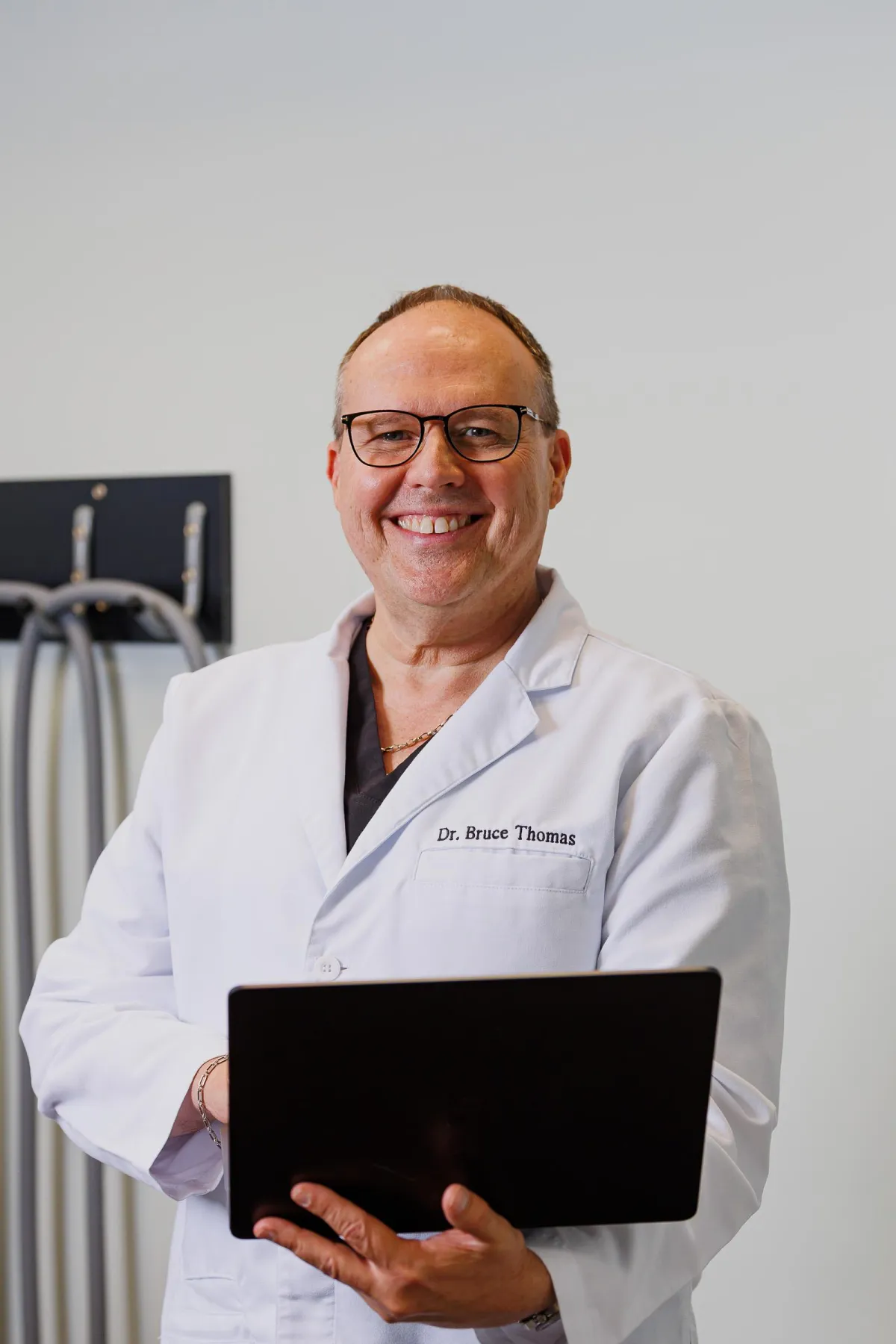
At Physician Artistry, Dr. Thomas personally reviews every treatment plan before a patient moves forward. That means if PRP microneedling isn't the right starting point for your skin goals — or if it should be combined with something else to address the full picture — you'll know before you book, not after.
How PRP Microneedling Fits Into a Broader Skin Strategy
One of the most common questions we hear after a patient's first PRP microneedling series is: what comes next?
The short answer is that maintenance sessions — typically once or twice a year — help preserve and build on the results. But PRP microneedling can also be one layer of a thoughtful, multi-modal approach to skin health.
For patients who are also working on skin laxity and volume loss, non-surgical skin tightening options can complement what microneedling does at the surface level. For patients managing the skin effects of weight loss, treating skin laxity that develops during GLP-1 therapy is an area where microneedling plays a meaningful role.
And for patients who want to understand how to build a complete treatment plan tailored to their specific skin goals, a personalized approach is always the starting point.
What to Expect at Physician Artistry
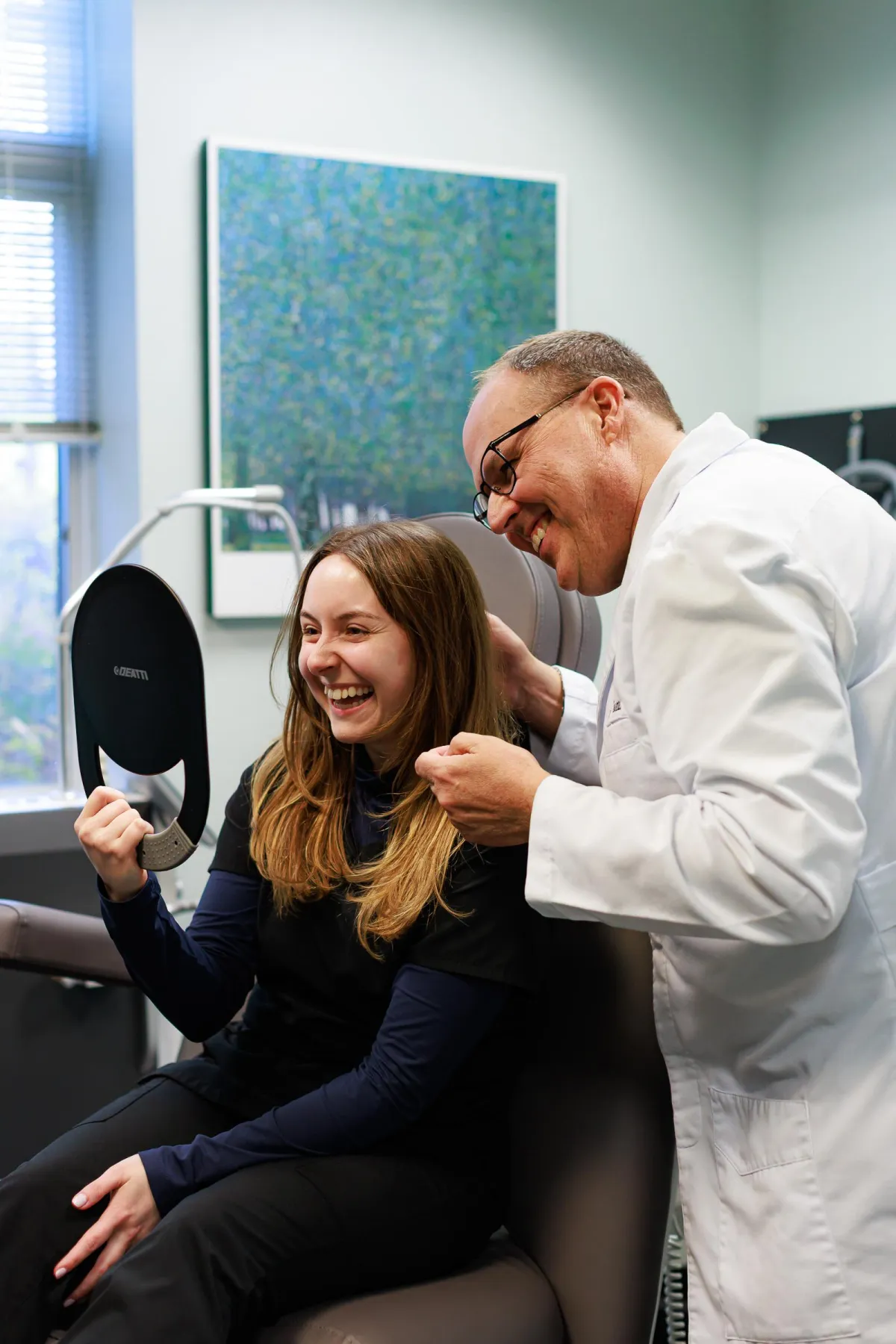
We don't do cookie-cutter treatment plans. When you come in for a consultation, Dr. Thomas takes the time to actually look at your skin — under proper lighting, without rushing — and understand not just what you're seeing in the mirror, but what's driving it at a biological level.
From there, you'll get an honest recommendation: whether PRP microneedling is the right fit, how many sessions make sense for your goals, what realistic before-and-after results look like for someone with your skin type and concerns, and how it fits into your longer-term skin health.
Patients consistently describe that approach as refreshingly different from what they've experienced elsewhere. One patient put it simply: "Comprehensive and thoughtful approach." That's what we aim for every time.
If you're in Sterling, Northern Virginia, or the broader DC metro area and you're ready to have a real conversation about whether PRP microneedling is right for you, we'd love to meet you. Reach out to schedule a consultation — no pressure, no upselling, just a straight answer about what your skin actually needs.
Start your transformation today!
Schedule your complimentary consultation with our friendly and knowledgeable team.