

Somewhere between your late 30s and early 50s, your skin might start doing things it never did before. The foundation that used to sit smoothly now clings to dry patches by noon. Breakouts show up in places you haven't seen since high school. Your jawline feels softer, your under-eyes look hollower, and no amount of your old skincare routine seems to fix it. If this sounds familiar, you're not imagining it, and you're definitely not alone — you're likely in perimenopause, and your skin is simply responding to a hormonal shift that most women are never told to expect.
We hear this all the time from patients walking through our doors in Sterling: "I did everything right and my skin still changed overnight." Here's the truth — it's not about doing something wrong. Estrogen plays a much bigger role in your skin than most people realize. It supports collagen production, helps your skin hold onto moisture, and keeps oil production balanced. When estrogen starts to decline in perimenopause, your skin can lose up to 30% of its collagen in the first five years alone. That's not a scare tactic — it's simply biology, and it's exactly why your favorite moisturizer suddenly feels like it's not doing enough.
What Perimenopause Actually Does to Your Skin
The changes tend to show up in a few predictable ways, even though every woman's timeline looks a little different:
- Dryness and dullness — declining estrogen reduces the skin's natural oil and hyaluronic acid production
- Loss of firmness — slower collagen and elastin production means less bounce and structure
- Hormonal breakouts — shifting estrogen-to-testosterone ratios can trigger adult acne along the jawline and chin
- Increased sensitivity — the skin barrier weakens, making products that used to feel fine suddenly sting or irritate
- New pigmentation — melasma and sun spots can intensify even without more sun exposure
If you've already noticed your retinol isn't cutting it the way it used to, you're not alone in that either — we wrote about exactly why in Retinol Isn't Enough After Menopause — Try This Instead. And if you want the fuller picture on how these hormonal shifts show up on your face specifically, our team put together a deeper breakdown in How to Treat Hormonal Skin Changes in Your 40s and 50s.
Natural Approaches Worth Trying First
We know plenty of women come to us wanting to explore gentler options before committing to a treatment plan, and we respect that instinct completely. If you've been searching for 7 natural menopause treatments that really work, here's where we'd start, based on what we've seen genuinely help our patients:
- Prioritizing protein and omega-3 fatty acids to support the skin's natural lipid barrier
- Adding a ceramide-rich moisturizer to rebuild what your skin is no longer producing on its own
- Strength training, which has been shown to support hormone balance and skin resilience
- Reducing alcohol and refined sugar, both of which accelerate collagen breakdown
- Improving sleep quality, since deep sleep is when your skin does most of its repair work
- Managing stress intentionally, since cortisol spikes worsen inflammation and breakouts — we go into more depth on this in Stress Wrecks Your Skin — Med Spa Fixes That Actually Work
- Layering in antioxidant-rich skincare, like vitamin C, to help offset the oxidative stress that increases during this transition
These changes genuinely help. But for many women, lifestyle adjustments alone don't fully close the gap left by declining hormone production — and that's where a physician-guided plan becomes worth exploring.
When It's Time for More Than a New Serum
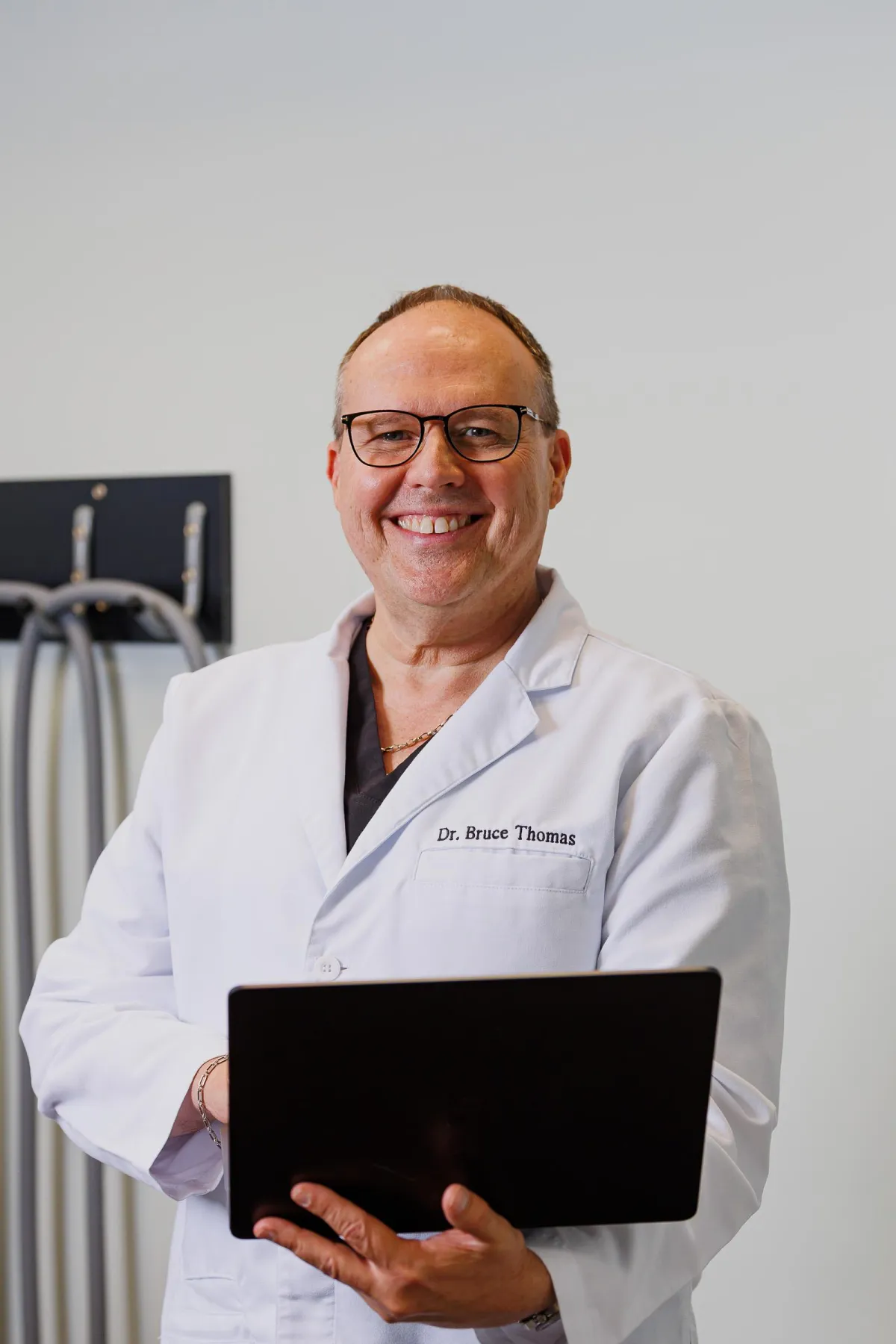
This is the part of the conversation we have with patients every single day, and it's one Dr. Thomas has spent over three decades refining. For some women, the right next step is bioidentical hormone replacement therapy, which addresses the root hormonal shift rather than just the surface symptoms. For others, estrogen therapy paired with targeted skin treatments makes the most sense. And for many, the answer is a combination — collagen-stimulating treatments that work with your changing skin rather than against it.
Secret RF Microneedling is one of the most requested treatments for this exact stage of life, because it directly stimulates the collagen production your body has slowed down. We often pair it with PDGF+ growth factor serum or polynucleotide injections to support skin quality from the inside out, not just the surface. If you're in your 50s specifically, we've also outlined the treatments that tend to make the biggest difference in Collagen Boosters That Actually Work in Your 50s.
Why Patients Choose to Navigate This With Us
When women search for a Virginia anti-aging clinic during this stage of life, what they're usually really looking for is someone who will actually listen — not just sell a package. That's the whole reason Dr. Thomas built this practice the way he did. Every treatment plan here starts with an honest conversation about what's actually happening in your body, not just what's showing up on your face. One patient put it simply: "My health and long-term success were his top priorities." That's not a tagline for us — it's how every appointment is structured.
If you've been reading through Sterling VA med spa reviews trying to find someone who treats perimenopause and menopause skin changes with real clinical depth and genuine warmth, we'd love the chance to show you the difference in person. You don't have to figure this transition out alone, and you definitely don't have to accept that this is just how things are now. Come in, tell us what you're noticing, and let's build a plan around what your skin actually needs at this stage — not a generic routine that stopped working months ago.
Start your transformation today!
Schedule your complimentary consultation with our friendly and knowledgeable team.