

There's a conversation happening more and more in consultation rooms across Northern Virginia. A patient comes in having done their research — they've read about facelifts, maybe even had a few consultations with plastic surgeons — and they ask a question that gets right to the point: "Is there something that actually lifts without the surgery?"
The answer, more often than not, is yes. And for a growing number of patients, PDO thread lifts are becoming that answer.
This isn't about avoiding a facelift because you're scared. It's about understanding what each approach actually does, who it's right for, and whether the downtime, cost, and permanence of surgery make sense for where you are right now. Let's break it down honestly.
What a Facelift Actually Does — and What It Can't
A traditional facelift — whether it's a full facelift or a more targeted mid face lift — is a surgical procedure performed under anesthesia. A surgeon makes incisions along the hairline and around the ears, lifts and repositions the underlying facial tissues, removes excess skin, and closes everything back up. Recovery typically runs two to four weeks before most patients feel comfortable in public, with full healing taking several months. The results, when done well by a skilled surgeon, are real. Significant sagging, deep jowling, and substantial volume redistribution are areas where surgery can do things no non-surgical treatment can fully replicate. For patients with advanced laxity — those in their 60s or 70s with significant skin excess — surgery may genuinely be the most effective long-term option. But here's what often gets left out of that conversation: a facelift is a one-time structural intervention on a face that will continue to age. It doesn't stop the clock. It repositions what's already there. And for patients in their 40s and early 50s who are starting to see sagging jowls, a softening jawline, and descent in the mid-face but haven't yet crossed into significant laxity territory, surgery may be addressing the problem at the wrong stage — or at a far greater cost and risk than necessary.Where PDO Threads Actually Fit
PDO (polydioxanone) threads are dissolvable sutures that have been used in medicine for decades. In aesthetic medicine, they're inserted beneath the skin using a fine needle or cannula, then positioned to physically lift and reposition soft tissue. Some threads are smooth and work primarily by stimulating collagen production in the surrounding tissue. Others are barbed — and these are the ones responsible for the mechanical lifting effect most patients are thinking about when they ask about thread lifts. The lift is real. It's not a simulation of lifting the way fillers can create the illusion of higher cheekbones — threads physically reposition tissue. The cheeks come up. The jowl softens. The jawline sharpens. And because the threads are made from a material your body gradually absorbs, the area continues producing collagen for months after the procedure as part of the natural healing response. The procedure itself takes about 45 to 60 minutes in-office. Most patients have some swelling and minor bruising for three to seven days, and feel comfortable returning to normal activities within a week. There are no incisions, no general anesthesia, and no surgical recovery.Mid Face Lift vs. Full Facelift: The Comparison That Actually Matters
When patients search for mid face lift vs full facelift, they're usually trying to answer a specific question: how much intervention do I actually need? A surgical mid-face lift focuses on the area from the cheekbones down to the nasolabial folds — the region where early aging often shows up first. It's a more limited procedure than a full facelift but still requires incisions, anesthesia, and meaningful downtime. A full facelift addresses the entire lower two-thirds of the face, including the neck and jowls. PDO threads occupy a different category altogether. They can be placed strategically across the mid-face, along the jawline, or in the brow area depending on where lift is needed. A patient who might be considering a surgical mid-face lift to address descending cheeks and softening jawline definition is often an excellent candidate for a targeted thread lift — with results that become visible immediately and continue improving over the following three to six months as collagen remodeling takes hold. The honest distinction: surgical options offer more dramatic and longer-lasting correction for moderate to severe laxity. Thread lifts offer meaningful, natural-looking lifting for mild to moderate laxity — with a fraction of the recovery, risk, and cost. For patients who are earlier in their aging journey and want to address changes before they become surgical territory, threads can actually extend the window before surgery ever becomes a consideration.PDO Thread Lift Cost Per Area — What Northern Virginia Patients Should Expect
PDO thread lift cost per area varies depending on the treatment zone, the number of threads required, and whether threads are being combined with other treatments. In Northern Virginia and the broader DC metro market, general ranges look like this: A single area — such as the brow, one side of the jawline, or a targeted mid-face zone — typically starts in the range of $600 to $900. A full mid-face and jawline lift using multiple threads across both sides of the face often runs $1,500 to $3,000 depending on the complexity and number of threads placed. Some patients combine thread work with dermal fillers or Secret RF Microneedling to address both structure and skin quality in the same treatment plan — which tends to deliver more complete results than either treatment alone. Compare that to the cost of a surgical facelift in Northern Virginia, which typically ranges from $12,000 to $20,000 or more when you factor in surgeon fees, anesthesia, and facility costs — and the value calculus shifts considerably for patients who aren't yet at the point where surgery is clinically necessary. That said, threads are not permanent. Most patients see results that last 12 to 18 months before a maintenance session becomes beneficial. For patients who want results they never have to revisit, surgery may eventually make sense. But for those who value flexibility, minimal downtime, and the ability to maintain results gradually without a single high-commitment procedure, threads tend to fit far more naturally into real life.Who Is Actually a Good Candidate?
The patients who tend to see the best results from PDO threads are those with mild to moderate skin laxity — typically in their late 30s through mid-50s — who have noticed their face starting to shift downward but still have reasonable skin quality and elasticity. Good bone structure and adequate soft tissue volume also make threads more effective, since the threads need something to anchor against. Patients who have already experienced significant volume loss alongside their sagging — which is increasingly common among those using GLP-1 medications like semaglutide or tirzepatide for weight loss — often benefit from addressing both concerns simultaneously. As we've discussed in other posts about how tirzepatide accelerates facial aging during weight loss, significant fat loss can leave the face looking gaunt and deflated even when the overall lift from threads is successful. In those cases, combining threads with volume restoration tends to produce far more harmonious outcomes. Patients who are not ideal candidates for threads include those with very thin, heavily sun-damaged skin with minimal elasticity, significant skin excess that would require surgical removal, or active skin infection in the treatment area. A thorough evaluation is the only reliable way to determine whether threading, another non-surgical approach, or a referral for surgical consultation makes the most sense.Why So Many Northern Virginia Patients Are Making the Switch
The shift away from surgical facelifts — at least for patients who aren't yet surgical candidates — isn't really about avoiding needles or being afraid of commitment. It's about alignment. People in their 40s and 50s in the DC metro area are busy. They run companies, raise families, travel for work. A two-to-four-week surgical recovery doesn't fit the way life is actually structured for most of them. What does fit: a Friday afternoon procedure, a weekend of mild swelling, and being back in the office Monday looking refreshed rather than operated on. What also fits: a treatment that can be adjusted, maintained, and layered with other approaches as the face continues to change over time — rather than a single event that locks in one result indefinitely. There's also something worth saying about the psychological experience of threading versus surgery. Patients who've had threads placed consistently describe feeling like themselves — rested, refreshed, but not dramatically altered. The results are visible but natural-looking in a way that surgical lifting, even when done beautifully, can struggle to achieve because of how the tissues are repositioned. If you're exploring what a non-surgical lift might look like for your face, the conversation starts with an honest evaluation — not a sales pitch. At Physician Artistry in Sterling, Dr. Thomas personally reviews every treatment plan and will tell you directly whether threads make sense for where you are right now, or whether a different approach would serve you better. That kind of straightforward guidance is exactly what you should expect from any provider you trust with your face. To learn more about how non-surgical treatments are replacing surgical options for patients over 50, this breakdown of what patients over 50 are choosing instead of surgery is worth reading. And if sagging skin is part of a larger concern about skin quality, our guide to sagging skin treatments that actually deliver results after 50 covers the full landscape. Ready to find out whether PDO threads are the right next step for you? Reach out to Physician Artistry in Sterling, VA to schedule a consultation with Dr. Thomas.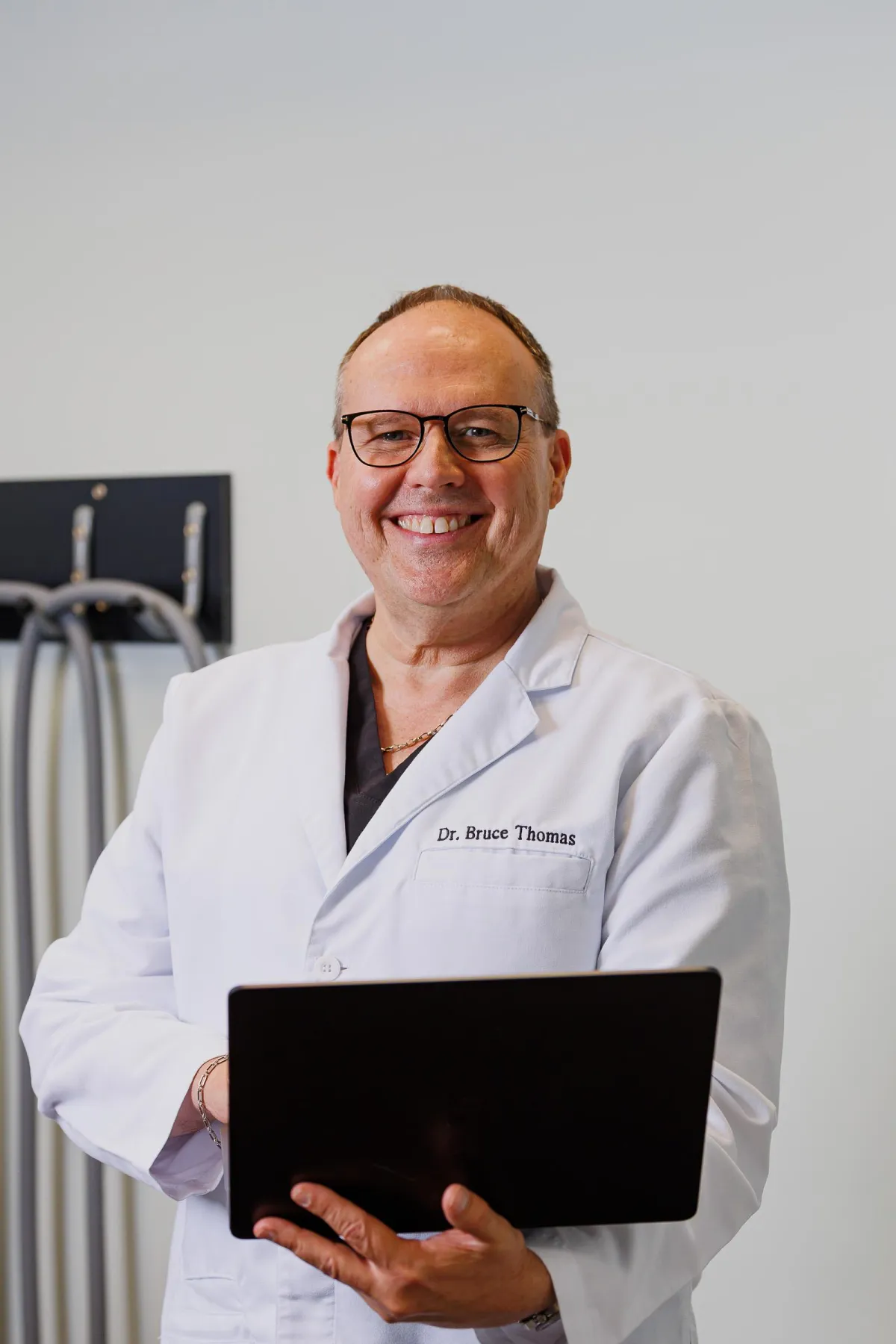
Start your transformation today!
Schedule your complimentary consultation with our friendly and knowledgeable team.