You've done your research. You've looked at before-and-afters. You've decided that a PDO thread lift sounds a lot more appealing than going under the knife. And now you're wondering about the part most providers gloss over: what does recovery actually look like?
This is the guide we wish every patient had before their appointment. Not the sanitized version. The real one — what to expect each day, what's genuinely normal, what might catch you off guard, and how long your results will actually last once the swelling settles.
If you're still weighing your options, our post on why patients are choosing PDO threads over facelifts is a good place to start. But if you're already leaning toward threads and just want to know what you're signing up for recovery-wise — keep reading.
First, a Quick Refresher on What PDO Threads Actually Do
PDO (polydioxanone) threads are dissolvable sutures that get placed under the skin to physically lift sagging tissue and stimulate your body's own collagen production. They've been used in cardiac surgery for decades, so the material itself is well-studied and safe.
During the procedure, a provider inserts the threads through tiny entry points using a fine needle or cannula. The threads grip the tissue, lift it into a new position, and then slowly dissolve over four to six months — leaving behind a scaffold of new collagen where the thread once was.
The procedure itself typically takes 45 minutes to an hour. Most patients drive themselves home. And then the recovery begins.
PDO Thread Lift Recovery: Day by Day
Day 1: The Day Of
Right after your procedure, you'll likely notice some swelling, mild bruising around the entry points, and a feeling of tightness or tension under your skin. Some patients describe a subtle dimpling or puckering at the insertion sites — this is completely normal and resolves within a few days as your tissue settles around the thread.
You may also feel the threads if you press on the treated area. That sensation fades as swelling decreases and the threads integrate with surrounding tissue.
Plan to rest for the remainder of the day. Sleep on your back if possible, and keep your head elevated to minimize swelling. Avoid touching or pressing on your face.
Days 2–4: Peak Swelling and Bruising
Most patients are surprised that days two through four feel more noticeable than the day of the procedure. This is completely expected. Swelling peaks around day two or three, and bruising — if it's going to appear — usually shows up during this window.
Some patients experience soreness when chewing or making exaggerated facial expressions. Eating soft foods during this phase makes things more comfortable. Avoid anything that requires wide mouth opening — hard foods, dental work, or vigorous chewing.
Cold compresses can help manage swelling. Arnica gel or supplements can reduce bruising. You can use makeup to cover any discoloration, but apply it very gently and avoid rubbing the treated area.
Most patients with lighter skin tones find the bruising more visible than those with deeper skin tones, but in either case it's temporary.
Days 5–7: The "Is This Actually Working?" Phase
Here's the part nobody warns you about: around day five to seven, some patients feel like their results look worse than they expected. The swelling is starting to decrease, but the lift doesn't look dramatic yet, and the residual puffiness can make things look uneven or underwhelming.
This is normal. This is not a sign something went wrong.
Your tissue is still adjusting. The threads are anchoring into position. And your collagen response — the part that creates the lasting benefit — hasn't even started yet. Most patients who feel discouraged at day six feel very differently at week four.
Week 2: Settling In
By the end of week two, most visible bruising has faded. Swelling has decreased significantly. You can return to most normal activities, though high-intensity workouts, facial massages, and anything that puts sustained pressure on the face should still wait a bit longer.
This is when the lift starts to feel more like yours. Patients often describe the result at this stage as looking more natural than the initial tightness right after the procedure.
Sleeping on your side is generally fine again by the end of week two for most patients, though sleeping on your back remains ideal for a few more weeks if you can manage it.
Weeks 3–4: You Start Seeing It
This is when most patients begin to understand what the procedure actually did. The exaggerated tightness from the procedure itself has softened, the swelling is gone, and the threads have settled into their final position. The lift looks natural, refreshed, and proportional — not pulled or overdone.
Your skin may also start to feel and look subtly different in texture. That's the collagen stimulation beginning. PDO threads trigger a healing response that prompts fibroblasts to produce new collagen around the thread, and that process continues for months after the procedure.
Months 2–4: The Collagen Dividend
This is the phase that surprises most patients most pleasantly. The physical threads are still present but beginning to dissolve, and the collagen they've stimulated is maturing. Skin quality — not just position — continues to improve. Patients often notice that their results look better at month three than they did at week four.
The surface texture feels firmer. The lift looks more natural. And results that might have looked slightly exaggerated right after the procedure look increasingly like your own face, just elevated.
Thread Face Lift: How Long Does It Last?
This is the question patients ask most, and the honest answer is: it depends — but with realistic expectations, you'll be well-served.
The physical lifting effect of PDO threads typically lasts between 12 and 18 months. The threads themselves dissolve within four to six months, but the collagen scaffolding they leave behind maintains the structural benefit for longer. Skin quality improvements — texture, firmness, tone — can persist even longer because you're not just lifting, you're rebuilding.
Several factors influence longevity:
- Skin quality at the time of treatment. Patients with mild to moderate laxity tend to see the most sustained results. PDO threads work with your existing tissue — they amplify what's there, rather than replacing it.
- Age and collagen production. Younger patients who still have active collagen production benefit from a more robust healing response, which can extend the effect.
- Lifestyle factors. Sun exposure, smoking, significant weight fluctuation, and high stress all accelerate skin aging and can shorten the longevity of any aesthetic treatment.
- Maintenance treatments. Many patients combine PDO threads with collagen-stimulating treatments like Secret RF Microneedling to extend and enhance results over time. The two work synergistically — threads lift and reposition, microneedling tightens and texturizes.
Most patients who are pleased with their initial results choose to repeat threads every 12 to 18 months. Each round builds on the previous collagen response, so results tend to compound over time in a way that feels progressive rather than maintenance-dependent.
For a broader look at how thread results compare to what patients actually experience, our post on PDO thread lift before and after results walks through real patient outcomes in detail.
Thread Lift Downtime: The Honest Summary
Let's be direct about what "downtime" means for this procedure, because it varies a lot by lifestyle and what you consider disruptable.
Social downtime: Most patients feel comfortable returning to everyday activities within five to seven days. If you work from home or have flexibility in your schedule, you may feel fine by day three or four. If your work involves a lot of face-to-face interaction and you're self-conscious about visible bruising, plan for a full week before returning.
Physical downtime: Exercise should be paused for at least two weeks, ideally three. Elevated heart rate increases swelling and can displace threads before they've fully anchored. Light walking is fine. High-intensity training, hot yoga, contact sports — wait.
Treatment downtime: Facial massages, aggressive skincare treatments, and anything involving sustained facial pressure or heat should be avoided for four to six weeks. This includes certain facials, dermaplaning, and similar services. Gentle skincare — cleansing, moisturizing, SPF — is fine from day one.
Dental downtime: If you have any dental appointments scheduled, move them to at least two weeks post-treatment if possible. Wide mouth opening puts pressure on the thread entry points and surrounding tissue during early healing.
What's Actually Normal (and What Isn't)
Because PDO thread recovery involves some side effects that can feel alarming if you're not prepared for them, here's a clear breakdown:
Normal:
- Swelling, especially days two through four
- Bruising around insertion points
- Tenderness or soreness with facial movement, especially chewing
- Feeling the threads when pressing on the skin
- Dimpling or puckering at insertion sites in the first few days
- Asymmetry during the swelling phase
- Mild tightness or pulling sensation for two to four weeks
Less Common but Still Normal:
- Mild headache the day of or the day after
- Slight indentation along the thread path as swelling resolves
- One side appearing more lifted than the other during early healing (usually self-corrects)
Contact Your Provider If You Notice:
- Signs of infection: increasing redness, warmth, significant pain, or discharge at insertion sites
- A visible thread protruding through the skin surface
- Persistent asymmetry or pronounced puckering beyond two weeks
- Severe swelling that worsens rather than improves after day four
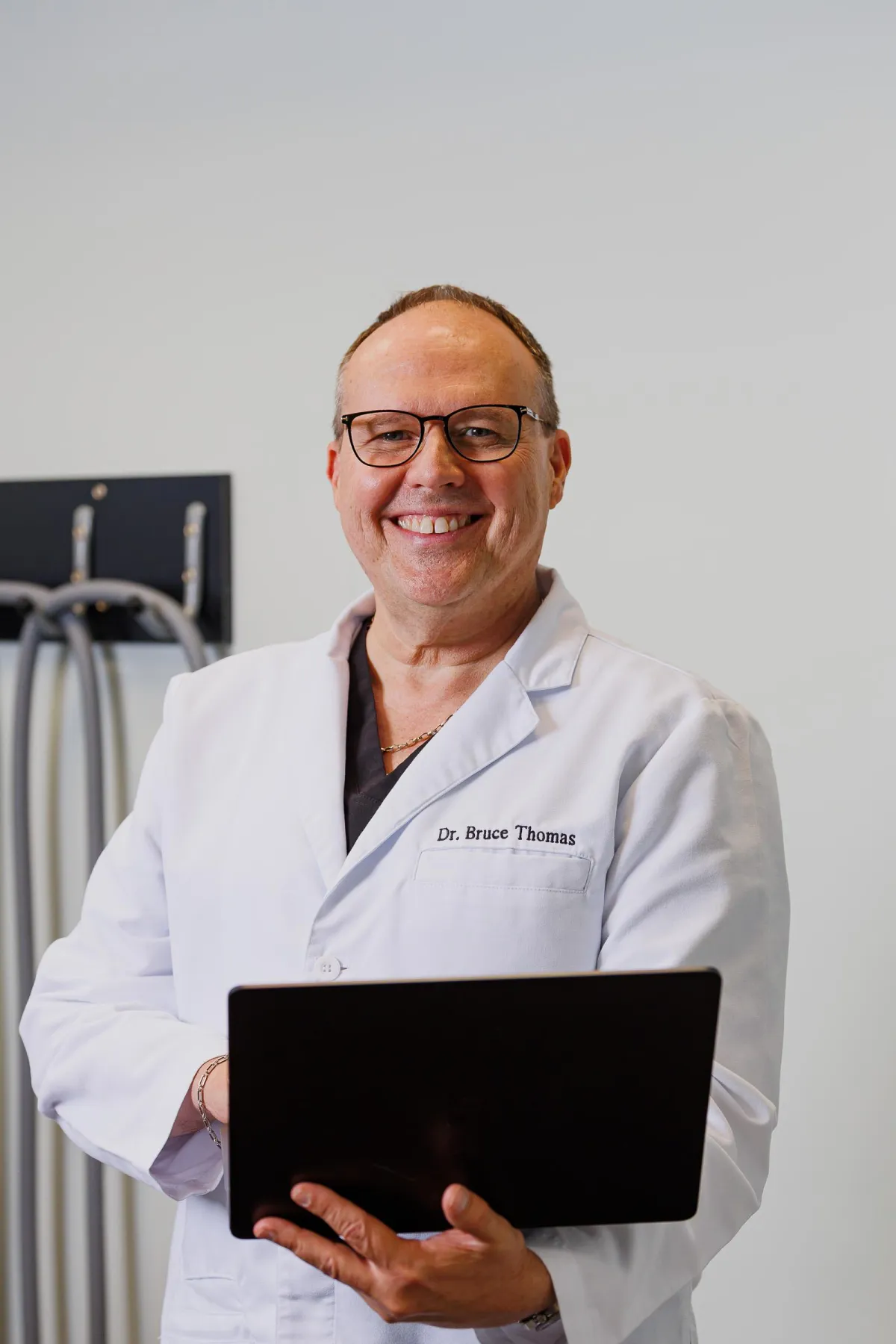
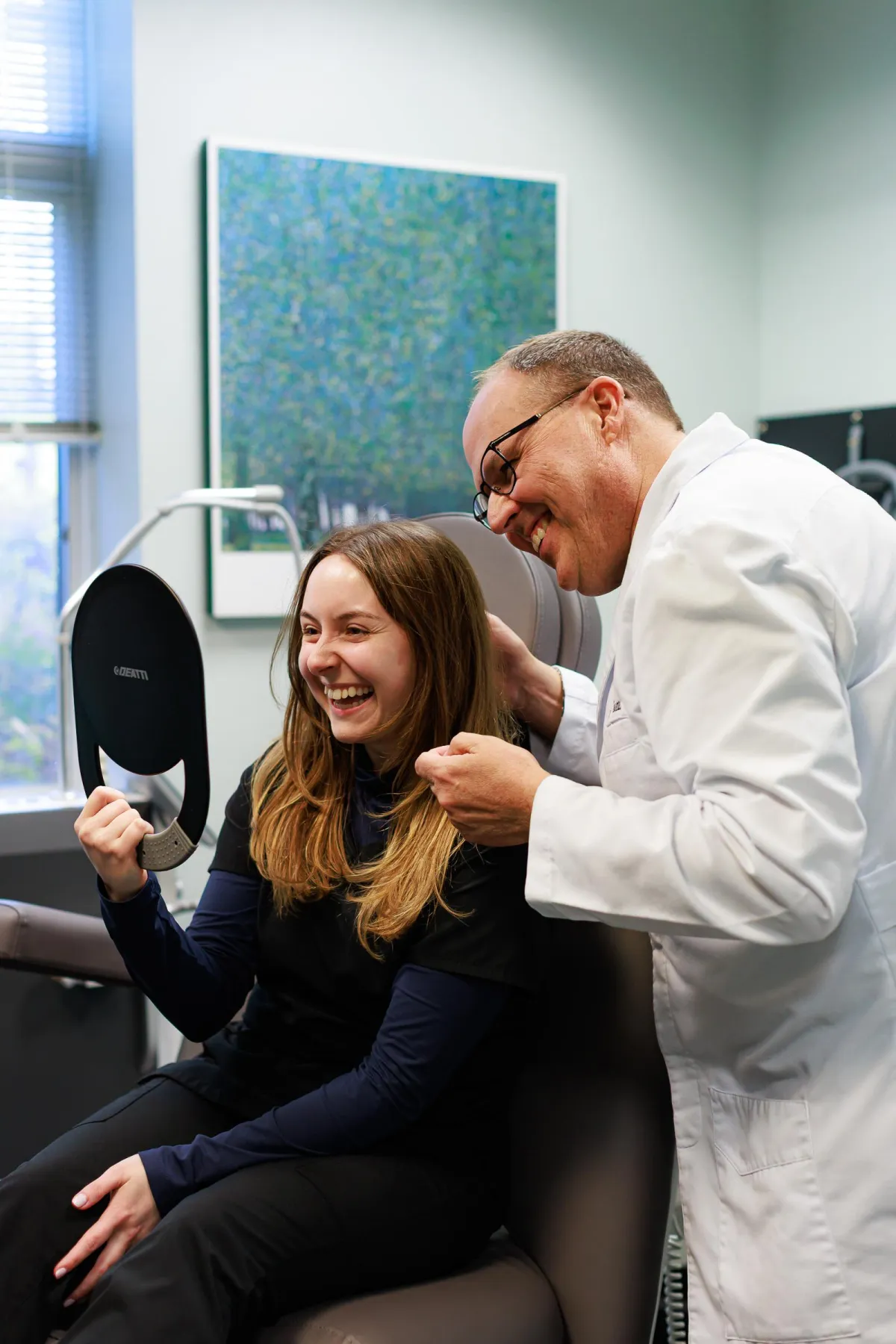
At Physician Artistry, Dr. Thomas personally oversees every treatment plan and remains available to patients throughout recovery — not just during the appointment itself. If something doesn't feel right, you're not left to figure it out alone.
Who Gets the Best Results From PDO Threads?
Thread lifts work best for patients who are in the right window — typically those experiencing mild to moderate sagging in the midface, jowls, jawline, or brow, who are not yet candidates for surgical intervention but are past the point where injectables alone can fully address the laxity they're seeing.
If you're noticing that your jawline is softening and fillers aren't quite cutting it anymore, our piece on whether fillers or threads are the right choice for jawline definition is worth reading before your consultation.
For patients managing sagging skin more broadly across the lower face and neck, threads often work best as part of a combined approach. Our post on non-surgical facelift options for patients over 50 covers how different modalities can be sequenced together for a more comprehensive result.
Patients who are not ideal candidates include those with very significant skin laxity (where surgery would produce meaningfully better results), active skin infections, autoimmune conditions affecting healing, or unrealistic expectations about the degree of lift achievable without surgery.
How PDO Threads Fit Into a Broader Treatment Plan
Most patients who get the best long-term results from PDO threads don't treat them as a one-time intervention. They use them as one layer in a thoughtful approach that includes collagen-building treatments, skin quality maintenance, and strategic use of injectables where appropriate.
For example, some patients combine threads with biostimulators like Sculptra or Radiesse, which add volumetric collagen stimulation in areas where thread lifting alone can't fully address volume loss. If you're curious how those fit together, our post on combining Sculptra and Radiesse explains the safety and strategy behind pairing them.
Others layer RF microneedling in the months following thread placement, once full healing is complete. The microneedling addresses skin quality — texture, tone, fine lines — while the threads maintain structural position. The combination consistently produces results that feel more comprehensive than either treatment alone.
And for patients on GLP-1 medications who are navigating skin laxity that comes with rapid weight loss, threads can play a meaningful role in addressing the sagging that diet and exercise can't resolve. Our guide on what comes next for skin after GLP-1 medications covers this in depth.
A Note on Recovery Expectations
One thing we see consistently at Physician Artistry is that patients who come in well-informed tend to have the best recovery experiences — not because their healing is different, but because they're not alarmed by things that are completely normal. When you know that day three swelling is expected, you don't panic. When you understand that the collagen benefit builds over months, you don't judge results at week one.
Thread lift recovery is genuinely manageable for most people. It's not painless, it's not invisible, and it's not instantaneous. But it's also not the week of misery that surgical recovery can be. Most patients describe it as a tolerable inconvenience with a very pleasant payoff.
If you're in Sterling, VA or the broader Northern Virginia area and want to talk through whether PDO threads are the right fit for what you're seeing in the mirror, we'd love to have that conversation. Dr. Thomas brings over 30 years of clinical expertise to every consultation — and the approach here has always been to give you honest answers and a plan that actually matches your goals, not a treatment menu upsell.
Reach out to Physician Artistry to schedule your consultation. We'll take it from there.