

If you've been quietly researching non-surgical lifting options, you've probably already landed on PDO threads as a possibility. And then you went looking for before and after photos — which is exactly the right instinct. Seeing real results, on real faces, at different stages of healing, is one of the most honest ways to understand what a treatment can actually do for you.
This page is designed to walk you through what PDO thread lift results genuinely look like: what changes immediately, what continues to improve over weeks and months, and what honest expectations look like for different face shapes, skin types, and age ranges. Because at Physician Artistry, we'd rather give you a clear, complete picture than a highlight reel.
What Is a PDO Thread Lift, and Why Do Results Look Different from Surgery?
A PDO (polydioxanone) thread lift involves placing fine dissolvable sutures beneath the skin to mechanically lift sagging tissue and simultaneously stimulate your body's own collagen production. The threads dissolve over time, but the structural improvement they trigger — new collagen forming along the thread path — can last well beyond the threads themselves.
This is why PDO thread lift before and after comparisons look different from surgical facelift before and afters. A surgical facelift produces a more dramatic, immediate repositioning of tissue. A thread lift produces a subtler, progressive improvement that often looks more natural — which is precisely why so many patients prefer it. The goal isn't to change your face. It's to restore it.
If you're weighing these two options more carefully, our post Patients Are Choosing PDO Threads Over Facelifts — Here's Why covers the clinical differences in depth.
The Thread Lift Before and After Timeline: What to Expect at Each Stage
Days 1–3: Immediate Lift, Some Swelling
Most patients see an initial lifting effect almost immediately after the procedure. The skin is mechanically repositioned, so the change is visible right away. However, this is also when swelling, minor bruising, and some surface irregularity are most noticeable. Don't judge your results during this window. What you're seeing is not your final outcome — it's the beginning of the process.
Weeks 1–3: Settling and Smoothing
As swelling resolves and the threads settle into position, the lift looks softer and more natural. The puckering or dimpling some patients notice in the first few days typically resolves completely. This is usually when patients start showing friends their results, because the improvement looks real without looking done.
Months 1–3: Collagen Begins Building
This is where PDO thread lifts differentiate themselves most clearly from temporary fixes. The threads are stimulating your body to produce new collagen along their path. Skin quality — not just position — begins to improve. Patients often describe their skin as looking firmer and smoother in a way that feels organic, not procedural.
Months 3–6: Peak Results
For most patients, this is when before and after photos are the most dramatic. The mechanical lift is holding, the collagen response is in full effect, and the skin looks genuinely refreshed. Results at this stage typically include visible jawline definition, lifted cheeks, reduced jowling, and improved skin texture along the treated areas.
Months 6–18: Long-Term Maintenance
The threads themselves have dissolved by now, but the collagen they stimulated remains. Many patients maintain meaningful improvement for 12 to 18 months. Some choose to do a repeat treatment around the 12-month mark to layer results and sustain their progress — much like a maintenance schedule for other treatments.
What Real Patients Actually See: Area-by-Area Results
Midface and Cheeks
Patients who experience midface volume descent — where the cheeks have flattened or fallen slightly — often notice the most visible improvement here. PDO threads reposition and support the tissue, creating a lift that restores the gentle contour of younger-looking cheeks without adding volume. For patients who also want volume restoration, threads are sometimes paired with dermal fillers for a more comprehensive result.
Jowls and Lower Face
Jowling — the softening or sagging of the lower face along the jawline — is one of the most common concerns patients bring to us, and one of the areas where thread lifts deliver the most noticeable improvement. A well-placed set of lifting threads can sharpen the jawline, reduce the appearance of jowls, and restore more definition to the lower face. For patients who want to understand all their options here, How to Treat Sagging Jowls and Lower Face Volume Loss Without Surgery in Sterling, VA is a helpful companion read.
Neck and Jawline Transition
For patients with mild to moderate neck laxity, PDO threads placed along the jawline and upper neck can produce a meaningful improvement in the neck-to-jaw transition. Results here are more modest than in the midface, but the improvement in overall facial framing is often significant enough to be noticeable. Patients who want to address the neck more aggressively sometimes combine threads with non-surgical neck lift treatments for a more layered result.
Brows and Upper Face
Threads placed in the brow area can create a subtle but meaningful lift that opens up the upper face, reduces heaviness over the eyes, and restores a more rested, alert appearance. This is a particularly popular application for patients who feel their brows have descended over time but aren't ready for surgery.
Face Lift Before and After: How Thread Lift Results Compare
When patients search for face lift before and after photos, they're often trying to answer a single question: how much difference can I realistically expect? The honest answer depends on what you're comparing.
A surgical facelift produces more dramatic structural repositioning — and it carries the recovery, cost, and risks that come with surgery. A PDO thread lift produces results that are typically described as "refreshed" and "natural-looking" rather than dramatically different. Patients consistently tell us their results enhanced their features without looking overdone — which, for most of our patients, is exactly the goal.
The right comparison isn't thread lift versus facelift. It's thread lift versus doing nothing — and in that comparison, the before and after difference is consistently meaningful.
Who Tends to See the Best Results
PDO thread lifts produce the most noticeable results in patients who have mild to moderate skin laxity and reasonable skin quality. If you're in your late 30s to 50s and have noticed gradual sagging but still have decent skin elasticity, you're likely in the ideal window for this treatment.
Patients with more advanced laxity can still benefit, but often see better outcomes when threads are combined with other treatments. Sagging Skin After 50: Treatments That Actually Deliver Results covers how to think about this combination approach in more detail.
Skin quality also matters. Threads lift tissue, but they work better when the overlying skin has reasonable collagen density. Patients who have been maintaining their skin — through Secret RF Microneedling, professional treatments, and consistent skincare — tend to see stronger thread lift outcomes because their skin can respond more robustly to the collagen-stimulating effect.
What Thread Lifts Don't Do (and What to Combine Them With)
It's worth being honest about what threads can't accomplish on their own. They lift tissue — but they don't restore volume, address skin texture, improve pigmentation, or treat dynamic wrinkles. Most patients who come to us for a thread lift also have one or more of these concerns, and addressing them together produces a more complete, balanced result.
Common combinations we see at Physician Artistry include:
- Threads + dermal fillers: Lift and restore. Threads reposition tissue; fillers replace lost volume. Together they address two of the main drivers of facial aging simultaneously. Our post on Thread Lifts vs. Fillers: Which Actually Lifts Sagging Skin? explains when each is appropriate.
- Threads + RF microneedling: Lift and resurface. Secret RF Microneedling improves skin quality, texture, and tightness from within — a natural complement to the structural lift that threads provide.
- Threads + Botox: Lift and relax. Addressing both sagging tissue and dynamic muscle movement at the same time produces a more comprehensive rejuvenation. Learn more about combining injectables for a full-face refresh.
- Threads + Sculptra: Both treatments stimulate collagen. Used together, they create a compounding effect that many patients in their 50s find particularly valuable. Sculptra Results Timeline: Months 1 Through 6 Explained is worth reading if this combination interests you.
PDO Thread Lift Before and After: What to Ask at Your Consultation
When you come in to talk about threads, the most useful conversation isn't about photos — it's about your specific anatomy and what you're hoping to see change. Here are a few questions worth bringing:
- Which areas of my face would respond best to threads given my current skin quality and laxity?
- How many threads would you recommend, and why?
- Would I benefit from combining threads with another treatment for a more complete result?
- What does my realistic before and after look like — not an idealized version, but a honest one?
- What does the maintenance schedule look like long-term?
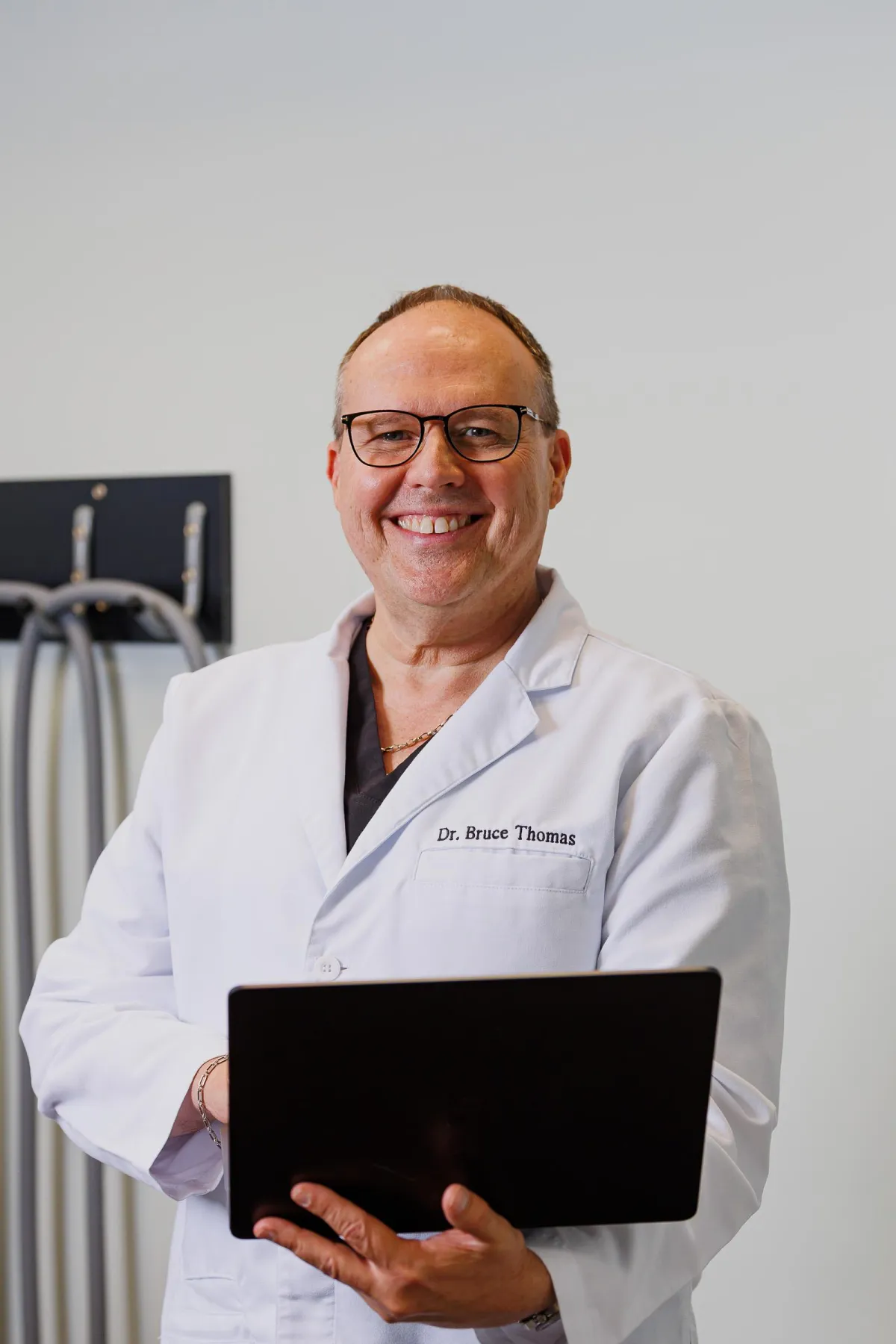
These are the kinds of questions Dr. Thomas and our team genuinely enjoy answering — not because we have a script, but because understanding your goals is how we make sure the results feel like you, only better.
A Note on Weight Loss and Thread Lifts
We see a meaningful number of patients at Physician Artistry who are undergoing — or have completed — GLP-1-based weight loss with tirzepatide or semaglutide. Significant weight loss can accelerate facial aging by reducing the fat volume that naturally supports the overlying skin — a phenomenon sometimes called "Ozempic face." Thread lifts are one of the treatments we use to address this specific pattern of laxity.
If this applies to your situation, Tirzepatide Users: Why Your Face Ages Faster During Weight Loss explains the mechanism in more detail, and Semaglutide Changed Your Face Shape — Fillers Can Help covers how we approach the volume piece alongside structural lifting.
Ready to See What's Possible for Your Face?
The best before and after photo isn't one you find online — it's the one that shows your own face, three to six months from now, after a treatment plan that was built around your specific anatomy and goals.
If you're in the Sterling, VA area — or anywhere in Northern Virginia or the DC metro — we'd love to sit down with you, look at what's actually happening with your skin and tissue, and tell you honestly what we think threads can do for you, and whether something else might serve you better.
That's the kind of conversation we have every day. And it always starts with listening to you first.
Start your transformation today!
Schedule your complimentary consultation with our friendly and knowledgeable team.