

You've probably tried it. You consciously remind yourself to stop furrowing your brow. You've slept differently, stressed less, maybe even used an expensive serum that promised to "relax" expression lines overnight. But when you check the mirror, those lines between your brows are still there — maybe deeper than last year, and definitely less responsive than they used to be.
This is one of the most common concerns patients bring to Physician Artistry in Sterling, VA. And the answer is almost never about working harder. It's about understanding what's actually happening beneath the skin — and addressing it precisely.
Why Frown Lines Stop Responding the Way They Used To
The vertical lines between your brows — clinically called glabellar lines, more commonly called the "11s" — are what's known as dynamic wrinkles. They form because of repeated muscle movement. Every time you concentrate, squint at a screen, or furrow in frustration, the corrugator and procerus muscles contract. Over years, those repeated contractions etch lines into the skin that don't fully disappear when your face relaxes.
In your 20s and early 30s, those lines bounce back. The skin has enough collagen and elasticity to recover. But with age, collagen production slows, the skin thins, and what used to be a temporary expression line starts becoming a permanent feature — present even when your face is completely at rest.
This is why the lines seem to "resist" softening. It's not that nothing is working. It's that the problem has evolved, and the solution needs to evolve with it.
What Neurotoxin Injections Actually Do — and Why They Work Here
Neurotoxin injections — including Botox, Dysport, Jeuveau, and Daxxify — work by temporarily interrupting the signal between the nerve and the muscle. When the muscle can't contract, the skin above it stops creasing. The existing line is no longer being reinforced, and over time, with repeated treatments, many patients see those lines genuinely soften and sometimes nearly disappear.
For frown lines specifically, this is one of the most consistently effective areas to treat. The muscles responsible are well-mapped, the injection technique is refined, and the results — when done correctly — can look completely natural. The goal isn't a frozen forehead. It's a face that looks rested, relaxed, and like you — just without the tension written across your brow.
If you're newer to neurotoxin or want a deeper overview of how the full treatment experience works, this guide to your first Botox appointment walks through exactly what to expect.
How Many Units Do Frown Lines Actually Need?
This is the question almost everyone asks — and the honest answer is: it depends on you specifically.
The general clinical range for treating glabellar lines (the 11s) is typically 20 to 30 units of Botox, or the equivalent in whichever neurotoxin is being used. But that range exists because people aren't the same. A person with strong, well-developed corrugator muscles — often men, or anyone who's spent years doing physically demanding work or spending time outdoors squinting — may need toward the higher end of that range to achieve meaningful relaxation. Someone with lighter muscle activity may need less.
Underdosing is one of the most common reasons patients feel like neurotoxin "stopped working." If you've had treatments elsewhere and felt like you barely noticed a difference, underdosing is worth investigating. Conversely, overdosing in the glabellar area without proper attention to neighboring muscles can create uneven brow positioning or the heavy-lid sensation some patients describe. The balance requires real clinical judgment — not a one-size-fits-all protocol.
At Physician Artistry, Dr. Thomas evaluates each patient's muscle strength, movement patterns, and treatment history before recommending a unit count. That kind of assessment is what separates a result that looks genuinely refreshed from one that looks off.
For those interested in how the 11s fit into a broader treatment approach, this guide to treating forehead lines, crow's feet, and frown lines together explains how combining treatment areas can create more balanced, natural-looking results.
The Difference Between Neurotoxin Brands — and Why It Matters for This Area
Not all neurotoxins are identical, and for stubborn glabellar lines, the choice of product can make a real difference in how long your results last and how naturally they move.
Botox remains the most studied and widely used option, with a well-established safety record and predictable dosing. Most physicians are most experienced with it, which matters.
Dysport has a slightly different molecular structure and tends to diffuse a bit more broadly. For some patients, this works well in the glabellar region — but it requires careful technique to avoid affecting muscles you don't want treated.
Daxxify is the newest FDA-approved neurotoxin and uses a peptide-based formulation that may extend duration significantly — some patients report results lasting six months or longer. If you've been frustrated with results that seem to fade after two to three months, this comparison of Daxxify and Botox is worth reading before your next appointment.
Jeuveau is another solid option, particularly for patients who want a modern alternative to Botox with comparable results. This breakdown of Jeuveau versus Botox covers how they compare in practice.
Choosing between them isn't something you should have to figure out on your own. It's a conversation worth having with your injector — one who knows the nuances of each product and can match the right one to your goals and history.
When Lines Are There Even When You're Not Making a Face
There's an important distinction between dynamic lines (those caused by movement) and static lines (those visible at rest). If your frown lines are only noticeable when you're actually furrowing, neurotoxin alone will likely address them beautifully over time. But if those lines are etched in even when your face is completely relaxed, the muscle movement is only part of the story.
Static frown lines mean the skin itself has been structurally altered. The collagen has broken down in those grooves. Neurotoxin can stop the reinforcement from continuing — and that's essential — but rebuilding what's already been lost may require additional support.
This is where a thoughtful combination approach comes in. Some patients benefit from adding a small amount of filler directly into persistent lines to soften the groove from below, while neurotoxin addresses the muscle above. Others benefit from collagen-stimulating treatments that rebuild skin quality over time. Combining treatments tends to produce better results than treating any single concern in isolation — and that's especially true for lines that have been there long enough to become structural.
How Often Should You Be Treating This Area?
Most patients treating their glabellar lines find that results from neurotoxin last somewhere between three and five months, depending on the product used, the dose, their metabolism, and how active those muscles are. Daxxify may push that window further for some people.
With consistent treatment over time, many patients find they can gradually extend the interval between appointments. The muscle becomes less active, the skin stops being repeatedly creased, and the lines become less prominent even between sessions. This is why starting earlier — before lines become deeply etched — makes a real difference. But it's also why patients who've been treating the area for years often report better and more lasting results than those who started recently.
If you've been going longer than five months between appointments and feel like you need to "catch up," that's worth discussing. Letting the muscle fully recover to its baseline activity between treatments can actually work against you over time.
This guide on how often to get Botox walks through how to think about your timing in a way that actually protects your results rather than just maintaining them.
The Role of Skin Quality — Because Neurotoxin Can't Do Everything
One thing that doesn't get said enough: neurotoxin addresses muscle activity, not skin quality. If the skin in your glabellar region is thin, dry, or showing signs of significant collagen loss, treating the muscle alone may not give you the result you're hoping for.
This is especially relevant for patients in their 40s, 50s, and beyond who are noticing that their skin between treatments doesn't look quite as smooth as it once did, even when the muscle is fully relaxed. The underlying skin architecture needs support too.
Topical support — particularly retinoids and broad-spectrum SPF — makes a real difference in how well the skin responds to neurotoxin over time. If you've been wondering whether your at-home routine is actually doing enough, this piece on retinol and aging skin in your 40s is a useful place to start.
For patients going through hormonal changes, skin behavior in this area can shift significantly. Hormonal skin changes in your 40s and 50s affect how the skin responds to treatments — understanding that connection can change how you approach your plan.
What to Expect at Physician Artistry
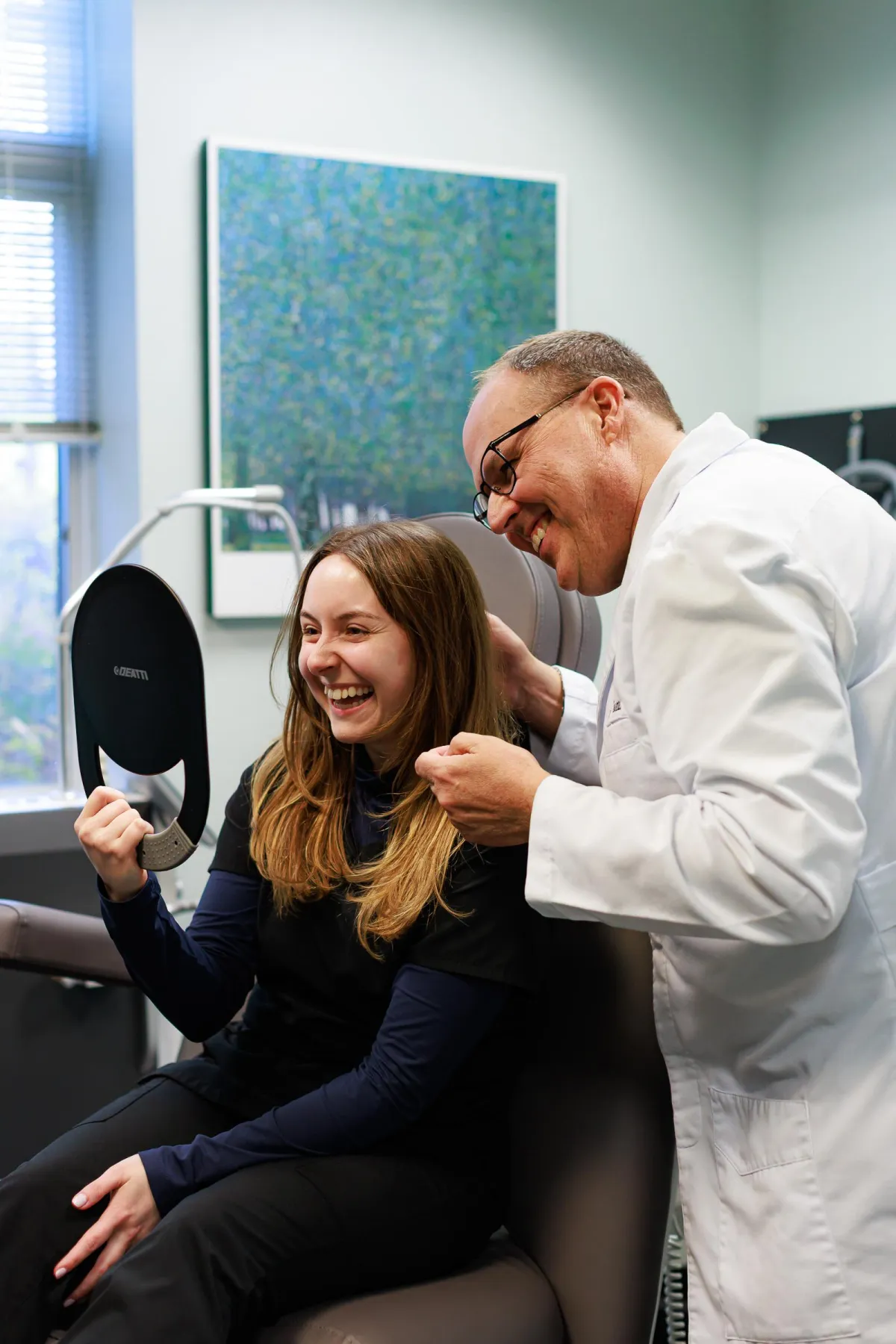
When you come in for a neurotoxin consultation at Physician Artistry, you're not handed a menu and asked to point at what you want. Dr. Thomas takes the time to actually look at how your face moves — asking you to raise your brows, furrow, squint — so he can assess the muscle patterns that are specific to you. That evaluation determines which neurotoxin makes the most sense, how many units will achieve a genuinely natural result, and whether anything else would meaningfully improve your outcome.
Patients consistently describe results that "enhanced their features without ever looking overdone" — and that's intentional. The goal has never been to eliminate expression. It's to remove the lines that make you look tense, tired, or older than you feel.
The treatment itself takes only a few minutes. Most patients are comfortable throughout with no numbing required. There's no real downtime — some minor redness or pinpoint marks that resolve within hours. Results begin to appear within three to five days and typically reach their full effect by two weeks.
If you want to see how frown line treatment fits into a more comprehensive approach, this guide to combining Botox and fillers for a full-face refresh explains how a thoughtful plan addresses the whole picture — not just one area in isolation.
Ready to Finally See a Difference?
If you've been treating your frown lines and not seeing the results you expected — or if you've been avoiding treatment because you're worried about looking unnatural — the conversation starts with a consultation. At Physician Artistry in Sterling, VA, that means sitting down with a physician who's spent over 30 years in aesthetic medicine, not a sales coordinator with a treatment menu.
Come in. Talk through what you're seeing, what you've tried, and what you want. Leave with a plan that actually makes sense for your face.

Start your transformation today!
Schedule your complimentary consultation with our friendly and knowledgeable team.