You've done everything right. You found someone to treat your nasolabial folds, you got the filler, you loved the results — and then a few months later, you were right back where you started. So you went again. And again. But here's the frustrating part: each time, it seems like the filler doesn't last as long as it did before. Now you're wondering whether something is actually wrong, or whether this is just how fillers work.
It's a pattern we hear about regularly at Physician Artistry. And the honest answer is: yes, something is happening — but it's not always what people assume. Let's walk through what's actually going on, and what a smarter long-term approach looks like.
Why Nasolabial Fold Filler Fades — And Why It Sometimes Fades Faster Each Time
Nasolabial folds — the lines that run from the sides of your nose down to the corners of your mouth — are one of the most requested areas for filler. And they're also one of the most dynamic areas of the face. Every smile, every bite of food, every conversation involves movement in and around this region. That movement is one of the reasons filler metabolizes relatively quickly here compared to, say, the cheeks or jawline.
But if you're noticing a pattern where each round of treatment seems to wear off faster than the last, a few different things may be at play:
1. You may be treating the symptom instead of the cause.
Nasolabial folds deepen for several reasons — and not all of them live in the fold itself. One of the biggest drivers is midface volume loss. As the fat pads in your cheeks descend and thin out over time, the skin above the fold loses its support structure. The fold appears deeper not because the fold itself has changed, but because the scaffolding above it has shifted.
When filler is placed directly and repeatedly into the fold without addressing what's causing it, results tend to be shorter-lived and less satisfying over time. You're essentially filling a crease that keeps reforming from above. A more comprehensive assessment — one that looks at the cheeks, midface, and overall facial structure — often leads to longer-lasting, more natural-looking results.
2. Repeated filler in the same area can sometimes accelerate breakdown.
There's emerging evidence and significant clinical observation suggesting that areas treated repeatedly with hyaluronic acid fillers may develop a more robust enzyme environment over time — meaning hyaluronidase (the enzyme your body uses to break down filler) becomes more active in that tissue. This is one reason some patients notice diminishing duration with each session in the same location.
This doesn't mean filler stops working entirely. It means the approach may need to evolve. Continuing to add volume to an area that's becoming resistant to it isn't the same as treating the underlying issue.
3. Your face is continuing to change — and filler alone may not be keeping pace.
Filler replaces volume. It doesn't rebuild the collagen and structural tissue that have been lost over years. If you've been getting nasolabial fold filler for several years and feel like you're chasing the same result, it may be because the underlying architecture of your skin and tissue needs something filler wasn't designed to provide.
This is especially relevant if you've experienced significant weight changes, hormonal shifts, or rapid aging in the midface. If any of those apply to you, it's worth reading about how filler and fat loss interact differently on the face — it puts a lot of this into perspective.
Is Smile Line Filler Dangerous?
Nasolabial fold filler is one of the safer areas of the face for injection — but "safer" doesn't mean risk-free, and it doesn't mean all providers approach it with the same level of care.
The most common concerns we see aren't dramatic emergencies. They're subtler: filler that looks lumpy or uneven, results that don't match the surrounding face, or repeated treatments that accumulate product without improving the underlying issue. Over time, excessive filler in the nasolabial fold area can actually make the face look heavier or unnatural — what some call a "pillow face" effect — even when each individual session looked fine at the time.
More serious risks — like vascular occlusion — are uncommon but not impossible, particularly when injections are performed by someone without deep anatomical knowledge of facial vasculature. This is one reason physician oversight matters, not just for outcomes, but for safety.
If you've had filler that left you with lumps, asymmetry, or results that just don't look right, that's a correctable situation. Hyaluronidase can dissolve hyaluronic acid filler, and a skilled injector can assess whether correction makes sense before adding more product. We've written about what happens when filler goes wrong and how correction actually works — it's a useful read if you're in that situation.
What a Better Approach Actually Looks Like
If you've been getting nasolabial fold filler and feel stuck in a cycle of diminishing returns, the conversation worth having isn't "how much filler do I need this time?" It's "what is actually driving this, and what combination of treatments makes sense for where my face is right now?"
Here's how that might look in practice:
Addressing the midface, not just the fold.
Restoring volume to the cheeks and midface — rather than just the fold itself — often produces more natural, longer-lasting results. When the structural support above the fold is rebuilt, the fold itself frequently softens without needing to be filled directly. Treating hollow cheeks and midface volume loss is often the missing piece for patients who feel like nasolabial filler isn't holding.
Biostimulators instead of — or alongside — traditional filler.
Products like Sculptra and Radiesse don't just add volume — they stimulate your own collagen production over time. For patients who have been relying on repeated hyaluronic acid filler sessions, switching to or adding a biostimulator can produce results that build gradually and last significantly longer. Many of our patients who made this switch describe it as a turning point. You can read more about why repeat filler patients are making this switch, and get a detailed breakdown of how Sculptra and Radiesse compare for aging skin.
Skin quality treatments that reduce how visible folds appear.
When the skin itself is thicker, firmer, and better hydrated, folds appear less pronounced — even without additional volume. Secret RF Microneedling is one of the tools we use most often to rebuild skin quality from the inside out, stimulating collagen in the dermis in a way that topical products simply can't replicate. Pairing it with filler treatments often produces results that outlast what either treatment achieves alone. If you're weighing your options on skin tightening, combining treatments frequently outperforms single sessions — and that's especially true in the midface.
A treatment plan that evolves as your face does.
Your face at 42 is different from your face at 48. A plan that made sense three years ago may not be the right plan now — and that's not a failure, it's just biology. What serves patients best is a provider who reassesses rather than just repeats. If you've been on autopilot with the same treatment every six months, it may be time for a fuller conversation about where you are now and what will actually serve you going forward. Our post on how filler needs shift between your 40s and 50s is a good place to start thinking through this.
What to Expect at Physician Artistry
If you're searching for nasolabial fold filler near you in Sterling, VA or the broader Northern Virginia area, here's what we want you to know before you book anywhere: the most important thing isn't which filler is used. It's whether the person designing your treatment plan has actually looked at your whole face — not just the fold you're pointing to.
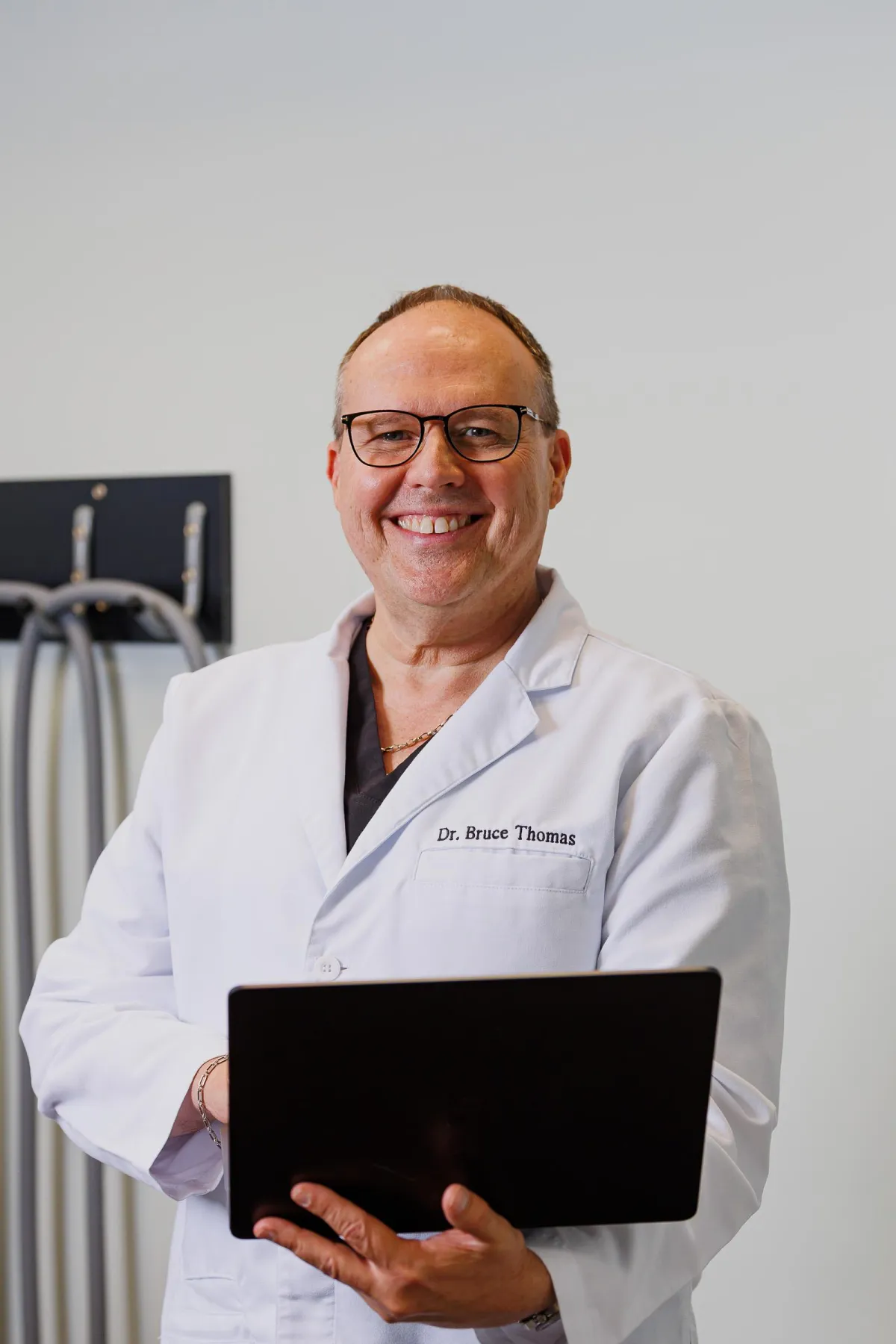
At Physician Artistry, every treatment plan is personally overseen by Dr. Thomas, who brings more than 30 years of clinical experience to every assessment. That means you're not getting a cookie-cutter recommendation based on whatever appointment slot is open. You're getting a thoughtful look at what's driving your concern, what options genuinely make sense for your face and your goals, and an honest conversation about what to expect.
Our patients consistently tell us that what sets us apart is that we take the time to actually listen — and that the results reflect it. As one patient put it, the results "enhanced my features without ever looking overdone." That's exactly what we're aiming for, every time.
If you've been stuck in a cycle of nasolabial filler that keeps wearing off faster, we'd love to take a fresh look with you. Learn more about our approach to dermal fillers, or reach out to schedule a consultation. There's a better path forward — and it usually starts with asking better questions.