
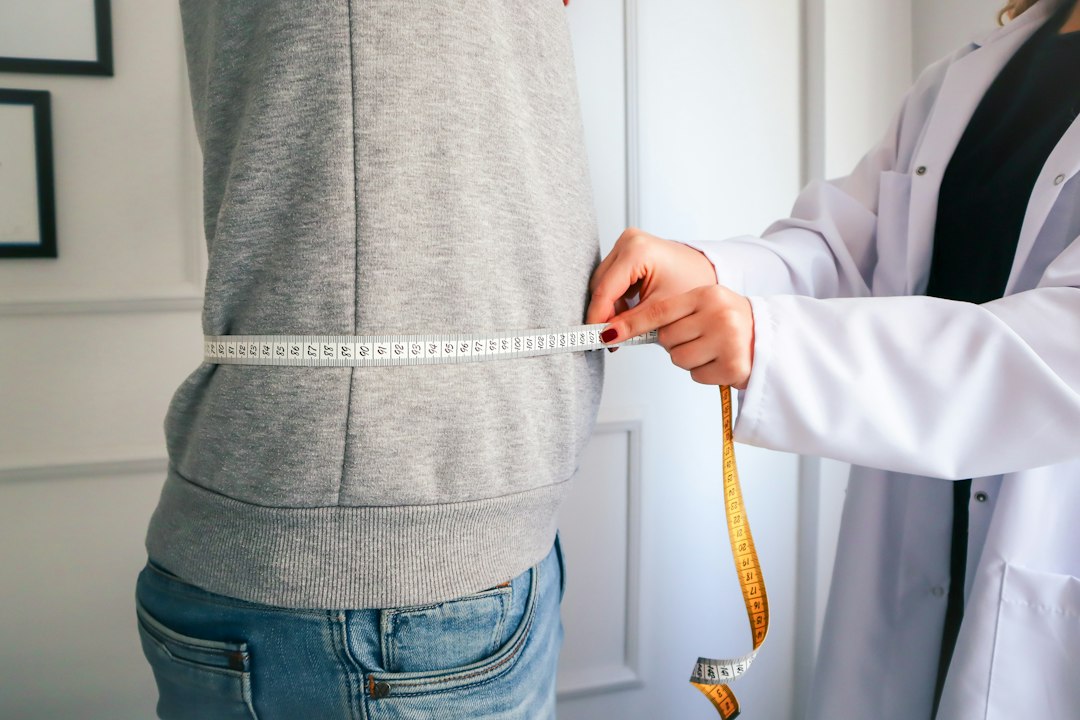
If you've lost significant weight on a GLP-1 medication, you already know the scale isn't the whole story. Patients tell us the same thing, week after week: "I love my body again, but my face looks tired in a way it never used to." You're not imagining it, and you're not alone. This is one of the most common conversations we have at Physician Artistry, and it deserves a clear, honest explanation — not a sales pitch.
What Is GLP-1, Exactly?
GLP-1 stands for glucagon-like peptide-1, a hormone your gut naturally produces after you eat. It signals fullness to your brain, slows digestion, and helps regulate blood sugar. Medications like semaglutide and tirzepatide work by mimicking this hormone at much higher, sustained levels than your body produces on its own — which is exactly why appetite drops and weight loss follows.
It's effective medicine. It's also powerful medicine, which means it changes more than your waistline. Facial fat pads — the soft cushioning around your cheeks, temples, and under your eyes — respond to rapid fat loss the same way your midsection does. The difference is that your face has far less fat to lose before structural changes become visible.
Why Your Face Changes Before You Expect It To
The fat compartments in your face provide structure, not just softness. When they shrink quickly, skin that once draped smoothly over volume now has less to rest on. The result is often called "Ozempic face" — hollowed cheeks, deeper nasolabial folds, a more pronounced tear trough, and skin that appears to sag rather than simply thin. We've written in detail about how fillers can address Ozempic face if you want to go deeper on that specific pattern.
This isn't a flaw in your weight loss — it's physiology. Rapid fat loss anywhere in the body outpaces the skin's ability to remodel and contract. Patients who lose weight gradually over years tend to see gentler facial changes than those who lose 40, 60, or 80 pounds in several months, which is increasingly common with these medications.
What Is the Best GLP-1 for Minimizing Facial Changes?
This is one of the most frequent questions in our consultations, and the honest answer is: it depends on your goals, your metabolism, and how your body responds — not on which drug is "strongest." Semaglutide and tirzepatide work through slightly different mechanisms, and patients age differently on each. We've broken down the real differences in our guide comparing tirzepatide vs. semaglutide and who ages faster during weight loss, and our full head-to-head on tirzepatide vs. semaglutide weight loss comparison is worth reading before you start or switch.
What matters more than the drug itself is how your treatment is monitored. Dr. Thomas personally oversees dosing, bloodwork, and pacing for every patient on semaglutide or tirzepatide at our practice, because the goal was never just weight loss on a chart — it's a version of you that feels sustainable and looks like yourself.
Recognizing the "GLP-1 Face" Early
You don't have to wait until you're unhappy with the mirror to act. Early signs worth paying attention to include flattening cheeks, a sharper jawline paired with looser skin beneath it, and shadows under the eyes that weren't there before. If you're also noticing changes in skin elasticity more broadly, our piece on semaglutide and skin laxity walks through what treatments actually help, and why timing your skin tightening treatment matters before your results fully set in.
It's also worth mentioning: if you're considering pausing or stopping your medication, please talk to us first. Hormone levels shift meaningfully during this process, and we recommend hormone testing before stopping GLP-1 medications so nothing catches you off guard.
Restoring What Weight Loss Takes Away
The good news — and this is the part patients are often relieved to hear — is that facial volume loss is one of the most treatable side effects of GLP-1 therapy. We're not talking about looking "done" or overdone. We're talking about gently restoring the structure that was always naturally yours.
Dermal fillers remain the most direct approach for hollowed cheeks and midface volume loss, and we tailor placement specifically to how your face has changed, not a generic template. You can read more about cheek fillers for midface volume loss and how fillers respond to a changed face shape after semaglutide.
For patients who want their own collagen doing the work rather than relying on filler indefinitely, biostimulators like Sculptra are often a better long-term fit. We explain the distinction in Sculptra vs. dermal fillers, and why many repeat patients are moving toward biostimulators instead of traditional filler. Some patients want to avoid injectables in the lower face altogether and are surprised to learn there's a non-surgical, filler-free path worth exploring — covered in our guide to the liquid facelift.
You Don't Have to Choose Between Health and Appearance
This is the heart of what we believe at Physician Artistry: your weight loss success and how you feel looking in the mirror are not competing priorities. They're both part of the same story, and Dr. Thomas treats them that way — reviewing your facial changes with the same clinical attention he gives your labs and your dosing schedule. If your face has changed in ways you didn't expect, come talk to us. We'll listen first, explain what's happening medically, and build a plan that feels like you again.

Start your transformation today!
Schedule your complimentary consultation with our friendly and knowledgeable team.