You did the hard work. The scale moved. Your clothes fit differently. People are noticing — and mostly saying the right things. But somewhere in the middle of all that progress, you started looking at your face in the mirror a little differently. Not bad, exactly. Just… different. A little more hollow. A little more tired. Like the version of you that showed up after the weight loss is somehow older than the one who started.
You're not imagining it. And you're not alone.
Semaglutide is genuinely remarkable for weight loss — and we use it right here at Physician Artistry because we've seen it change lives. But rapid or significant fat loss doesn't just happen in your midsection. It happens everywhere, including in the structural fat compartments of your face. And once that facial volume shifts, your face shape can change in ways that feel jarring — especially when the rest of you feels better than it has in years.
The good news: this is one of the most treatable consequences of semaglutide weight loss, and facial fillers, used thoughtfully, can restore what the weight loss took without reversing any of your results.
Why Semaglutide Specifically Affects Your Face This Way
When people lose weight gradually over years, the face tends to adjust relatively slowly. When weight loss is accelerated — as it often is on GLP-1 medications like semaglutide — the face can lose volume faster than the skin has time to adapt.
Fat in the face isn't just cosmetic. It's structural. There are distinct fat compartments in your cheeks, temples, under-eye area, and along your jawline that contribute to the rounded, lifted, youthful appearance we associate with a healthy face. When those compartments shrink — which they do when the body is in a significant caloric deficit — the scaffolding underneath your skin shifts. Cheeks that were full become hollow. The area under the eyes looks sunken. The skin that used to sit on top of that volume now has less to hold onto, which can accelerate the appearance of sagging and deep folds.
This is what the aesthetic world has started calling "Ozempic face" — though the same phenomenon happens with tirzepatide, phentermine, and any approach that produces meaningful weight loss quickly. If you've noticed these changes, you can read more about the broader picture in our post on Ozempic face and whether fillers can fix it.
What Changes — and Where
Not everyone experiences facial volume loss the same way. Some patients lose it primarily in the midface — the cheeks and the area just beneath the eyes. Others notice it most in the temples, which creates a gaunt, hollowed-out look at the sides of the face. Some see changes along the jawline or in the lower face, where lost fat can make jowling appear earlier or more pronounced than expected.
Here's what that tends to look like in practice:
- Hollow or sunken cheeks — the cheekbones become more prominent but in a way that looks deflated rather than defined
- Deeper nasolabial folds — the lines from your nose to the corners of your mouth become more pronounced as the fat above them disappears
- More visible tear troughs — the under-eye area looks shadowed and tired even when you're well-rested
- Temporal hollowing — the sides of your forehead look concave, which can make the face look narrower and older
- Loss of jawline definition — not from fat under the chin, but from volume loss that allows the lower face to look less structured
For a closer look at what's happening specifically in the cheeks and midface, our post on hollow cheeks and midface volume loss goes deeper into the anatomy and what treatment actually involves.
How Fillers Address Facial Volume Loss After Weight Loss
Hyaluronic acid fillers — the most common category, which includes products like Juvederm and Restylane — work by physically restoring lost volume beneath the skin. When placed strategically in the right compartments, they can re-lift the cheeks, soften the nasolabial folds, reduce the shadowing under the eyes, and restore a more balanced, rested appearance to the face.
The key word there is strategically. Volume replacement after significant weight loss is not the same as simply adding filler to wherever looks hollow. The face has changed shape. The proportions are different. A treatment plan that doesn't account for that can look overdone or unnatural — which is the last thing anyone wants after working this hard to feel good in their body.
What we do at Physician Artistry is start with a genuine conversation about what you're seeing, what bothers you most, and what you want to feel like when you look in the mirror. Dr. Thomas has spent over 30 years developing the kind of eye that sees the face as a whole, not as a collection of isolated problem areas. His approach to filler placement is about restoring harmony and balance — the kind of result where people notice that you look well and rested, not that you "had something done."
That's consistent with what our patients tell us, too: "Results enhanced my features without ever looking overdone."
Which Fillers Work Best for This?
The answer depends on where the volume loss is most significant and how much correction is needed.
For the cheeks and midface, thicker hyaluronic acid fillers like Juvederm Voluma are typically used because they provide lift and structure. For the under-eye area and tear troughs, softer fillers are more appropriate since the skin there is thin and delicate. For the temples, either hyaluronic acid fillers or biostimulators like Sculptra may be considered depending on the degree of hollowing and how you want to approach maintenance over time.
Sculptra, in particular, is worth understanding if your volume loss is significant or widespread. Unlike hyaluronic acid fillers that add immediate volume, Sculptra works by stimulating your own collagen production over several months. The results build gradually and can last significantly longer. If that approach interests you, our detailed guide on Sculptra results from months one through six explains exactly what to expect.
For patients who are weighing fillers against biostimulators more broadly, the post on why biostimulators are replacing fillers for some patients is a useful read before your consultation.
How Many Syringes Will You Actually Need?
This is one of the most common questions we hear — and it's a fair one, especially when you're budgeting and planning. The honest answer is that it varies, but patients who have experienced meaningful facial volume loss from weight loss often need more than a single syringe to see a real difference.
That's not because more is always better. It's because the volume loss after significant weight loss tends to affect multiple areas simultaneously. Treating just the cheeks while leaving the temples hollow, for example, can actually make the face look more asymmetrical, not less. A comprehensive approach — even if it's done in stages — tends to produce more natural results.
Our post on facial balancing and whether two syringes are better than one gets into this in more detail and is worth reading before your first appointment.
Can You Combine Fillers With Your Semaglutide Treatment?
Yes — and many of our patients do exactly that. There's no medical conflict between being on a GLP-1 medication and receiving facial fillers. The two treatments work in completely different systems and don't interfere with each other.
In fact, combining aesthetic treatments with your weight loss journey is something we encourage when it makes sense for you. Addressing the facial changes early — rather than waiting until you've lost all the weight you're targeting — can actually be easier to manage, because you're not trying to correct the maximum possible volume loss all at once.
We've written more broadly about this approach in how combining semaglutide with med spa treatments produces better overall results. It's a good overview of the strategic thinking behind treating the whole picture, not just the number on the scale.
One thing worth noting: if your weight is still actively changing, we'll take that into account in your treatment plan. Placing significant filler volume when the face is still shifting can mean that results look different once you reach your goal weight. We'll talk through the timing with you and help you decide what makes the most sense for where you are in the process.
What About Skin Laxity?
Volume loss and skin laxity often go hand in hand after weight loss — and while fillers address the volume piece beautifully, they don't tighten skin. If you're also noticing that the skin itself feels looser or less elastic, that's a separate issue worth addressing.
Treatments like Secret RF Microneedling can help rebuild collagen and tighten skin from the inside out — often paired with fillers as part of a more complete plan. We've covered the relationship between semaglutide and skin laxity in detail, including which treatments actually help, in our post on semaglutide, skin laxity, and med spa treatments.
If loose skin along the neck and jawline is part of what you're seeing, our guide on treating sagging jowls without surgery is also worth a read.
What the Consultation Actually Looks Like
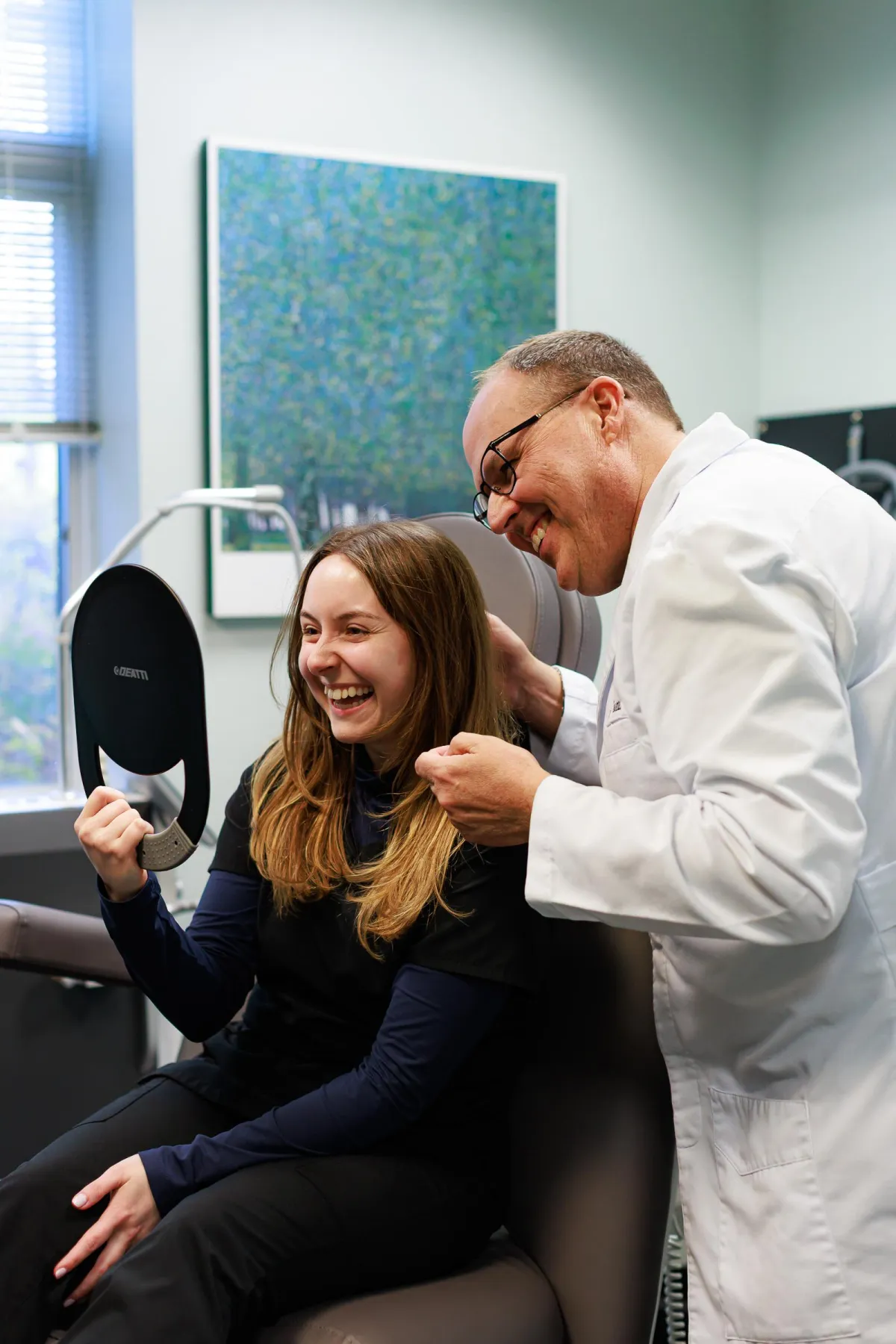
When you come in to talk about facial fillers after weight loss, we're not going to walk you to a mirror and start cataloging everything you might want to change. That's not how we work.
We start with a conversation. What are you noticing? What bothers you most? What are you hoping to feel like after treatment? From there, Dr. Thomas will assess your facial anatomy — looking at how volume loss has affected your proportions, where the structural support has shifted, and what a realistic, natural-looking result looks like for you specifically.
You'll leave that appointment with a clear picture of what's possible, what it would take to get there, and exactly what to expect — no pressure, no upselling, no vague suggestions to "just try a little of this and see." As one of our patients put it, Dr. Thomas takes a "comprehensive and thoughtful approach" — and that starts from the very first conversation.
You Earned This Result. Your Face Should Reflect It.
Losing weight is hard. Staying consistent with semaglutide, adjusting your lifestyle, working through the plateaus — it takes real commitment. The last thing you should have to deal with is looking in the mirror and seeing a face that looks more tired or aged than it did before you started.
Facial fillers, placed well and planned thoughtfully, are one of the most direct ways to reclaim the part of your appearance that weight loss sometimes takes with it. You don't have to choose between the body you worked for and the face you recognize.
If you're in Sterling, Northern Virginia, or the broader DC metro area and want to talk through what your options look like, we'd love to hear from you. Dr. Thomas and the team at Physician Artistry are here when you're ready.