

For decades, we've been told that sun exposure is the single biggest culprit behind aging skin. Wear your SPF, avoid the tanning bed, and you'll keep your skin looking youthful. It's good advice — but it's incomplete. If you're a woman in your 40s or 50s who has been faithful about sun protection and is still watching your skin lose its bounce, thin out, and dry out seemingly overnight, sun damage isn't the whole story. Estrogen decline is.
**Why Estrogen Matters So Much to Your Skin**
Estrogen isn't just a reproductive hormone — it's one of the hardest-working molecules in your body when it comes to skin health. It stimulates collagen and elastin production, supports the skin's ability to hold onto moisture, and helps maintain the thickness and elasticity that keep your face looking full and smooth. Research shows women can lose up to 30% of their skin's collagen in the first five years after menopause, with continued losses of about 2% per year after that. Compare that to the slow, cumulative damage from years of sun exposure, and you start to understand why so many women notice a dramatic shift in their skin during perimenopause — one that feels far faster than anything sun damage alone could explain.
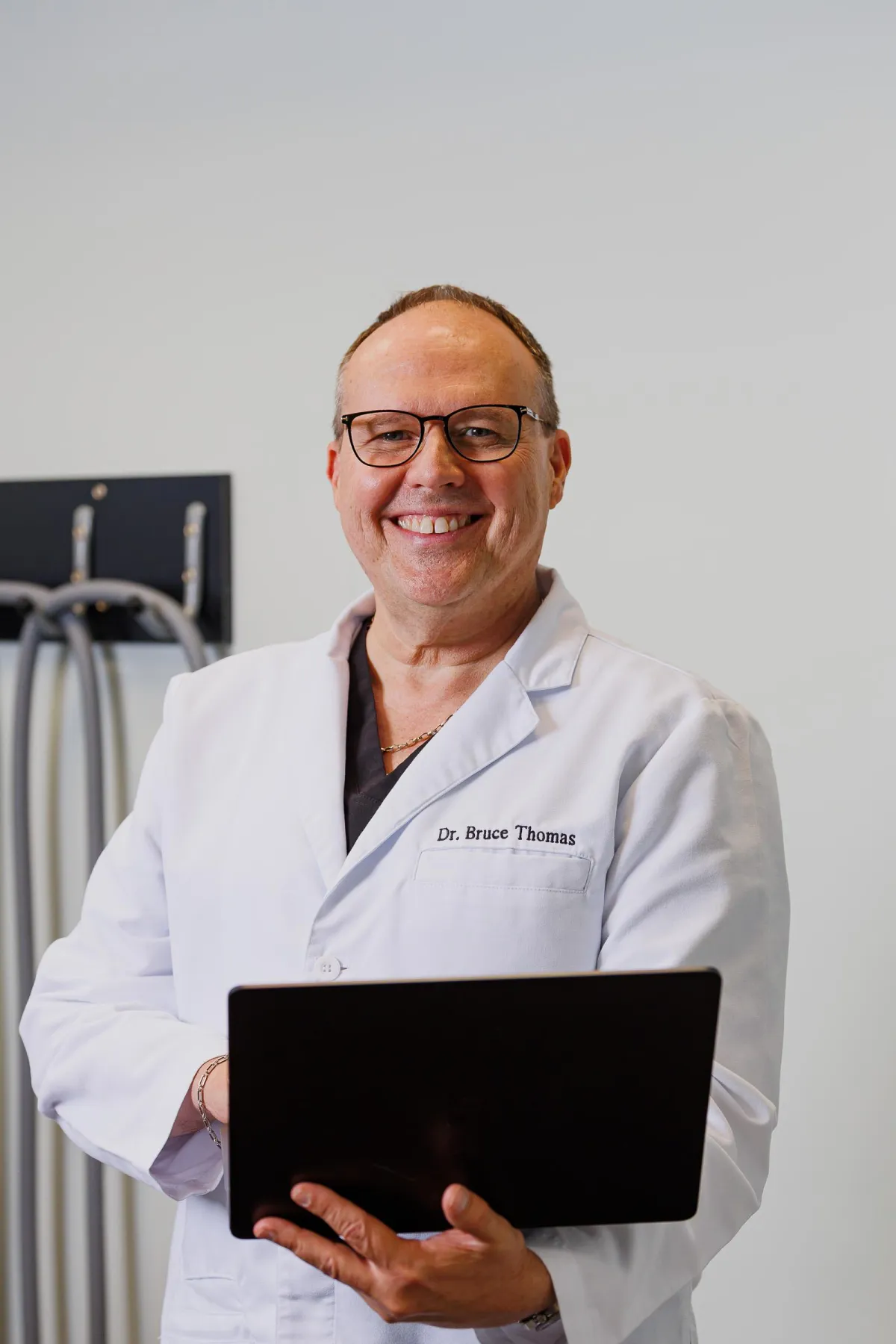
This is why answering "does estrogen help skin look younger" matters so much for women navigating this stage of life. The answer, backed by both clinical research and what Dr. Thomas sees every day in practice, is a clear yes. Estrogen doesn't just influence how youthful your skin looks — it directly governs the biological processes that keep skin resilient, hydrated, and structurally sound.
**What This Decline Actually Feels Like**
Patients often describe it the same way: skin that used to bounce back now feels thinner and more fragile. Fine lines that were barely noticeable suddenly deepen. Dryness that no moisturizer seems to fix. A general sense that their face looks "tired" even when they're not. If any of this sounds familiar, you're not imagining it, and you're not alone — this is one of the most common and least talked-about experiences of perimenopause skin changes that nobody warns women about ahead of time.
The frustrating part is that many women respond by doubling down on the skincare routines that worked in their 30s — heavier retinols, richer creams, more frequent facials — without addressing the hormonal root cause. That's often why retinol alone stops being enough after menopause. Topical treatments can support skin health, but they can't replace what estrogen was doing at a cellular level.
**Hormones and Skin Aging: The Bigger Picture**
This is really a conversation about hormones and skin aging as a whole system, not just estrogen in isolation. Progesterone, testosterone, and cortisol all play supporting roles, but estrogen's impact on collagen synthesis and skin barrier function is uniquely significant — which is why so many women see rapid, visible changes clustered around the perimenopausal and menopausal years specifically, rather than a slow, steady decline that mirrors sun exposure over time.
Understanding this distinction matters because it changes the conversation from "what cream should I try next" to "what is actually happening in my body, and what can I do about it." That's the kind of comprehensive, thoughtful approach Dr. Thomas brings to every patient — looking at hormonal health and skin health as connected, not separate, issues, much like the broader hormonal skin changes many women experience in their 40s and 50s.
**What Actually Helps**
The good news is that once you understand the root cause, there are real options — not quick fixes, but genuine, physician-guided solutions that address both the hormonal and structural sides of the equation.
For many women, this starts with a conversation about bioidentical hormone replacement therapy or estrogen therapy, which can help restore some of what's been lost at a systemic level — supporting not just skin, but energy, sleep, and overall well-being. This is never a one-size-fits-all decision, which is why Dr. Thomas personally reviews thorough testing and evaluation with every patient before recommending a path forward.
On the skin itself, treatments that stimulate the body's own collagen production can make a meaningful difference. Many patients find that rebuilding collagen after 40 requires a more targeted approach than skincare alone — things like Secret RF Microneedling, which encourages new collagen and elastin formation directly in the deeper layers of skin, or collagen-boosting treatments designed specifically for women in their 50s. Others benefit from biostimulators that work over time to restore volume and structure that estrogen used to help maintain.
**You're Not Behind — You're Informed**
If you've been doing everything "right" and still feel like your skin changed overnight, please hear this: it's not a failure of your skincare routine, and it's not something more sunscreen would have prevented. It's biology — and biology responds well to the right, personalized plan.
Dr. Thomas has spent more than 30 years helping women understand exactly what's happening in their bodies and building treatment plans that address it thoughtfully, not reactively. If you're ready to have that conversation, we'd love to sit down with you — not as a patient number, but as someone we genuinely want to help feel like herself again.
Start your transformation today!
Schedule your complimentary consultation with our friendly and knowledgeable team.