
There's a question we hear often from patients in their 60s, and it usually comes wrapped in a little hesitation: "Am I too old for fillers?"
It's a fair question — and an important one. The honest answer is that age alone isn't the determining factor. What matters far more is the kind of aging you're experiencing, your skin's current condition, your overall health, and most importantly, what you're hoping to achieve. With the right assessment from an experienced physician, dermal fillers can still deliver genuinely beautiful, natural-looking results well into your 60s and beyond.
But the approach needs to be thoughtful. Filler treatment in your 60s looks different — and should look different — than it does in your 30s or 40s. Here's what you need to know.
What Happens to Your Face After 60
To understand whether fillers are right for you, it helps to understand what's actually changed beneath the surface.
Starting in your 40s and accelerating through your 60s, the face undergoes a series of structural changes that go well beyond surface-level wrinkles. Fat compartments that once gave the face its youthful roundness and lift begin to thin and descend. Bone density in the jaw, chin, and eye sockets decreases, reducing the scaffolding that supports everything above it. Collagen and elastin production slows significantly, leaving skin thinner, less resilient, and less able to "bounce back." And the ligaments that anchor facial tissue to underlying bone loosen over time, contributing to the descent we recognize as jowling, hollow temples, and deepening nasolabial folds.
What you see in the mirror — sunken cheeks, a deflated midface, deepened lines around the mouth, a jawline that's lost its definition — is largely the result of this multi-layered structural shift. Understanding that is important, because it means the most effective treatment strategy isn't always about adding volume everywhere. It's about identifying where strategic, conservative restoration will create the most meaningful lift and balance.
If you'd like to go deeper on what's driving these changes at a cellular level, our blog on collagen loss after 40 and how to rebuild it is a useful place to start.
So — Are You Still a Good Candidate?
Generally speaking, yes — most healthy adults in their 60s are still excellent candidates for dermal fillers. But there are a few specific factors a skilled injector will assess before recommending a treatment plan.
Skin Quality Matters More Than Age
Filler works by restoring volume beneath the skin. If the skin itself has significant laxity — meaning it's lost a substantial amount of its structural integrity and is hanging rather than simply deflating — adding volume alone won't produce the results you're hoping for. In fact, adding too much filler to very lax skin can sometimes make things look heavier rather than lifted.
That doesn't mean fillers are off the table. It means the treatment plan may need to include complementary options like Secret RF Microneedling, which stimulates collagen and tightens the skin from within, alongside targeted filler placement. A layered approach often produces far better outcomes than filler alone in this age group.
The Goal Should Be Restoration, Not Recreation
One of the most common concerns patients in their 60s bring to us is a fear of looking overdone. They've seen the pillow faces and the stretched, unnatural results — and they want no part of it. That's a completely reasonable instinct, and it's actually the right instinct to have.
The goal of filler in your 60s isn't to recreate the face you had at 35. It's to restore a more balanced, rested, and refreshed version of the face you have now. That means working with your anatomy — not against it — and resisting the urge to over-correct. Less is almost always more in this age group, and the most beautiful results are the ones where no one can quite put their finger on what changed, only that you look well.
Volume Needs Are Often Moderate — Not Dramatic
This connects to something patients often wonder about: how much filler is actually needed. Some assume that more years of aging automatically means more product. But that's not always true. Strategic placement in the right areas — often the cheeks, temples, chin, or along the jawline — can create a lifting and balancing effect that's disproportionate to the actual amount of filler used. Our blog on how to treat hollow cheeks and midface volume loss explains this beautifully.
What About Lip Filler After 60?
Lips are one of the areas where patients over 60 often have the most questions — and the most apprehension. And honestly, their hesitation is understandable. Overdone lip filler is one of the most visible signs of poorly executed aesthetic treatment, and nobody wants to look like a caricature of themselves.
Here's the good news: subtle, well-placed lip filler can be genuinely transformative for older patients — and it doesn't require a dramatic change to make a meaningful difference.
After 60, the lips tend to thin, lose their defined border, and develop vertical lines above the lip line — those small lines sometimes called "smoker's lines," even in people who've never smoked. The corners of the mouth may turn slightly downward, and the cupid's bow can flatten. A small amount of filler — often a 0.5 syringe rather than a full syringe — can restore definition, soften vertical lines, and bring a gentle fullness back to lips that have thinned with age, all without creating an exaggerated or artificial look.
For patients curious about what that can actually look like, lip filler before and after photos and a consultation with Dr. Thomas are the most reliable way to understand what's possible for your specific anatomy. We also have a full guide on treating thinning lips and loss of lip definition as you age that's worth a read.
The Areas Where Filler Tends to Work Best After 60
While every face is different and a personalized plan is essential, here are the areas where patients in their 60s most commonly see meaningful improvement from well-placed dermal fillers:
Cheeks and Midface
Volume loss in the cheeks is one of the most significant drivers of the aged appearance — and one of the most responsive to treatment. Restoring a small amount of volume here creates a subtle lift that improves everything below it, including nasolabial folds and the appearance of the lower face.
Temples
Temple hollowing is one of the most overlooked signs of aging and one of the most aging features on an older face. Addressing it creates a more youthful frame around the eyes and forehead. Many patients don't even realize how much this area has changed until they see the difference.
Jawline and Chin
Bone resorption in the chin and jaw, combined with soft tissue laxity, contributes significantly to jowling and a softened lower face. Strategic filler in this area can restore definition, improve proportion, and reduce the appearance of jowls without surgery. For more on this, see our post on treating sagging jowls and lower face volume loss without surgery.
Nasolabial Folds and Marionette Lines
These lines deepen with age as the midface descends. While they can be softened directly with filler, the best results usually come from a combination approach — addressing both the source (midface volume loss) and the lines themselves.
Under-Eyes
Tear trough hollowing and under-eye shadowing can make patients look perpetually tired, regardless of how much rest they've had. Filler here requires precision and experience, but in the right hands, the results can be remarkable. Learn more in our guide to treating dark circles and under-eye hollows with fillers.
What Fillers Can't Do — And What Might Help Instead
Being a good candidate for fillers also means understanding their limitations, and a physician you trust will be honest with you about this.
Fillers cannot lift significantly sagging or loose skin. They cannot tighten a neck that has developed substantial laxity. They won't erase deep, etched-in wrinkles caused by decades of movement — that's often better addressed with Botox or a combination approach. And in cases of very advanced volume loss or significant structural change, the conversation might eventually shift toward surgical options that fall outside what a medical spa can offer.
What fillers can do — when used thoughtfully by an experienced physician — is create a more rested, balanced, and youthful version of your current face. Not a different face. Yours, refreshed.
For patients where skin quality is the primary concern, treatments like Secret RF Microneedling or SkinVive by Juvederm may be worth exploring either alongside or before filler treatment, depending on your goals. If you're also navigating the skin changes that come with hormonal shifts in your 60s, our post on treating hormonal skin changes in your 40s and 50s covers a lot of ground that's equally relevant a decade later.
Why the Injector Matters More Than Ever After 60
If there's one thing to take away from this, it's this: the quality of your outcome has everything to do with the experience and judgment of the person doing the treatment.
Injecting dermal fillers in a 60-year-old face is not the same as injecting in a 35-year-old face. The tissue behaves differently, the structural changes are more complex, and the margin for error is narrower. The wrong amount, the wrong placement, or the wrong product choice can create results that look heavy, unbalanced, or simply unnatural.
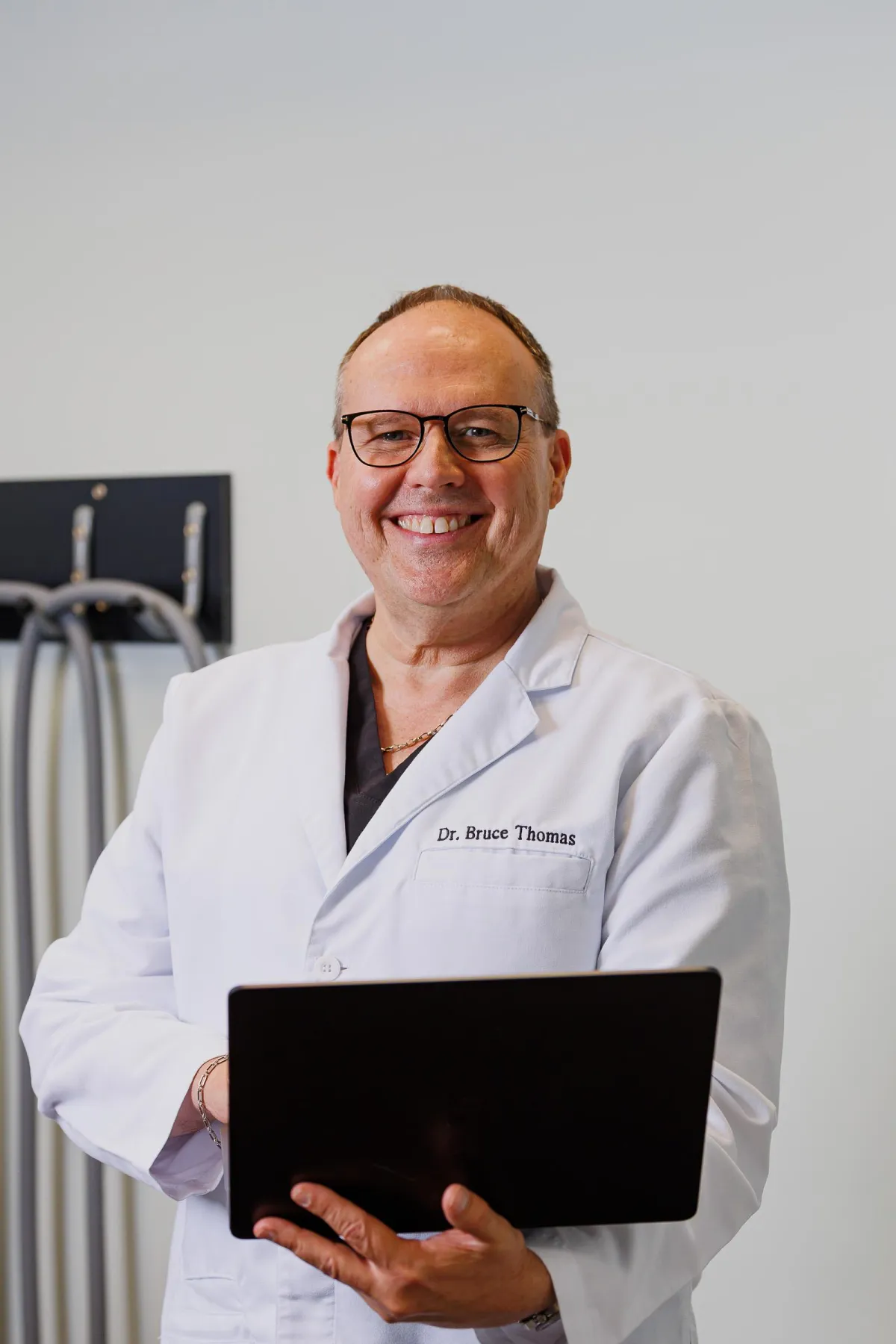
At Physician Artistry, every treatment plan is personally overseen by Dr. Thomas, who brings over 30 years of clinical experience in aesthetic medicine. Patients consistently describe results that "enhanced their features without ever looking overdone" — and that kind of outcome doesn't happen by accident. It happens because of a comprehensive, thoughtful approach that treats every face as the individual it is.
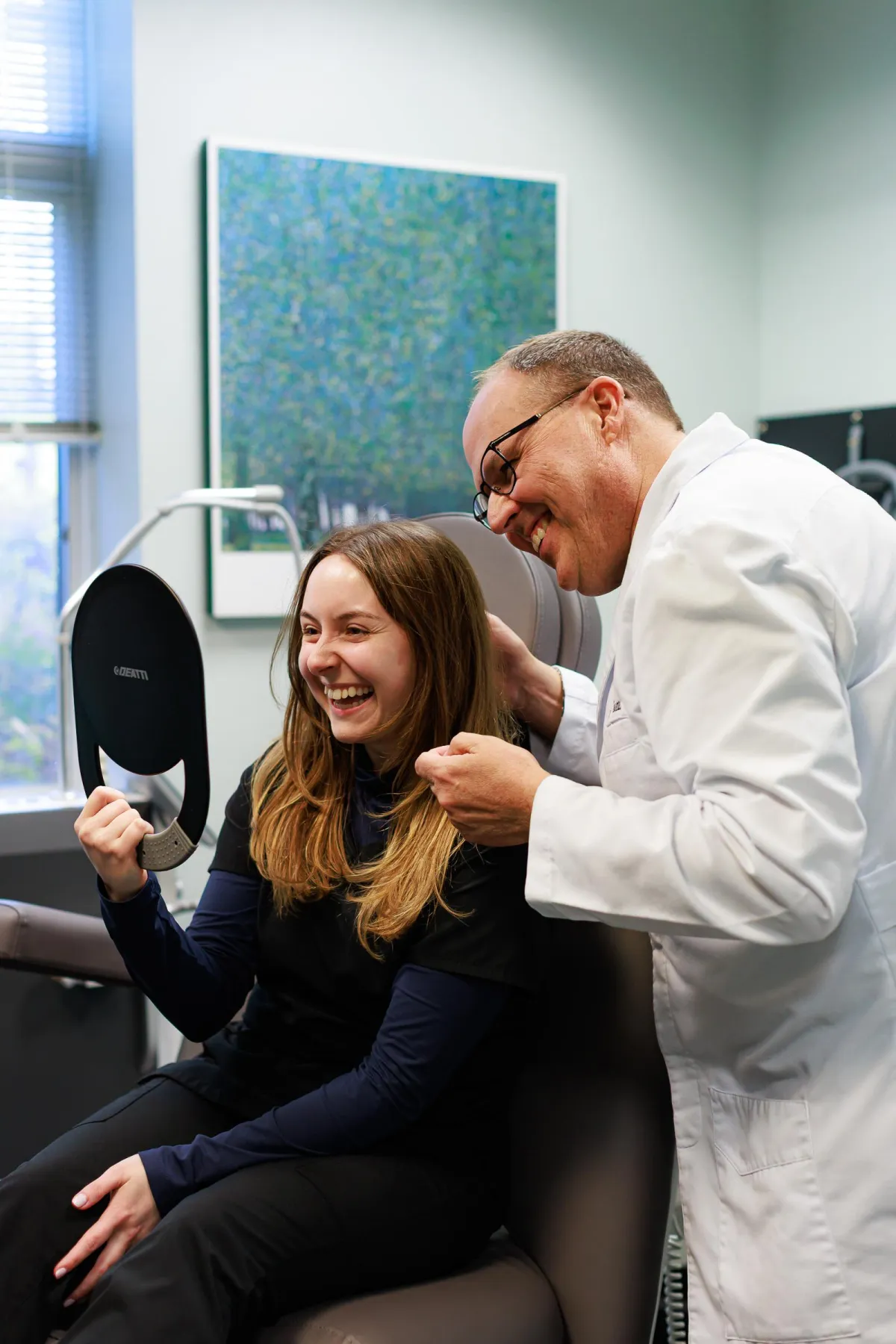
If you're wondering whether fillers are right for you at this stage of life, the best next step isn't reading more articles. It's a real conversation with a physician who can actually look at your face, understand your goals, and be honest about what's possible. That's exactly what we're here for.
You can learn more about our full range of dermal filler treatments or explore how a liquid facelift approach might address multiple areas at once. When you're ready to talk, we'd love to hear from you.
Start your transformation today!
Schedule your complimentary consultation with our friendly and knowledgeable team.