

You've cleaned up your diet. You're walking most days, maybe even lifting weights again. And yet that stubborn roll around your midsection hasn't moved an inch — if anything, it's gotten more noticeable. If this sounds familiar, please know: you're not imagining it, and you're not doing anything wrong. What you're likely experiencing is the very real, very physiological effect of cortisol on a body that's changing in ways diet and exercise alone can't fix.
We hear this same story from so many patients in our Sterling office, and it deserves a real explanation — not another lecture about calories in, calories out.
**Why cortisol targets your midsection specifically**
Cortisol is your body's primary stress hormone, and it's been quietly working against you for years — you just may not have felt it until now. Here's the mechanism: cortisol signals your body to store fat viscerally, meaning deep around your abdominal organs rather than just under the skin. This isn't the "spare tire" you can pinch — it's metabolically active fat that sits behind your abdominal wall, which is exactly why it feels so unresponsive to sit-ups or spot-reduction efforts.
After 50, several things converge to make this worse. Declining estrogen and testosterone reduce your body's ability to regulate cortisol efficiently. Chronic, low-grade stress — the kind that comes from caregiving, work, sleep disruption, or simply the accumulated wear of decades — keeps cortisol elevated more consistently than it would have in your 30s. And because your metabolism has already slowed with age, your body has less capacity to burn off the fat cortisol is telling it to store.
The result is a specific, frustrating pattern: weight that concentrates almost exclusively around the abdomen, resists typical diet and exercise changes, and seems to appear "overnight" even when your habits haven't shifted.
**This is a hormone problem, not a willpower problem**
We want to be direct with you here: no amount of discipline overrides a hormonal signal telling your body to store fat in a specific place. If you've felt discouraged or even ashamed that your efforts "aren't working," that frustration makes complete sense — but it's misdirected. The problem isn't your commitment. It's your hormones.
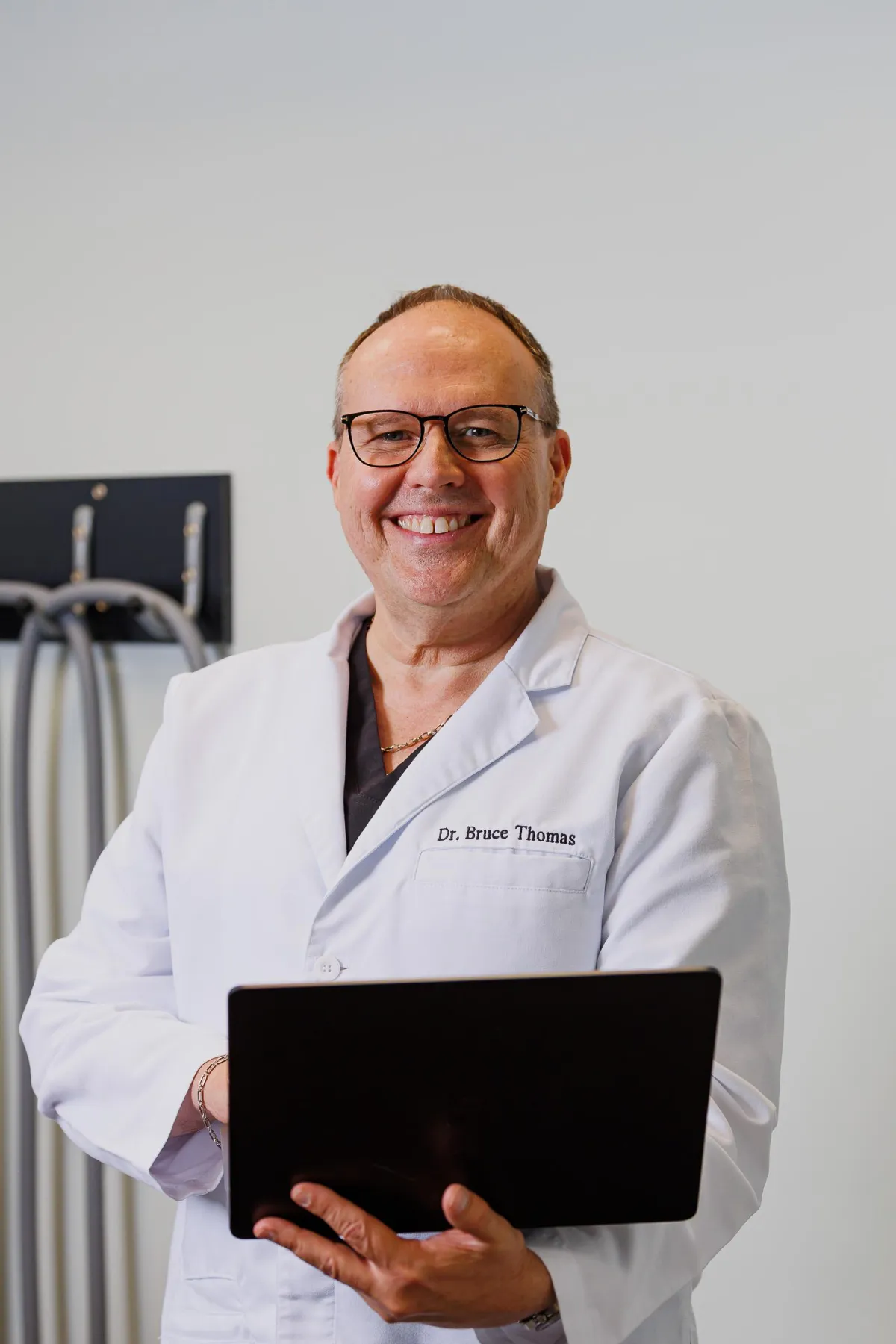
This is precisely why we take a comprehensive and thoughtful approach with every patient who comes to us with this concern. Cortisol dysregulation rarely travels alone — it's often intertwined with declining estrogen, progesterone, or testosterone, and sometimes with thyroid function too. That's why Dr. Thomas insists on thorough testing and evaluation before recommending any path forward. Guessing wastes your time and your trust; testing respects both.
**What actually helps**
Addressing cortisol-driven belly fat after 50 typically requires more than one intervention working together. For many patients, this starts with bioidentical hormone replacement therapy to restore the estrogen, progesterone, or testosterone balance that helps your body regulate cortisol more effectively in the first place. When hormones are properly balanced, your body is far better equipped to respond to healthy diet and movement.
For patients whose weight concerns extend beyond hormone imbalance alone, we often pair hormone therapy with semaglutide or tirzepatide to support meaningful, sustainable fat loss — you can read more about how combining semaglutide with the right supporting treatments tends to produce better outcomes than medication alone. And if you're already on a GLP-1 medication but have hit a wall, our patients have found real answers in understanding why plateaus happen and what actually restarts progress.
We also frequently see this concern show up alongside the broader hormonal shifts of perimenopause — if you've noticed your energy disappearing right alongside your changing body composition, our piece on how perimenopause drains energy before symptoms even start may connect some dots for you.
**Why testing comes first**
Every patient who comes to us with this concern gets a real conversation and real lab work before any treatment plan is built. Your cortisol pattern, your sex hormones, your thyroid — these all need to be understood individually, because the right plan for one patient's belly fat may be completely wrong for another's. This is the difference between a spa that sells you a product and a physician-led practice that treats you as a whole person.
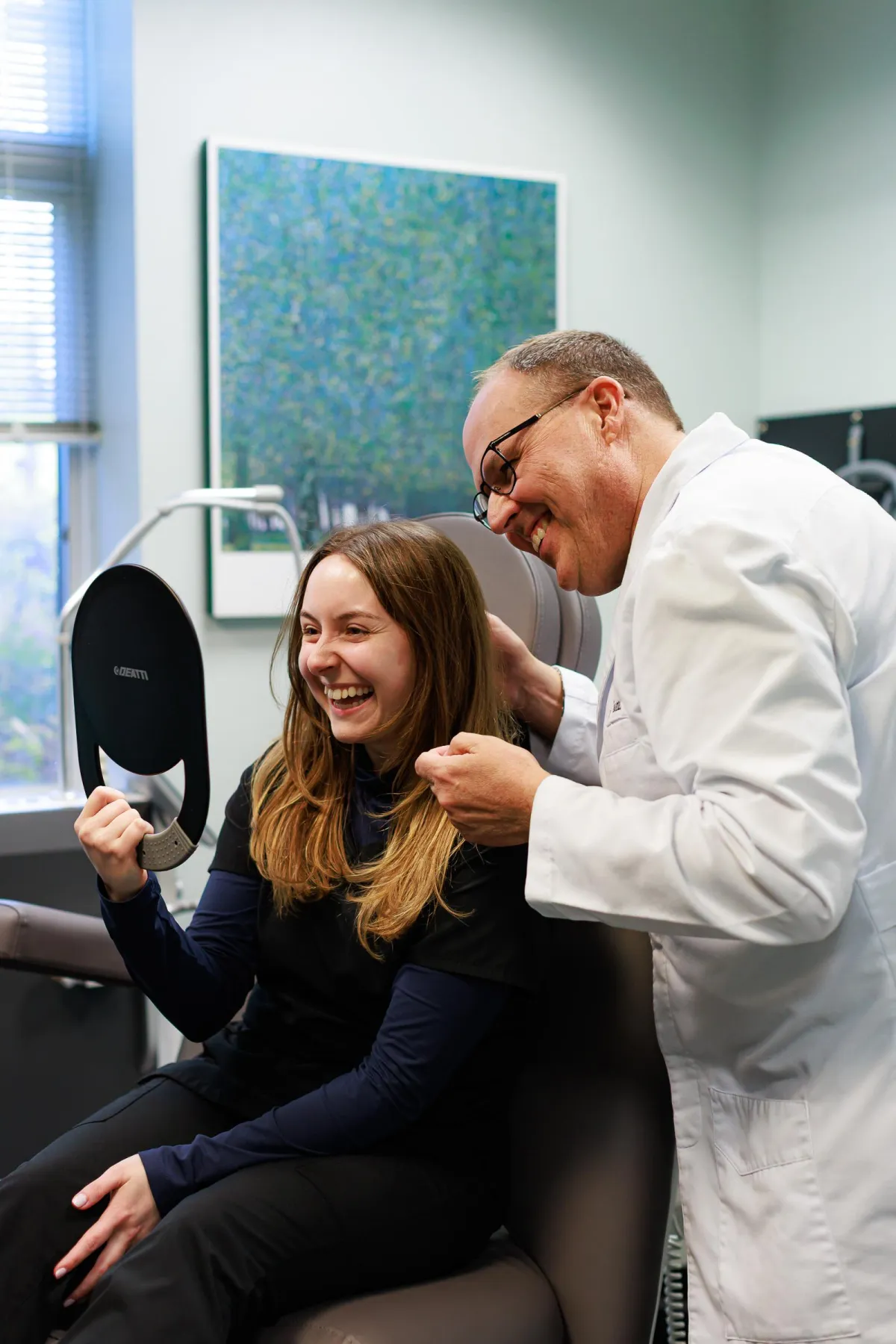
One of our patients put it simply after finally understanding what was happening to her body: she said she felt like herself again — energized, healthy, and confident. That's the outcome we're working toward with every person who walks through our doors, not a quick fix, but a real, sustainable answer.
If your midsection has stopped responding to everything you're trying, it might not be your effort that needs to change. It might be time to understand what your hormones are actually doing. We'd love to sit down with you, run the right tests, and build a plan that finally makes sense for your body.
Start your transformation today!
Schedule your complimentary consultation with our friendly and knowledgeable team.