

If you've spent any time searching for collagen-boosting treatments, you've probably noticed that the internet has a lot to say on the subject — and very little of it is specific to where you actually are in life. Most of what's out there is written for people in their 30s who want to get ahead of aging, or it's vague enough to apply to literally anyone. Neither of those is particularly useful when you're in your 50s and noticing real changes: skin that feels thinner, features that look a little softer or more hollowed than they used to, and a texture that doesn't respond the way it once did to serums and facials alone.
Here's the honest version: collagen loss after 50 is real, it's significant, and it can't be reversed with a cream. But that's actually good news in a way, because the treatments that do work — the ones built around stimulating your skin's own biology rather than just filling space temporarily — are more accessible, more effective, and more natural-looking than most people realize. You don't need surgery, and you don't need to look like you've had work done. You need a plan that's built around what your skin actually needs right now.
Why Your 50s Are a Different Conversation Entirely
Collagen production starts declining in your mid-20s, but the drop accelerates sharply around menopause. By the time most women reach their mid-50s, they've lost a significant percentage of their skin's structural support — and it shows not just in lines and wrinkles, but in overall facial volume, skin quality, and the way light reflects off the face. Men experience a slower but steady version of the same process.
What this means practically: treatments that are primarily filling or relaxing — things like standard hyaluronic acid fillers or neurotoxins — are still useful, but they're addressing symptoms rather than the underlying structural change. The patients who see the most dramatic, natural-looking skin rejuvenation in their 50s are typically the ones who are combining surface-level treatments with deeper, biology-based approaches that actually rebuild what's been lost.
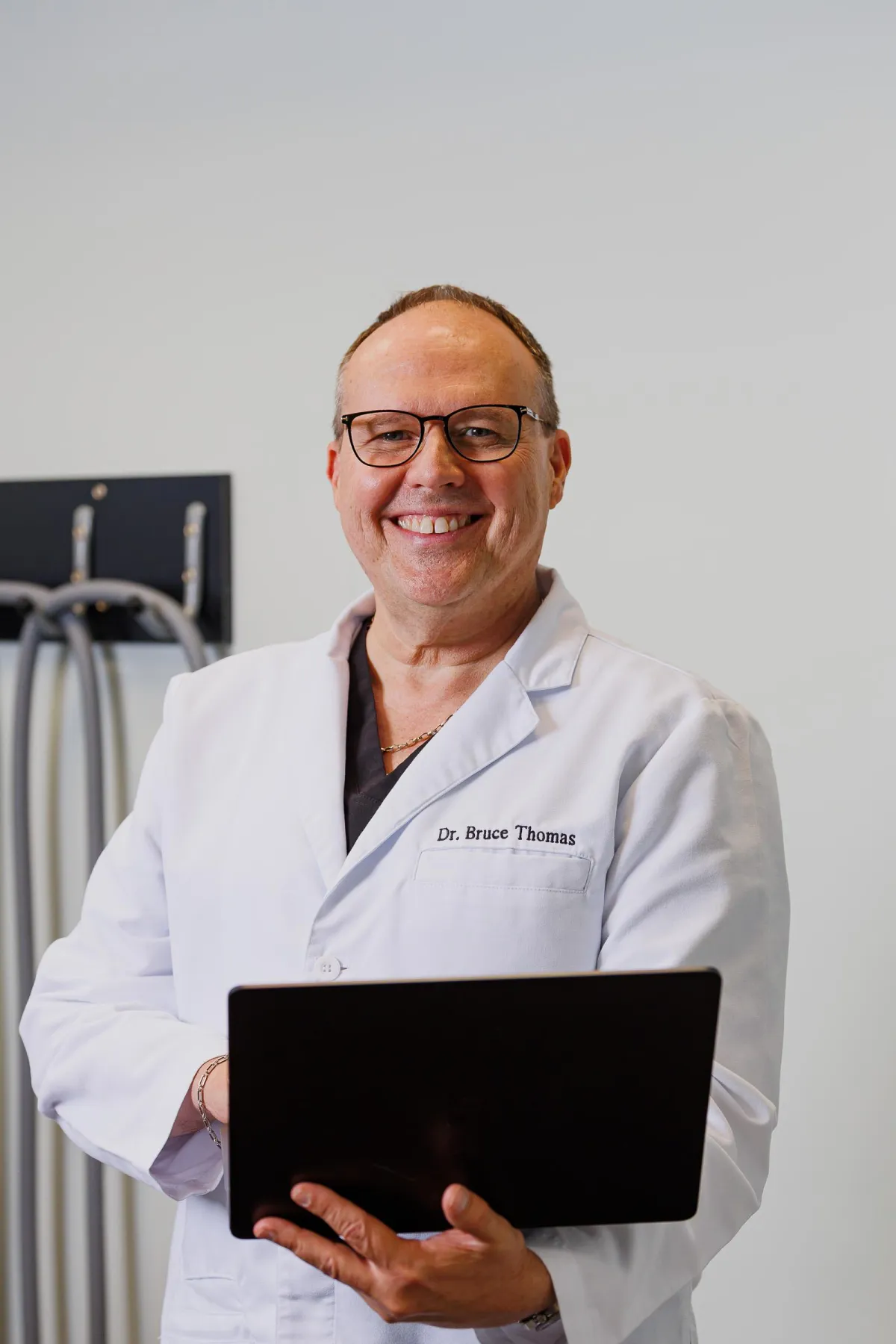
That combination strategy is exactly what we focus on at Physician Artistry. Dr. Thomas has spent over 30 years helping patients understand not just what a treatment does, but why it makes sense for them at this specific stage — and that kind of thinking changes everything about your results.
The Treatments That Actually Rebuild Collagen
Biostimulators: Sculptra and Radiesse
If you haven't heard of collagen stimulators yet, they're worth understanding in depth. Unlike traditional fillers, which add volume by placing a substance under the skin, biostimulators like Sculptra (poly-L-lactic acid) and Radiesse (calcium hydroxylapatite) work by triggering your body's natural wound-healing response — prompting fibroblasts to produce new collagen over time.
The results aren't instant, and that's actually part of what makes them look so good. Rather than a sudden change that needs to be explained away, you get a gradual, progressive improvement that most people around you will register as "you look great" rather than "did you have something done?" The Sculptra results timeline typically unfolds over three to six months, with many patients seeing continued improvement beyond that.
For patients in their 50s dealing with volume loss in the cheeks, temples, or jawline — or overall skin laxity that makes the face look tired rather than just lined — biostimulators are often the foundational piece of a longer-term plan. If you're trying to understand how these compare, our breakdown of Sculptra vs. Radiesse as collagen stimulators is a good place to start.
Secret RF Microneedling
Radiofrequency microneedling is one of the most clinically meaningful advances in non-surgical skin rejuvenation of the last decade. At Physician Artistry, we use Secret RF Microneedling, which delivers precisely controlled radiofrequency energy through microneedles into the deeper layers of the skin. This triggers a controlled healing response that stimulates both collagen and elastin production — the two proteins most responsible for skin firmness and elasticity.
For patients in their 50s, this is significant because skin laxity is rarely about collagen alone. Elastin loss — which causes that crepey, tissue-paper quality you might notice on the neck, under the eyes, or on the arms — requires its own approach, and Secret RF addresses both simultaneously. Results include noticeably tighter, smoother skin and improved texture over a series of treatments. Many patients describe their skin rejuvenation before and after as one of the more striking changes they've experienced without going under the knife.
If you've been weighing your options between different resurfacing approaches, our comparison of microneedling vs. chemical peels and our deep dive on how RF microneedling differs from standard microneedling can help you understand where each fits in a comprehensive plan.
PRP Therapy
Platelet-rich plasma therapy uses your own blood — specifically the growth factors concentrated in your platelets — to trigger tissue repair and collagen production. It's a treatment that tends to appeal to patients who are cautious about introducing synthetic substances, and for good reason: there's nothing foreign about it. It's your own biology, redirected to where your skin needs the most support.
PRP works particularly well when combined with microneedling, where the channels created by the needles allow the growth factors to penetrate more deeply into the skin. The results of combining PRP and microneedling consistently outperform either treatment used alone. It can also be used independently for overall skin quality, tone, and luminosity. If you want the full picture on what PRP therapy involves, our guide to PRP and skin rejuvenation covers it thoroughly.
Supporting Treatments Worth Layering In
Collagen stimulators and energy-based devices do the heavy lifting, but they work better — and last longer — when you're addressing the full picture of what's happening in your skin in your 50s.
Hormonal Skin Changes
One thing that often gets overlooked in conversations about collagen loss is the hormonal component. Estrogen plays a direct role in skin thickness, moisture retention, and collagen synthesis. As estrogen declines in perimenopause and menopause, the skin's ability to produce and maintain collagen drops alongside it. Understanding how hormonal changes affect your skin in your 40s and 50s is worth doing — especially if you're finding that your skin isn't responding to treatments the way it should.
Dr. Thomas also brings deep expertise in hormone therapy to the practice, which means we can look at what's happening systemically — not just at the surface — as part of your overall plan.
SkinVive and Skin Quality Treatments
SkinVive by Juvederm is an injectable skin booster — not a filler in the traditional sense, but an intradermal injection of hyaluronic acid that hydrates the skin from within and improves overall glow and texture. It's a subtle treatment that tends to make patients look refreshed and healthy rather than "done," which makes it a natural complement to collagen-building treatments.
Fraxel Laser
For patients dealing with sun damage, texture irregularities, or more significant collagen loss, Fraxel laser treatment can resurface the skin more aggressively than microneedling while still maintaining the non-surgical profile most patients prefer. It's particularly effective for the décolletage and chest — areas where collagen loss and sun exposure combine to create significant textural changes.
What "Skin Rejuvenation Before and After" Actually Looks Like in Your 50s
We want to be straightforward about expectations, because we think honesty is more useful to you than hype. The most impressive skin rejuvenation before and after results we see in patients in their 50s come from a consistent, layered approach over time — not a single treatment session. A patient who does a series of Secret RF treatments, adds Sculptra across a few sessions, and supports that with PRP and appropriate skincare is going to see results that are genuinely striking. A patient who does one treatment and waits to see if it "works" is going to have a different experience.
That said, even a single well-chosen treatment can make a meaningful difference. The key is starting with a real conversation about what your skin needs — not just what's popular or on special this month.
Patients who have gone through weight loss journeys, including those on GLP-1 medications, often notice that skin laxity becomes more pronounced as volume decreases. If that describes you, our overview of treatments that address semaglutide-related skin laxity is worth reading, and our post on sagging skin treatments after 50 covers the full range of options for that specific concern.
Finding Collagen Stimulators Near You — and Why the Provider Matters
If you've been searching for collagen stimulators near me, you've probably noticed that options are everywhere — from dermatology offices to med spas to plastic surgery practices. The range of quality is equally wide. What matters most isn't the name of the treatment or the device used — it's who is making the treatment decisions and overseeing your plan.
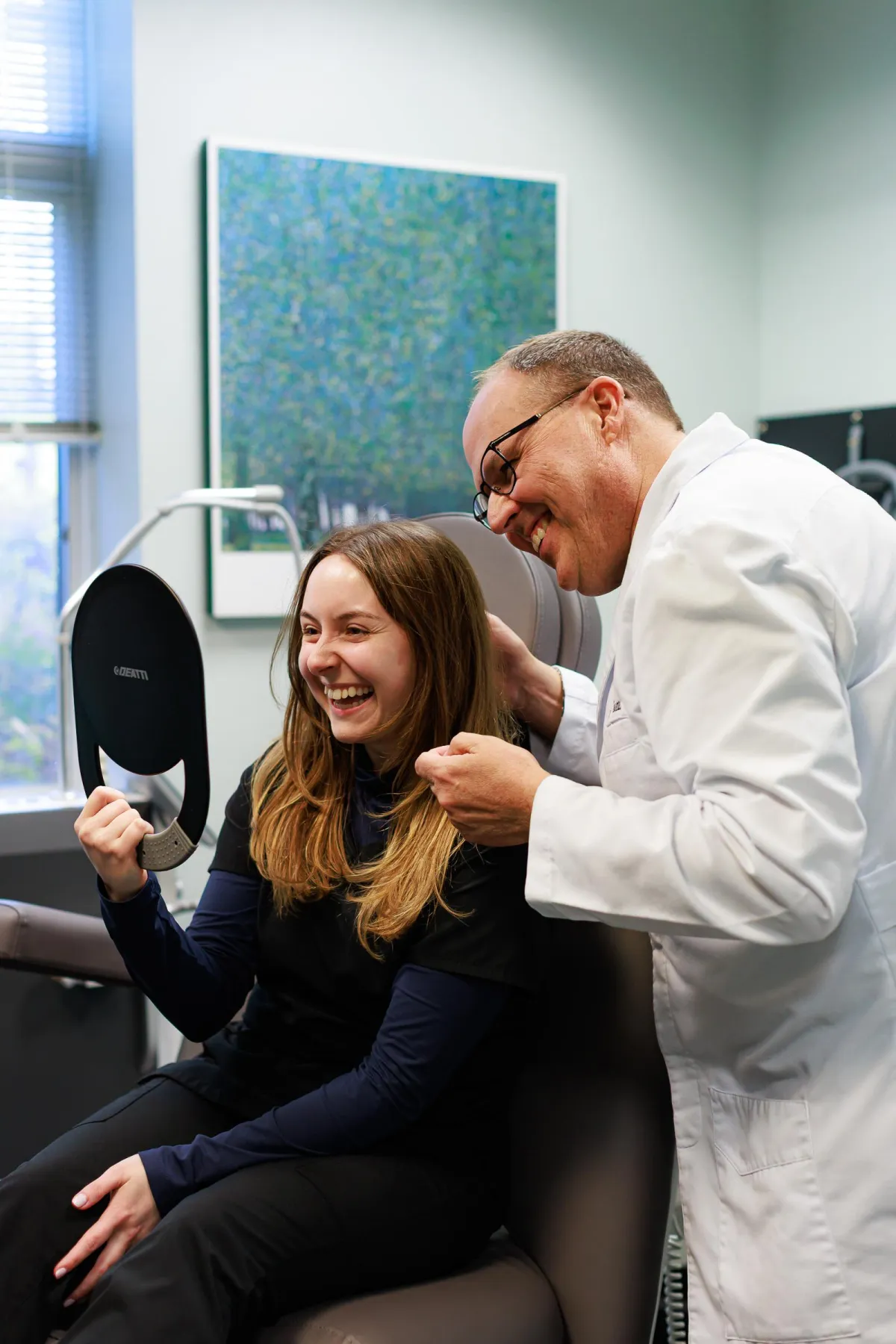
At Physician Artistry in Sterling, VA, every treatment plan is personally overseen by Dr. Thomas. That's not a marketing line — it's a structural difference from most med spas, where physician involvement is often limited or absent entirely. When you're talking about treatments that work at the level of your skin's biology, having a physician who understands both the aesthetic and the physiological picture isn't optional. It's what separates good results from great ones.
Our patients consistently describe outcomes that feel like themselves — not altered, not overdone, but genuinely healthier, firmer, and more alive. "Noticeably tightened and smoothed my skin" and "I feel like myself again" are the kinds of things we hear regularly, and they reflect exactly what collagen-building treatments done well are supposed to accomplish.
If you're in the Northern Virginia or DC metro area and ready to have a real conversation about what your skin needs right now, we'd love to talk. There's no pressure and no one-size-fits-all protocol here — just an honest look at where you are and what's actually going to help.
You can reach us directly to schedule a consultation at Physician Artistry in Sterling, VA.
Start your transformation today!
Schedule your complimentary consultation with our friendly and knowledgeable team.