
There's a specific kind of frustration that comes with looking in the mirror and thinking you look tired, heavy, or older than you feel — and not being able to pinpoint exactly why. For a lot of people in their 30s, 40s, and 50s, the answer lives right above the eyes. The brows have dropped. The skin above the upper lid has started to fold forward. The eyes that used to look open and awake now read as heavy, even closed-off.
It's one of the most common concerns we hear at Physician Artistry — and one of the most satisfying to address. Because in many cases, the fix isn't surgery. It's knowing exactly where to place Botox, and just as importantly, where not to.
Why Your Brows Drop in the First Place
The position of your brows isn't fixed. It's determined by a constant tug-of-war between muscles that pull the brow down and muscles that hold it up. As we age, the muscles responsible for pulling the brows downward — particularly the corrugator supercilii and orbicularis oculi — tend to become more dominant. The result is a gradual descent of the brow that, over time, creates that heavy, hooded appearance above the lid.
Volume loss plays a role, too. As fat pads under the skin shrink and bone structure shifts, the entire upper face can lose the scaffolding that kept everything lifted and defined. But even before significant volume loss sets in, muscle imbalance alone can be enough to pull the brows into a position that reads as tired or aged.
The good news: this is exactly the kind of problem Botox was designed to solve — when it's placed by someone who understands the underlying anatomy.
What a Botox Brow Lift Actually Does
A Botox brow lift isn't a single injection. It's a precise, strategic approach that works by relaxing the muscles that depress the brow, allowing the frontalis muscle — the one responsible for lifting — to do its job without resistance. When the downward pull is reduced, the brow naturally rises and assumes a more youthful, open position.
Depending on where the injections are placed and how much product is used, this technique can:
- Lift the tail of the brow to restore an arched, defined shape
- Elevate the brow as a whole for a more refreshed, awake appearance
- Reduce the appearance of hooding over the upper eyelid
- Open the eye area so that more of the lid is visible
- Soften the heavy, compressed look that comes from a descended brow position
The results are subtle by design. Done well, no one should be able to tell you've had anything done. They'll just notice that you look more rested, more like yourself.
Botox for Hooded Eyes: What's Realistic
This is where it's worth being honest with you, because not every provider will be.
Botox can meaningfully improve the appearance of hooded eyes when the hooding is caused — or significantly worsened — by brow descent. If your brow has dropped over time and is pushing skin over the upper lid, strategic Botox placement can lift the brow, create more lid space, and make a visible difference that shows up clearly in before and after photos.
What Botox cannot do is correct hooding that's caused purely by excess skin on the upper eyelid itself — a condition called dermatochalasis, where there's simply more skin than the lid can accommodate regardless of brow position. In those cases, a blepharoplasty (surgical eyelid lift) may be the more appropriate path, and part of our job at Physician Artistry is to tell you that honestly rather than take your money for a treatment that won't give you the result you're hoping for.
During your consultation, Dr. Thomas will assess your brow position, the degree of hooding, and what's actually driving it — so you leave with a clear picture of what's possible and what to expect.
The Anatomy That Makes or Breaks This Treatment
A brow lift with Botox requires an unusually precise understanding of facial anatomy. Place too much product in the wrong location — particularly in the forehead — and you can actually make things worse. Over-treating the frontalis muscle can drop the brow further instead of lifting it, leading to exactly the heavy, tired appearance patients come in hoping to fix.
This is why the experience and clinical judgment of your injector matters so much here. It's not just about how many units you use. It's about mapping the unique architecture of each patient's face, understanding which muscles are dominant, how strong the frontalis is in relation to the depressors, and where the natural brow sits versus where it needs to go.
With over 30 years of clinical expertise, Dr. Thomas approaches every treatment plan as exactly that — a plan. Not a formula, not a standard dose applied the same way to every face. The same thoughtful individualization that patients describe as a "comprehensive and thorough approach" applies here as much as anywhere.
If you're curious how multi-area Botox treatment works more broadly, our guide on treating forehead lines, crow's feet, and frown lines all at once walks through the coordination involved in full upper-face Botox planning.
What to Expect: Timeline, Results, and Longevity
Botox doesn't work instantly. Most patients begin to notice lifting and softening within three to five days of treatment, with full results visible around the two-week mark. That's when the muscles have fully relaxed and the brow has settled into its new, lifted position.
Results typically last three to four months, though this varies based on your metabolism, how active the treated muscles are, and how consistently you've been treated over time. Patients who maintain regular appointments often find their results lasting longer as the muscles become conditioned to their relaxed state.
One thing worth knowing: a brow lift with Botox is a dynamic treatment. As the product gradually wears off, you'll notice the brow beginning to settle back toward its baseline. This isn't a failure of the treatment — it's just how neuromodulators work. Consistency is part of the strategy.
If you're wondering how to get the most out of your appointments over time, our post on maintaining Botox and filler results year-round is a good read.
Can Botox and Fillers Work Together for Better Results?
Sometimes, yes — and this is where treatment planning gets interesting.
In cases where volume loss is contributing to brow descent or upper-face heaviness, combining a Botox brow lift with strategic filler placement can produce results that neither treatment achieves alone. Replacing lost volume in the temples, brow bone, or upper cheek can restore the structural support that keeps the brow in a lifted, youthful position — while Botox addresses the muscular imbalance that's pulling it down.
This kind of combination thinking is something Dr. Thomas approaches with genuine attention to what each patient actually needs, rather than recommending more treatments because more treatments exist. As one patient put it, the results "enhanced my features without ever looking overdone" — and that's the standard we hold every treatment plan to.
For a broader look at how Botox and fillers complement each other, see our guide on combining Botox and fillers for a full-face refresh.
Who Is a Good Candidate for a Botox Brow Lift?
This treatment tends to work especially well for patients who:
- Have noticed their brows dropping or flattening over time
- Feel that their upper lids look heavier or more hooded than they used to
- Look tired or stern even when they're not
- Want a natural, refreshed result without the recovery time of surgery
- Are in their 30s through 60s and starting to see the early to mid-stage effects of facial aging in the upper face
It's worth noting that this isn't exclusively a concern for patients in a particular age range. Some patients in their late 20s and 30s have naturally low or flat brow positioning that Botox can meaningfully improve. And patients in their 50s and 60s with moderate brow descent often see results that genuinely surprise them. If you're in your 30s and thinking about what treatments are worth starting now, our post on the best med spa treatments to start in your 30s puts brow positioning in context alongside other preventative options.
What About Droopy Eyelids After Botox?
It's a fair concern to raise, and one we'd rather address directly than gloss over.
Eyelid ptosis — actual drooping of the upper eyelid — is a known, though uncommon, side effect of Botox when product migrates into the levator palpebrae muscle that controls the lid. It typically resolves on its own as the Botox wears off, but it can be frustrating in the meantime. The risk is meaningfully reduced when injections are placed precisely, when the right amount of product is used, and when you follow post-care instructions like avoiding rubbing the treated area for the first several hours.
Choosing an experienced, physician-led practice isn't just about getting better results — it's about minimizing the likelihood of complications and having someone in your corner with the clinical knowledge to manage them if they do occur.
Ready to See What's Possible?
If you've been living with a heavy brow, hooded lids, or eyes that read as tired no matter how rested you actually are, a Botox brow lift might be the most effective and least invasive step you can take. It's one of those treatments where the right approach, in the right hands, produces results that feel genuinely transformative — not dramatic, not obvious, just quietly, unmistakably better.
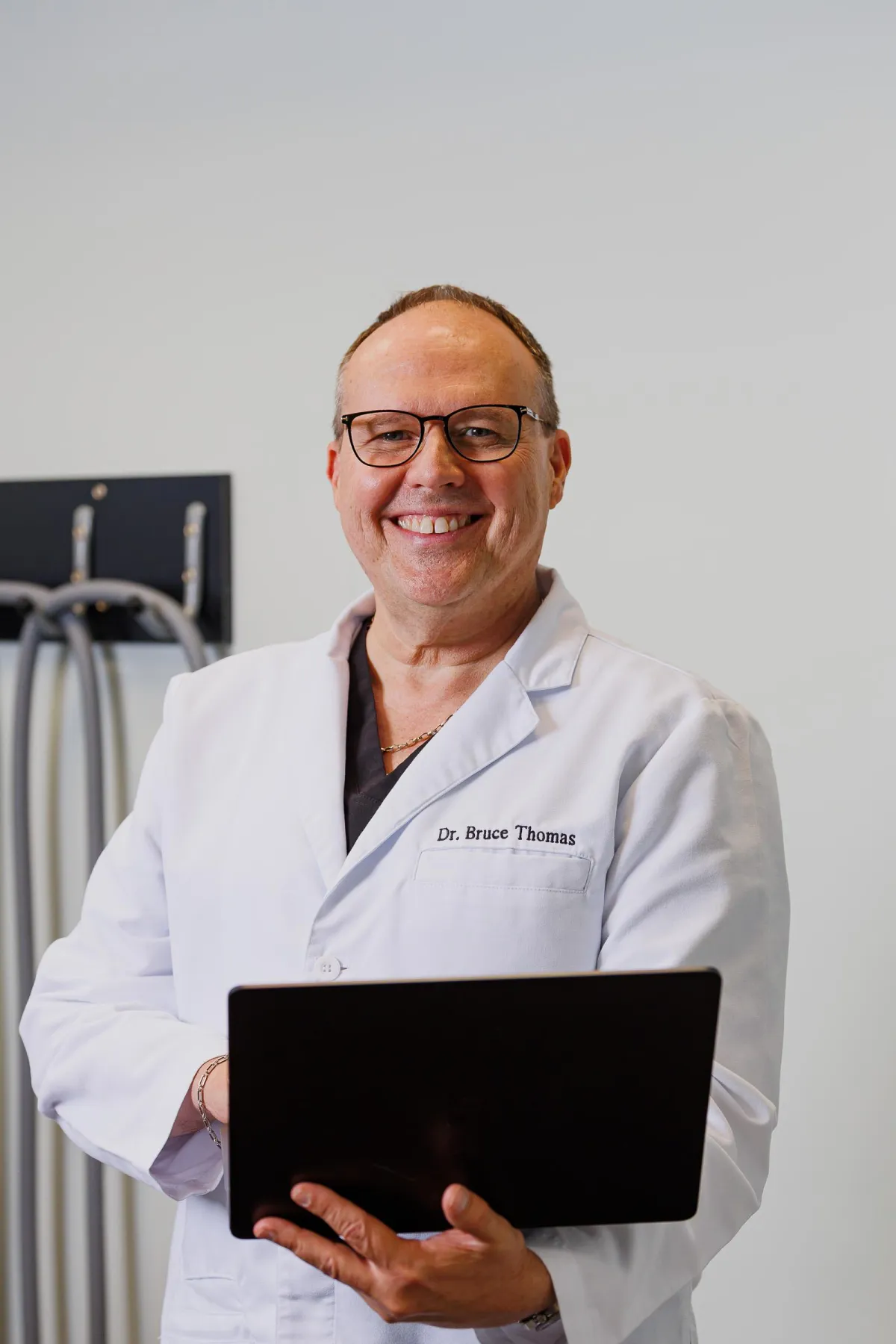
At Physician Artistry in Sterling, VA, every treatment starts with a real conversation. Dr. Thomas will look at your face, understand what's actually driving what you're seeing, and tell you honestly whether Botox is the right answer — or whether something else would serve you better.
To learn more about Botox at Physician Artistry or to schedule a consultation, reach out to our team. We're here when you're ready.
Start your transformation today!
Schedule your complimentary consultation with our friendly and knowledgeable team.